Is The Heli Hike On Franz Josef Glacier Hard?
The Franz Josef Glacier Heli Hike is graded moderate by its operator. Here is exactly what that means for fitness, age, weight, health and gear, based on what Franz Josef Glacier Guides states.
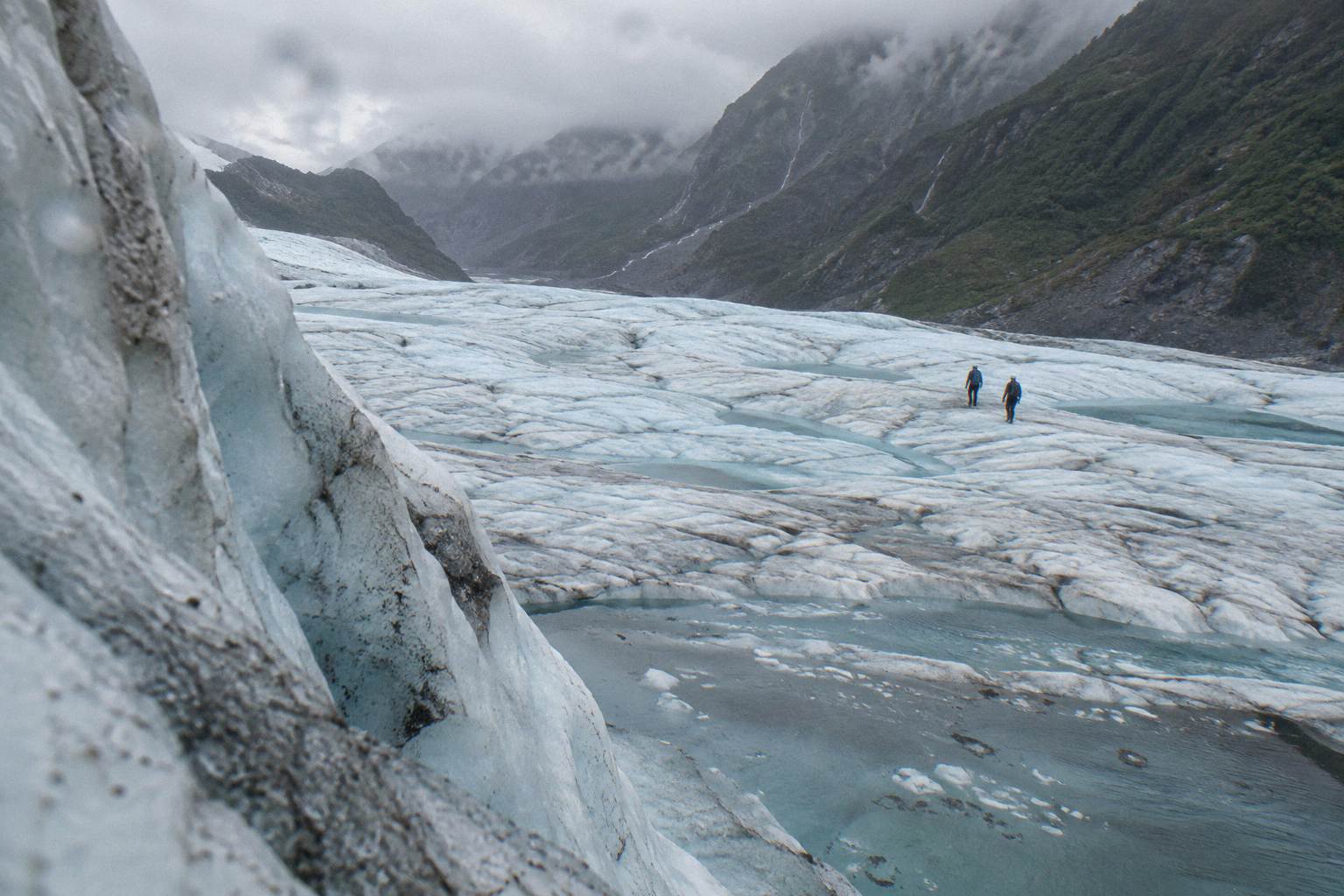
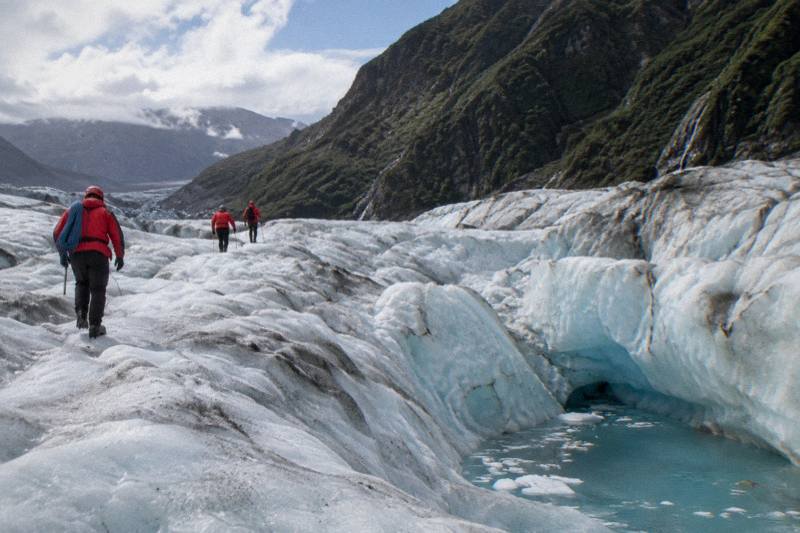
No, not in the way most people fear. Franz Josef Glacier Guides grades its Glacier Heli Hike as moderate and states that no previous experience is needed. Moderate means being comfortable walking 2 to 3 hours on uneven terrain, including steps cut into the ice. The trip runs up to 2.5 hours on the ice and up to 4 hours from check-in, with 1 guide to 11 guests, and the guide may assess fitness on the day.
That is the short answer, but the word moderate carries a lot of weight in a booking decision, so it deserves unpacking with the operator's own wording rather than guesswork. Franz Josef Glacier Guides, the company that guides the glacier and is owned by Ngai Tahu Tourism, publishes its fitness definition on the trip page and in its FAQ. The helicopter flight itself, operated by Inflite with guiding services provided by Franz Josef Glacier Guides, does the climbing for you: the machine lands on the main ice fall, so the walk starts high on the glacier rather than at the valley floor.
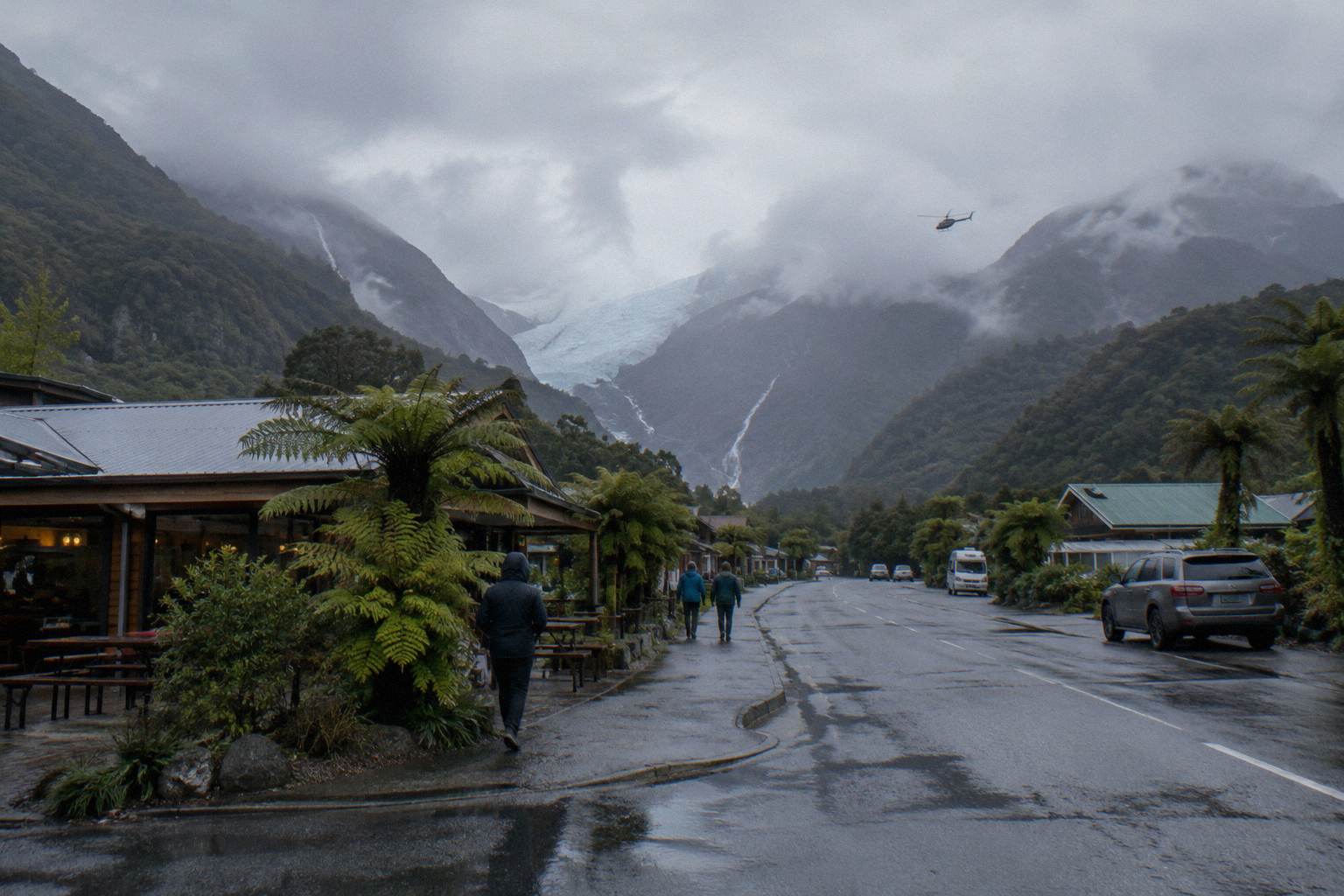
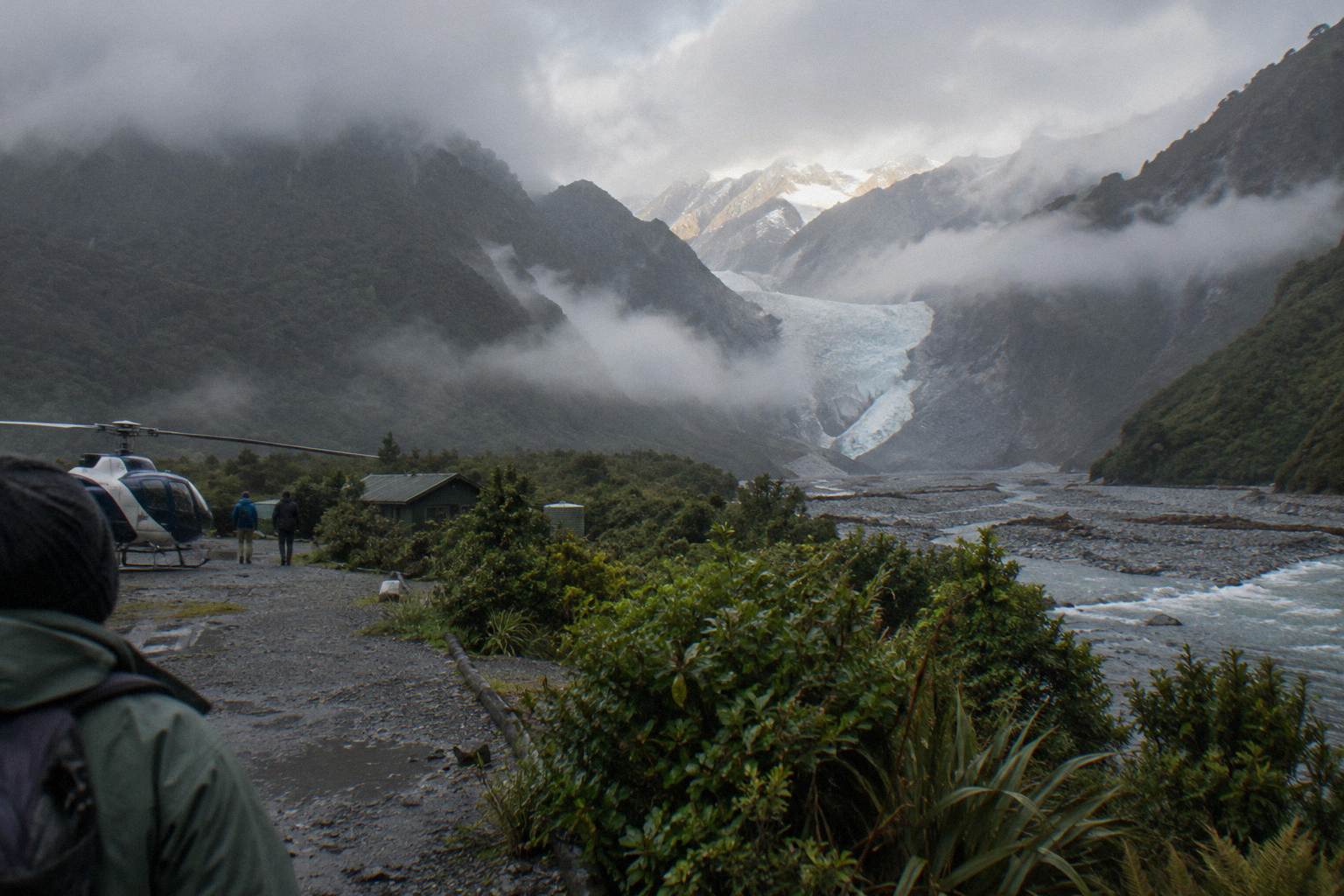
It is worth being clear about one thing early, because it shapes every difficulty question on this glacier. The Department of Conservation states that the river has cut off access up the valley, that it is not possible to go further on foot, and that helicopters are the only safe way to get people onto the glacier for guided walks. There is no harder or easier walking route onto the ice to compare against; the comparison that matters is between the guided products themselves.
Within the same operator's range, the heli hike sits in the middle. The Glacier Landing is the easiest option, 15 minutes on the glacier with no special gear, minimum age 4. The heli hike sits above it, and above the heli hike sit the Glacier Heli Ice Climb and the Glacier Adventure, both up to 8 hours in total with a "good fitness" or "moderate to high fitness" grading. So if the question behind your question is whether an ordinary reasonably active adult can do this trip, the operator's own grading says yes, provided you meet the limits and declare anything on the health list.
The Glacier Heli Hike is the shortest guided ice walk Franz Josef Glacier Guides sells, at NZD 899 per adult or child, and it works as a simple entry point to the ice with a guide.
The classic heli hike is the shortest guided ice walk Franz Josef Glacier Guides sells, and its price, NZD 899 per adult or child, is the entry point for getting onto the ice with a guide. You can read the full tour page for the classic Franz Josef heli hike or check availability if the dates matter to you.
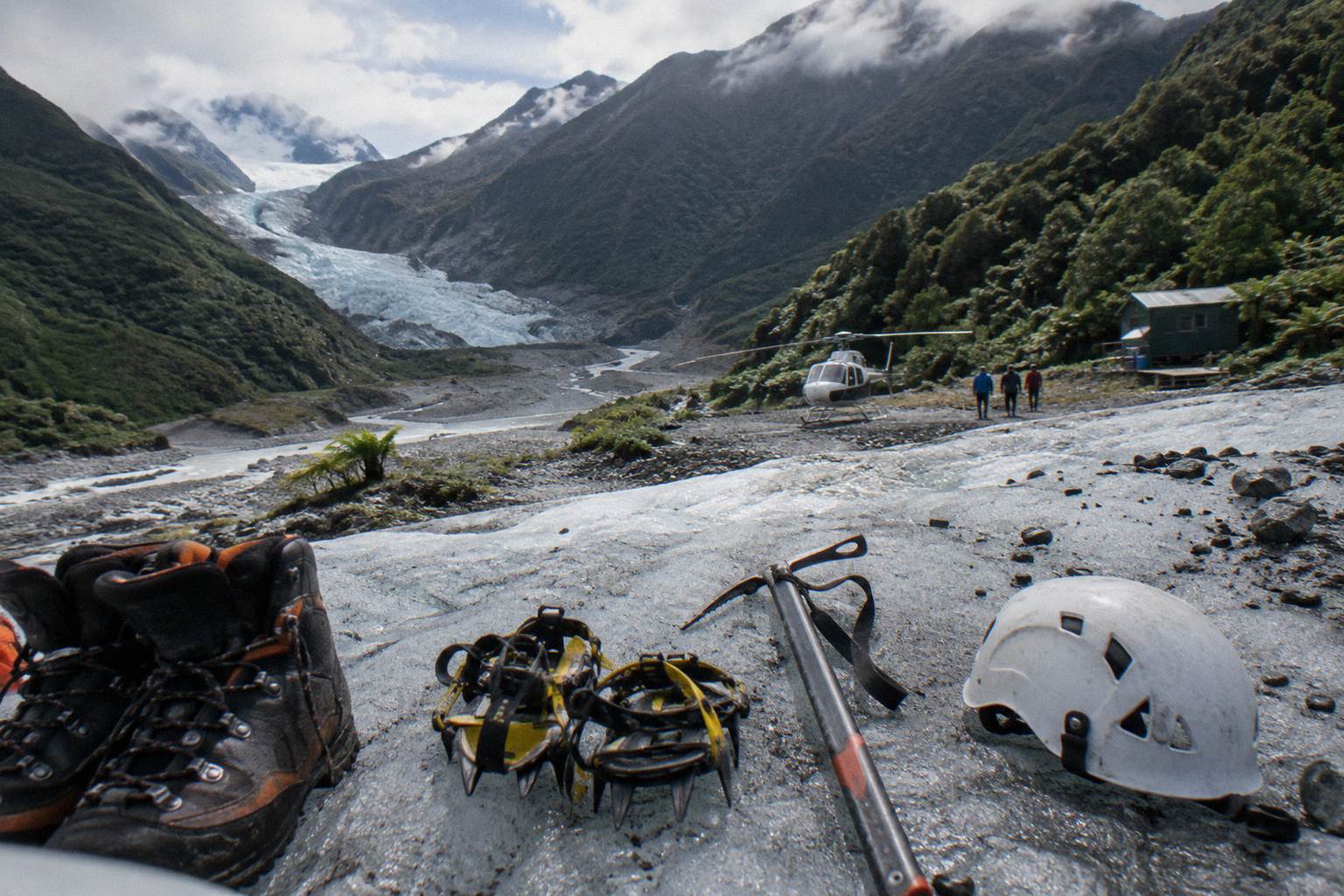
What The Operator Actually Means By Moderate
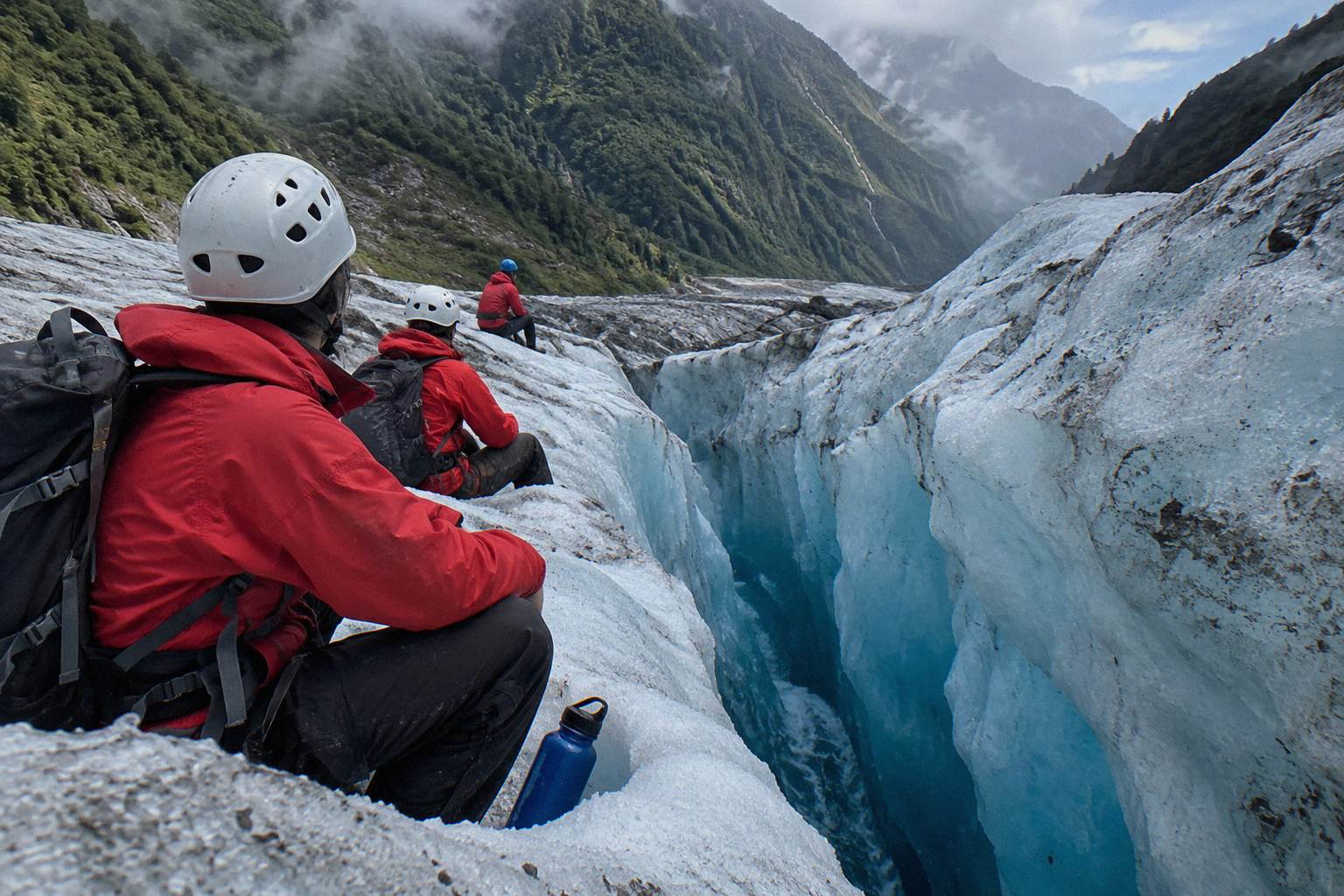
Moderate, in Franz Josef Glacier Guides' own words, means being comfortable walking 2 to 3 hours on uneven terrain, including steps cut into the ice, with no previous experience needed. It is a walking-endurance grade, not a climbing grade: crampons, a harness, a helmet and boots are all supplied, and a guide leads at a pace set for a group of up to 11.
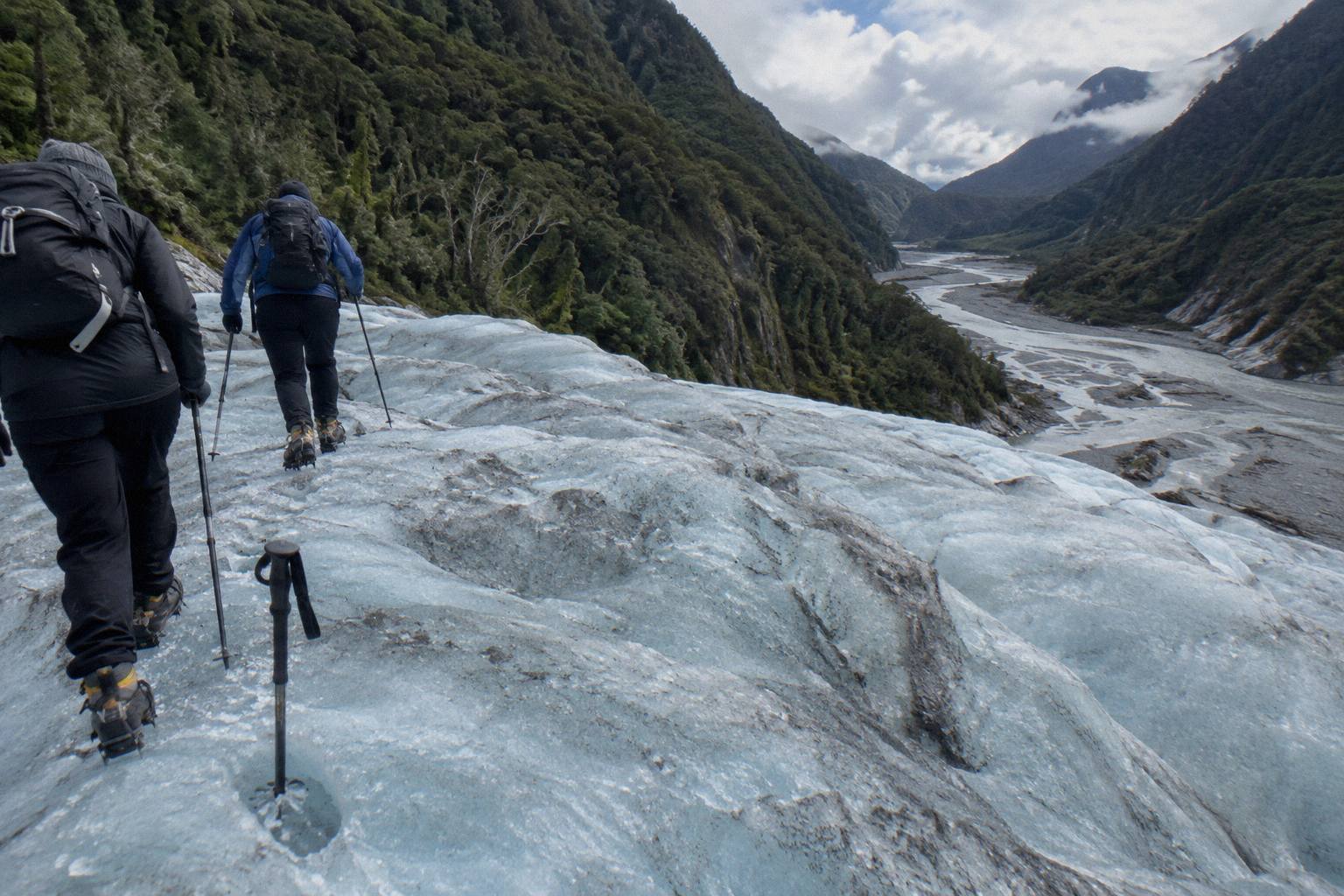
The ice time is capped at up to 2.5 hours, and the whole trip runs up to 4 hours from check-in, so the effort is bounded by the schedule rather than open-ended. The operator's fitness wording matters because it tells you the two physical demands directly. The first is duration: you are on your feet on ice for a period the operator caps at 2.5 hours. The second is terrain: uneven surfaces and steps cut into the ice, which is exactly what it sounds like, a staircase carved into the glacier surface that you ascend and descend in crampons. Trekking poles are supplied, which helps on the stepped sections.
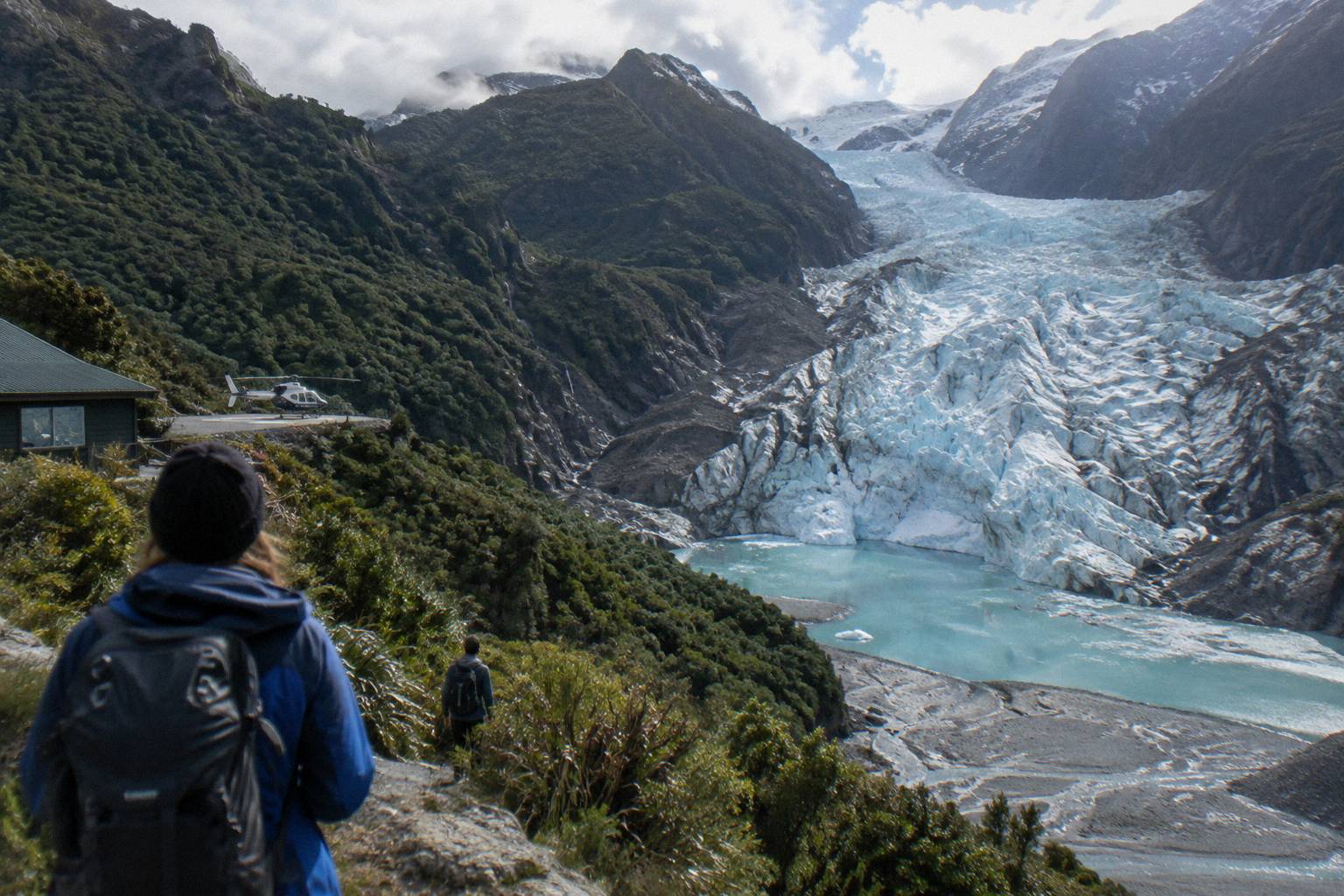
What the grade does not require is just as telling. No previous experience is needed, so the operator does not expect you to have worn crampons before; the guide covers that at the start. There is no stated hill-training requirement, no minimum walking speed, and no test you pass or fail at check-in. The guide may assess fitness on the day, which in practice means the guide watches the group and adjusts the route, since guides hold NZMGA Hard Ice Guide qualifications, per the operator's Adventure page.
If you want the operator's fuller framing of fitness, preparation and who the trip suits, the Franz Josef Glacier Guides FAQ sets out the fitness text and the group rules, and the heli hike trip page carries the day's structure and the gear list. Between them they answer most of what a first-timer asks before calling the operator on 0800 484 337.
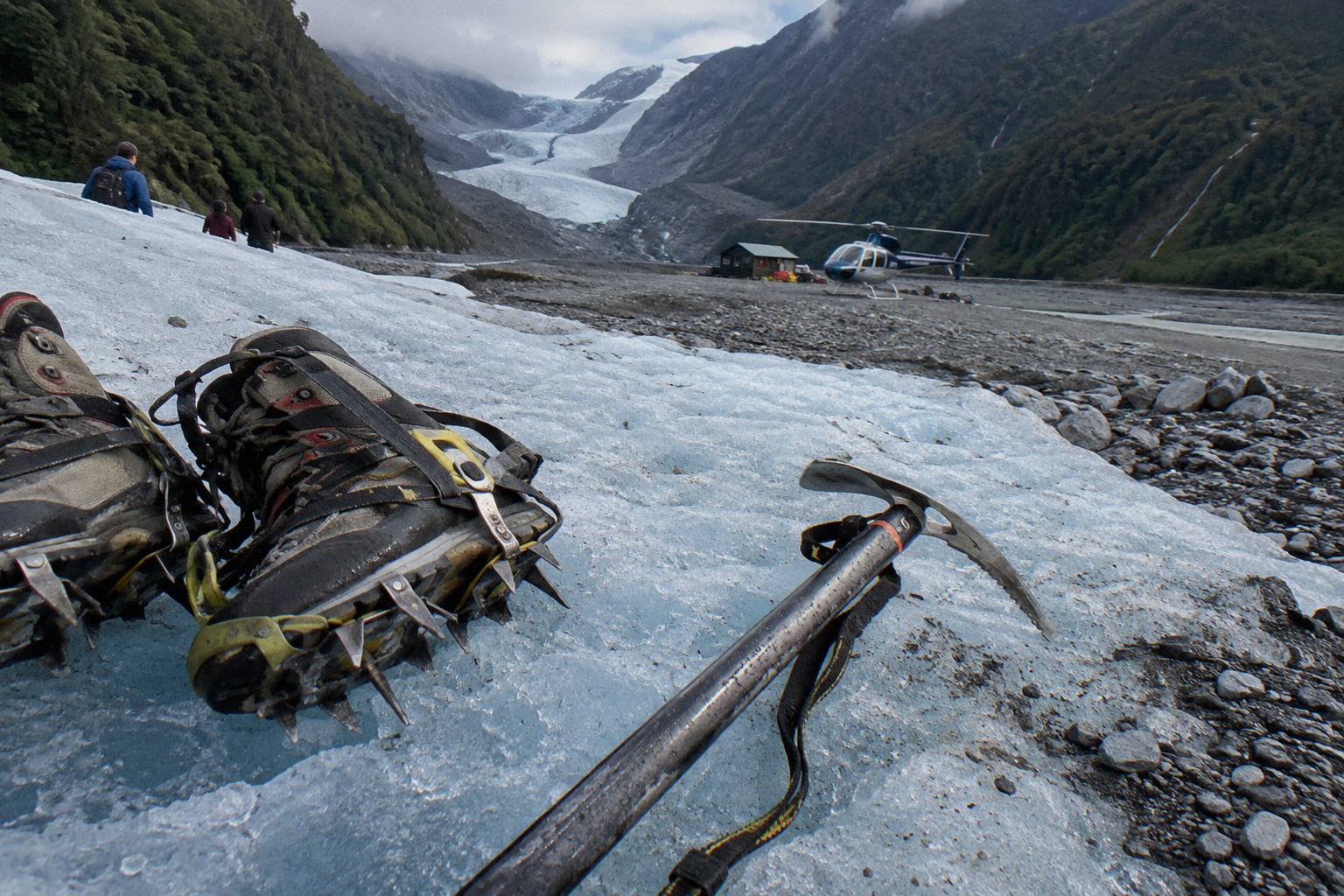
One comparison worth making while you are calibrating: the same operator's Ice Climb, which does require good fitness and a minimum age of 16, is built around vertical ice with tools, and its Adventure product, graded moderate to high, runs up to 5.5 hours on the ice against the heli hike's 2.5. The heli hike is deliberately the accessible version of a glacier day.
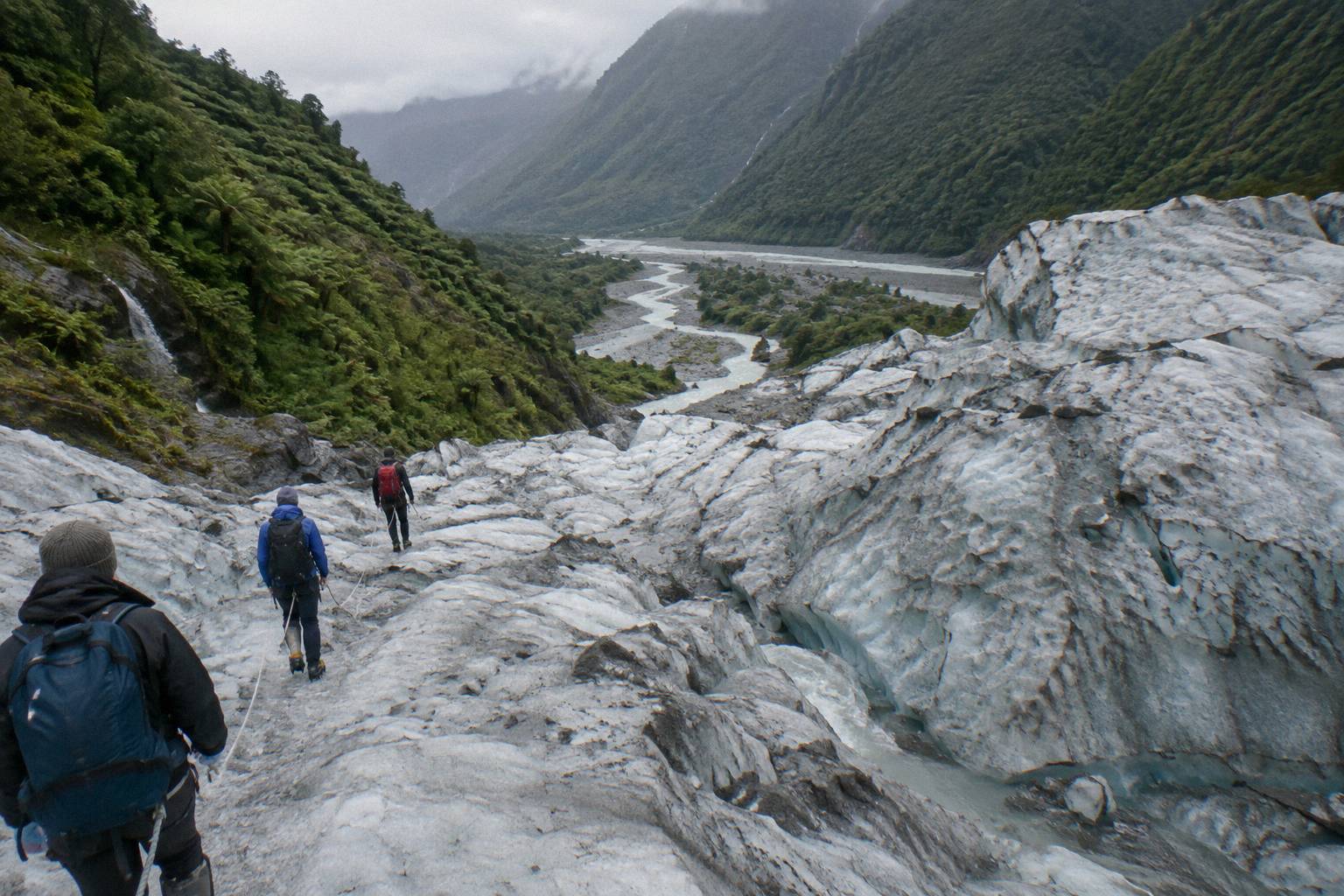
For a broader look at how the West Coast trips stack up by effort, the companion piece on heli hikes across New Zealand places Franz Josef among the other guided glacier products.
Fitness, Age, Weight And Height: Who Can Actually Book
The heli hike's hard limits are a minimum age of 10, a weight range of 35 kg to 115 kg, and a minimum height of 137 cm, all stated by Franz Josef Glacier Guides. Under 18s must be accompanied by a paying parent or guardian. Summer departures run at 7:30am, 10:00am and 12:30pm, with check-in 15 minutes before at Glacier Base on Cron Street.
These are booking conditions, not fitness negotiation points. The weight band exists because the helicopter load and the crampon gear have to fit you, and the operator does not offer a way around it. The height minimum of 137 cm pairs with the age minimum of 10, and the operator asks for proof of a child's age at check-in on the Fox side of the coast; Franz Josef Glacier Guides states its own age rule plainly on the trip page.
| Limit | Heli Hike (FJGG) | Glacier Landing (FJGG) | Glacier Adventure (FJGG) | Glacier Heli Ice Climb (FJGG) |
|---|---|---|---|---|
| Minimum age | 10 | 4 | 14 | 16 |
| Weight rule | 35 kg to 115 kg | Not stated; depends on helicopter load, per T&Cs | Not stated | Not stated |
| Fitness grade | Moderate, no experience needed | Easiest option | Moderate to high | Good fitness |
| Time on ice | Up to 2.5 hours | 15 minutes | Up to 5.5 hours | Up to 5.5 hours |
| Total time | Up to 4 hours from check-in | 1 hour from check-in | Up to 8 hours | Up to 8 hours |
| Guide ratio | 1 guide to 11 guests | 1 guide to 6 guests | Maximum 4 guests per booking | 1 guide to 4 guests |
Two honest gaps sit in that table, and it is better to say them once than to gloss over them. A weight range for the Adventure and the Ice Climb is not stated; ask the operator. And the sister product on Fox Glacier, the Fox Glacier Heli Hike run by a different company, Fox Glacier Guiding, carries its own limit of 116 kg on all its helicopter trips and a minimum age of 9, which is close to but not the same as the Franz Josef rules. Per-product limits never transfer between operators, so if you are borderline on any number, call before you book: Franz Josef Glacier Guides on 0800 484 337 or +64 3 752 0763, Fox Glacier Guiding on 0800 111 600 or +64 3 751 0825.
For families, the age question is often the real difficulty question. A 10 year old who meets the 137 cm and 35 kg minimums can book the Franz Josef heli hike with a paying parent or guardian alongside. The fuller decision logic for children is in the guide to heli hike age limits for kids, which works through both operators' rules product by product.
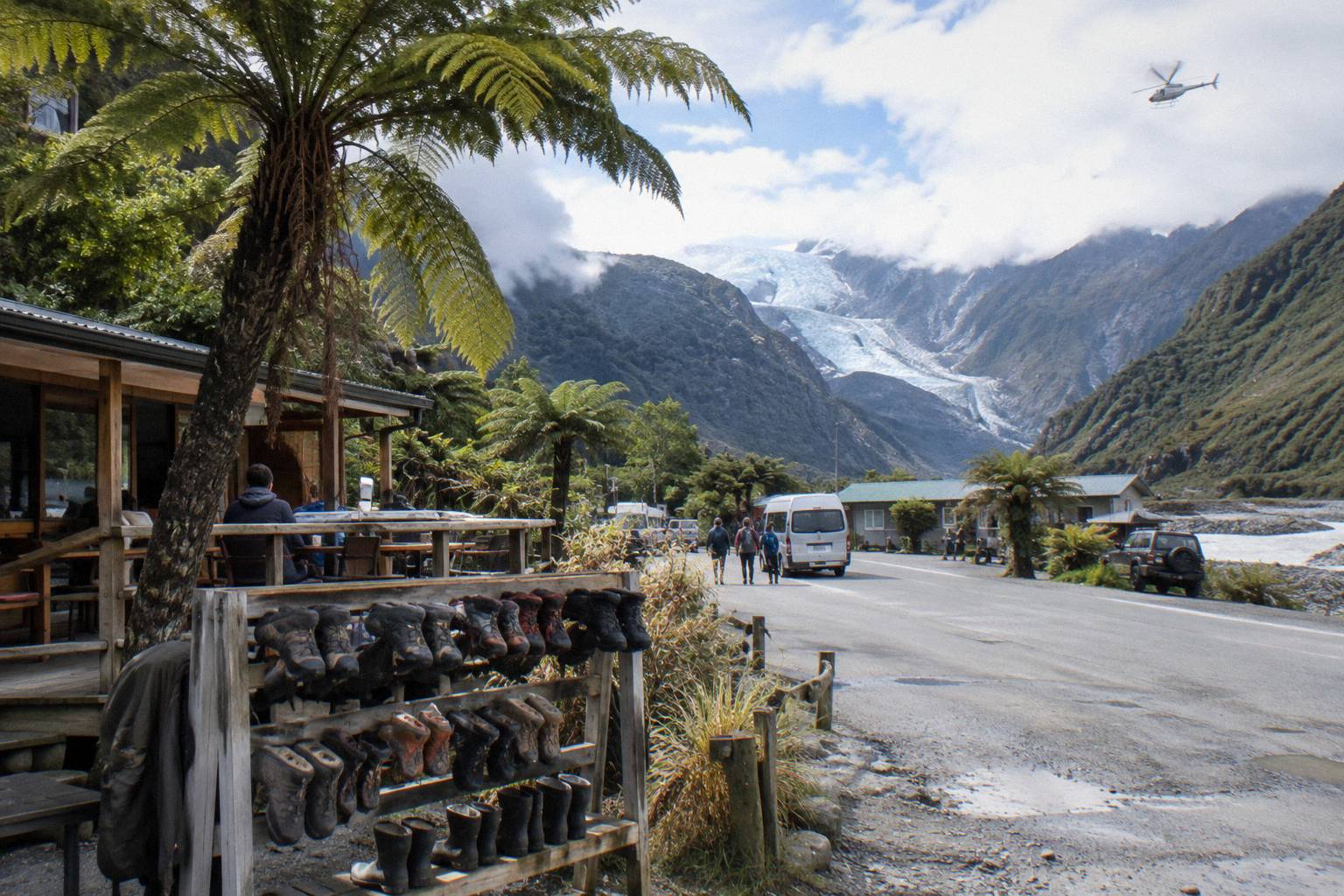
How The Heli Hike Compares With The Harder And Easier Options
Ranked by the operator's own grades, the order runs: Glacier Landing, easiest, 15 minutes on the ice; the heli hike, moderate, up to 2.5 hours on ice; the Glacier Adventure, moderate to high, up to 5.5 hours on ice; and the Heli Ice Climb, good fitness, up to 5.5 hours on ice with vertical climbing. Prices run NZD 699, NZD 899, NZD 1,549 and NZD 1,249 respectively.
The step from the Landing to the heli hike is the biggest one in feel, because the Landing never really becomes a walk. It is a helicopter flight that sets down on the icefall at about 1,300 m for 15 minutes, with enclosed shoes as the only footwear requirement and a minimum age of 4. If your difficulty concern is a bad knee, a heart condition you must declare, or a party member who cannot manage 2 to 3 hours on uneven ground, the Landing at NZD 699 is the operator's designed answer, and the heli hike is not.
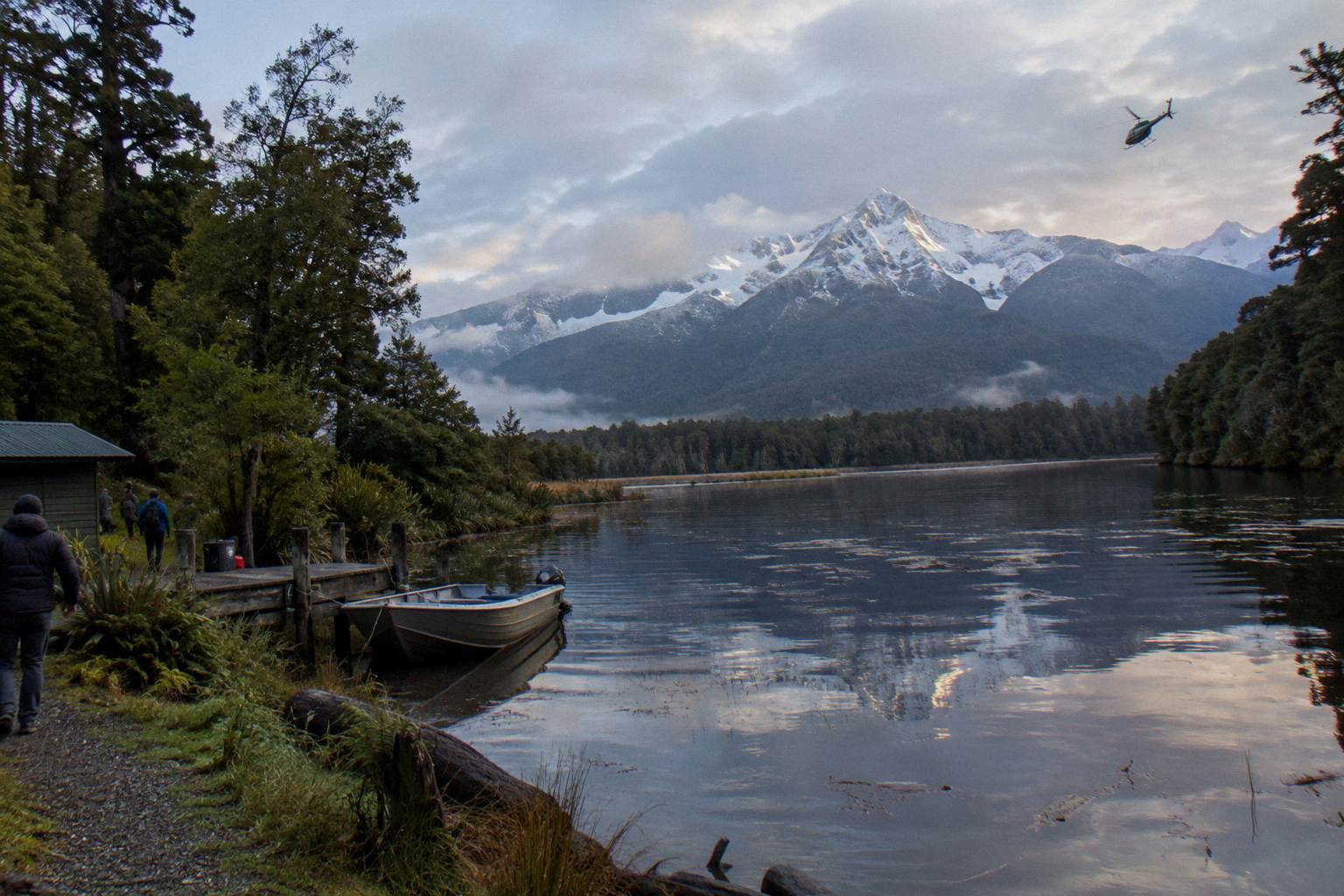
The step from the heli hike up to the Adventure is about duration and verticality. The Adventure runs daily at 7:15am from December to March, includes lunch and drinks, caps the booking at four guests, and the operator lists abseiling or a crevasse traverse as possible elements. Its grade, moderate to high, is the operator telling you the day is long, up to 8 hours in total, before any technical moment arrives.
| Question | Landing | Heli Hike | Adventure | Ice Climb |
|---|---|---|---|---|
| Do I need experience? | No | No | No | No, operator states no experience needed |
| Can a child do it? | From age 4 | From age 10 | From age 14 | From age 16 |
| How long am I out? | 1 hour from check-in | Up to 4 hours from check-in | Up to 8 hours | Up to 8 hours |
| Special gear needed from me? | Enclosed shoes only | Base layers, long pants, sunglasses, sunblock | Same personal kit as the heli hike | Same personal kit as the heli hike |
| Booking style | Daily departures | Daily summer departures | Daily 7:15am, December to March | Year round on demand, enquiry-based |
Between the two harder trips, the choice is technical. The Ice Climb at NZD 1,249 is enquiry-based, departs 7:15am year round on demand, and puts you on vertical ice with tools at a 1 to 4 guide ratio. The Adventure at NZD 1,549 is the small-group, long-day option with lunch included. Neither is a version of the heli hike with more walking; both are different days altogether, and the operator's fitness grades say so.
Readers comparing the two coasts should note the Fox Glacier Heli Hike is graded moderate by its own operator too, at NZD 849, up to 3 hours on the ice and up to 4 hours in total, minimum age 9, with a family deal of NZD 3,050 for 2 adults and 2 children aged 9 to 16 that the operator says saves NZD 346. It is rated 4.9 on one booking page, though no review count is stated. Different township, different operator, similar grade.
The side-by-side logic for the two glaciers, including the price and ice-time trade-offs, is laid out in Franz Josef or Fox Glacier, which heli hike is better.
The Health Conditions You Must Declare Before You Go
Franz Josef Glacier Guides asks every heli hike guest to declare ankle or knee injuries, ACL damage, joint replacements or dislocations, neck or back injuries, heart conditions, high or low blood pressure, diabetes and severe asthma. The operator does not recommend the trip beyond 12 weeks of pregnancy, and nobody may take part under the influence of alcohol or drugs.
This list is a booking-stage conversation, not a disqualification notice. The operator's FAQ says to tell them when you book so the guide knows what to watch, and the only general advice worth adding is the standard one: check with your doctor and tell the operator when you book. No medical claim beyond the operator's own list belongs on this page, and none is made here. More of these guides are collected on Franz Josef Heli Hikes.
Pregnancy deserves one careful sentence because the two operators differ. Franz Josef Glacier Guides states it does not recommend the trip during pregnancy beyond 12 weeks. Fox Glacier Guiding says it has guided pregnant women and leaves the decision to the guest, while noting Fox Glacier is 200 km from the nearest maternity hospital. Both positions are the operators' own; neither is a safety verdict, and the right move is to raise it directly with whichever company you book with.
The declaration list connects back to the difficulty question in a simple way. The ice walk's uneven terrain and cut steps load the ankles and knees steadily for up to 2.5 hours, which is precisely why joints and cardiac conditions are on the list. If everything on the list applies to you only mildly or historically, a phone call to 0800 484 337 settles it in minutes, and the operator can also talk through the Glacier Landing as the lower-load alternative.
Fox Glacier Guiding adds one disclosure that puts its own frame on remoteness: if helicopters cannot return, emergency tents, sleeping bags and food are stored on the glacier, and guests are told to bring essential medication. That is the operator's wording, and it is a fair reminder that these are mountain trips, not theme-park rides.
Gear: What Is Supplied And What You Carry
The operator supplies nearly everything technical: crampons, harness, helmet, waterproof jacket and over-trousers, weatherproof walking boots and socks, trekking poles, a small waist pack, a warm hat and gloves. You bring merino or polypropylene base layers, long pants, jeans excluded, sunglasses, which the operator calls essential, sunblock, a camera and a small water bottle.
The gear list answers a slice of the difficulty question on its own. When boots, crampons and outer layers are supplied and fitted at Glacier Base, the main physical unknowns left are your legs and your lungs. That is why the operator's kit list is short on the personal side: base layers, long pants, sunglasses, sunblock, a camera and a small water bottle. Nothing technical is your problem to source, rent or carry up.
The leave-behind list is just as specific: passport, wallet, car keys, power banks, spare batteries, selfie sticks, vapes, lighters and drones all stay off the helicopter. Drones are separately banned by the Department of Conservation on the valley walk, so leave them behind for the whole day, not just the flight.
If you are the type who likes to plan the kit in detail, the site's full guide on what to wear on a heli hike covers both operators' lists side by side, including the Fox Glacier Guiding kit, which adds a small backpack with a 3 kg maximum and leather boots on its Flying Fox trip. No temperature advice or layer-count advice is printed here because no operator states one.
Weather, Fitness Checks And Trips Cut Short
The heli hike needs a four-hour clear weather window, with the final weather call usually made just before departure, and the guide may assess fitness on the day. If the operator cancels for weather you get a full refund or a reschedule, with an alternative such as the Glacier Landing offered where possible. If a trip is cut short after starting, a partial refund is considered only if under 1.5 hours was spent on the glacier.
Weather is the part of the difficulty question people forget to ask. The physical grade may be moderate, but the West Coast receives 6 to 8 m of rain a year in the region, per the operator, and a helicopter needs its window. Franz Josef Glacier Guides advises spending at least two days in Franz Josef and booking the first day, so there is a spare day if the sky closes. That single piece of operator advice does more for your chances of a good glacier day than any fitness preparation.
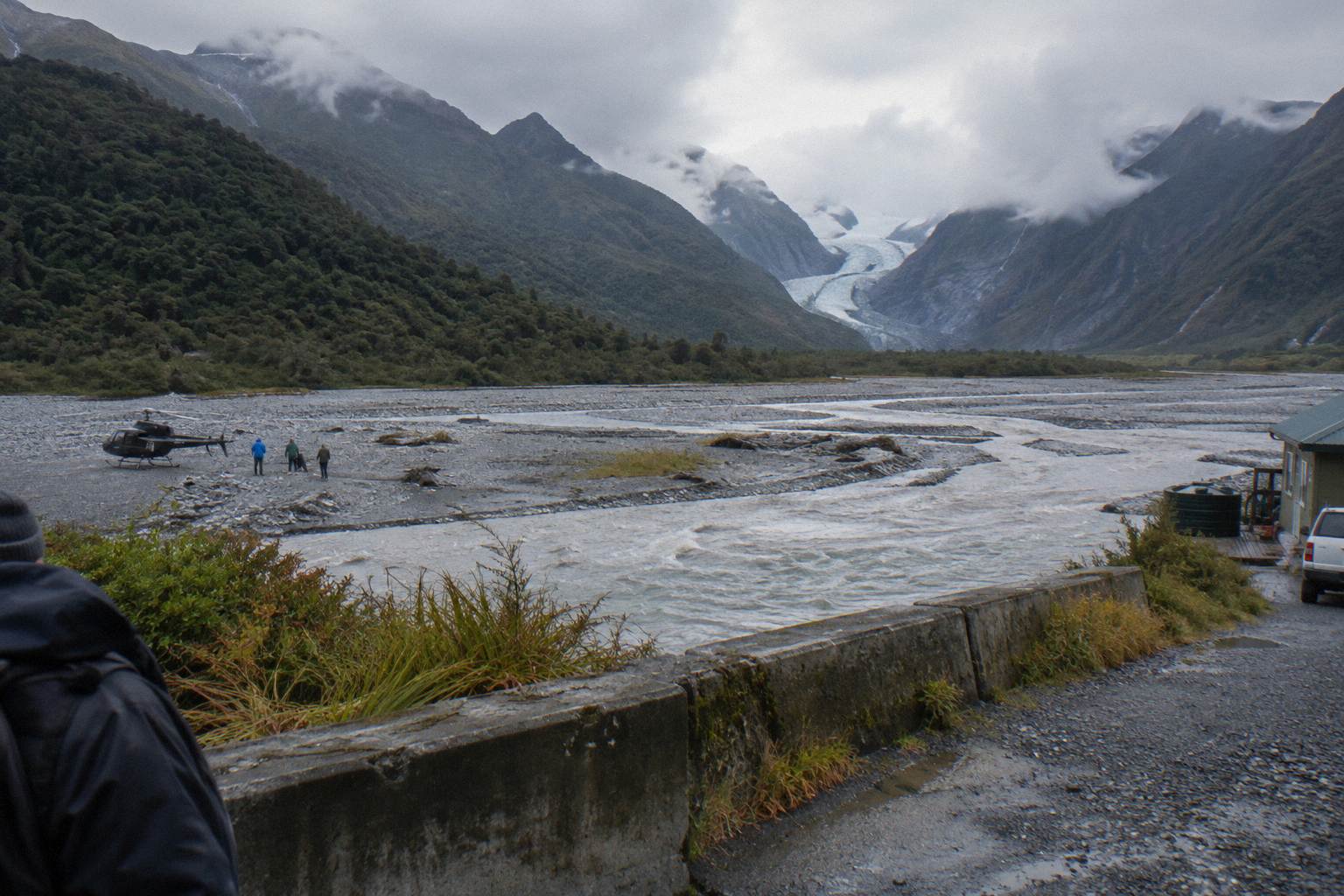
The cancellation mechanics matter to difficulty only indirectly, but they matter a lot to planning. Customers can change or cancel free of charge up to 24 hours before check-in; inside 24 hours the full amount is charged. Late arrival is charged in full because departures cannot be delayed. Travel insurance is strongly recommended by the operator, which accepts no liability for flights, hotels or other costs. On the Fox side the final call comes 10 minutes before departure, with a full refund or a move to another departure if cancelled.
The guide's on-the-day fitness assessment is the operator's safety valve rather than a threat. With 1 guide to 11 guests on the heli hike, the guide sets the pace and picks the line, and the graded terrain can be dialed up or down within the glacier's features. Nobody is asked to do anything the moderate grade does not describe, and nobody who struggles is abandoned; the group moves as a group.
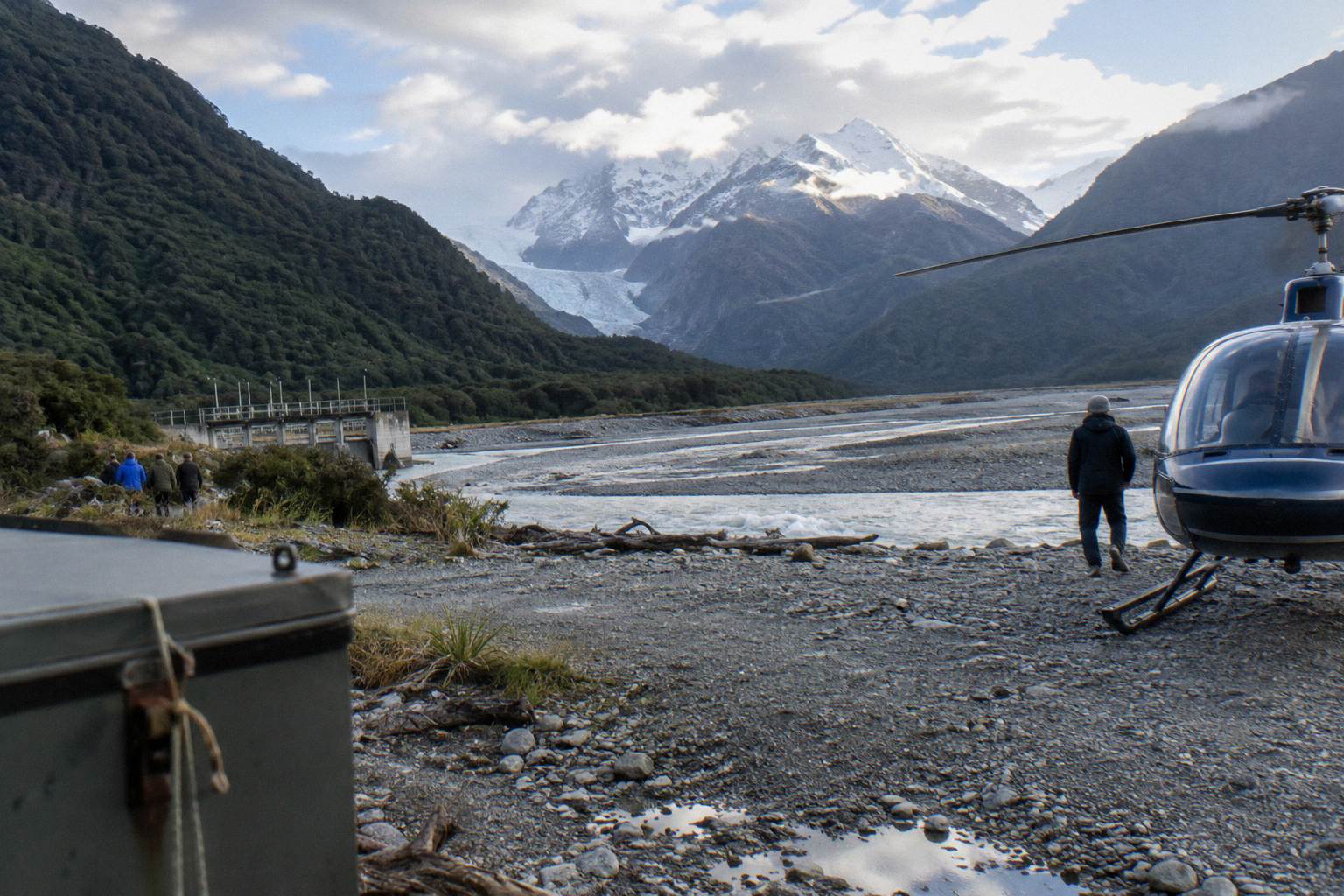
The practical strategy, if difficulty and weather both worry you, is to book the first day of a two-day stay, choose an early departure, and hold the Glacier Landing in mind as the operator's own fallback. The deeper planning logic for weather decisions is in the site's guide to heli hike weather.
What Trips People Up When Judging The Difficulty
Three things trip people up: treating the total time as walking time, assuming a child who clears the age also clears the weight and height minimums, and booking a single day in Franz Josef. The trip is up to 4 hours from check-in but up to 2.5 hours on the ice, the minimums of 10 years, 35 kg and 137 cm apply together, and the operator itself advises two days in the area for a weather window.
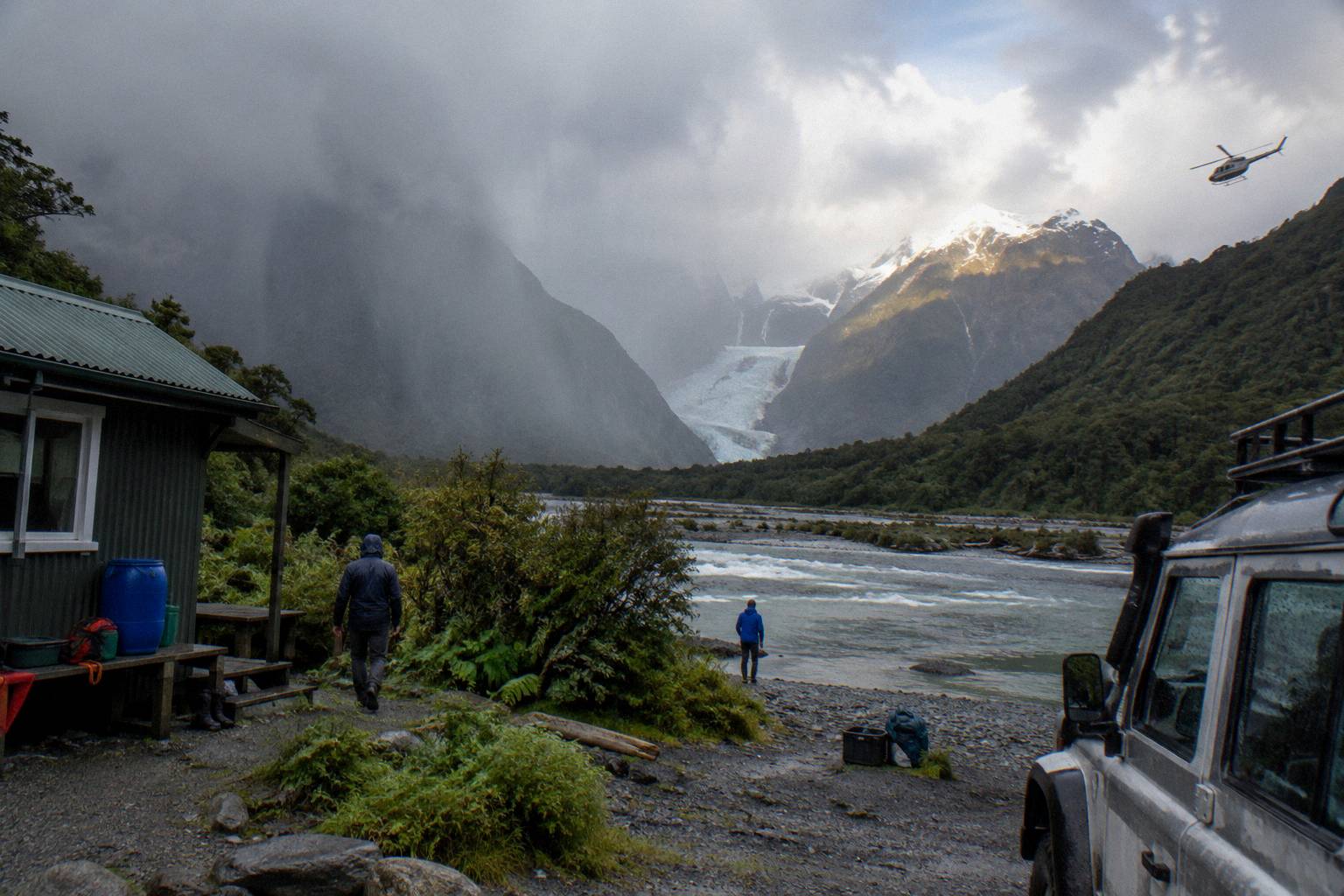
The first mistake is arithmetic. Up to 4 hours from check-in includes check-in, gear fitting, the flight in and out, and time on the ice capped at up to 2.5 hours. People who train for a 4 hour mountain walk have over-prepared, and people who assume a short stroll on the ice have under-prepared. The operator's own fitness line, comfortable walking 2 to 3 hours on uneven terrain, is the number to hold in your head.
The second mistake is family logistics. A 10 year old who meets the age minimum still needs 35 kg minimum weight and 137 cm minimum height, and every under 18 needs a paying parent or guardian on the trip. Booking four seats and discovering one child is under a minimum at check-in is an expensive morning. Ask the operator the week before, not on the day.
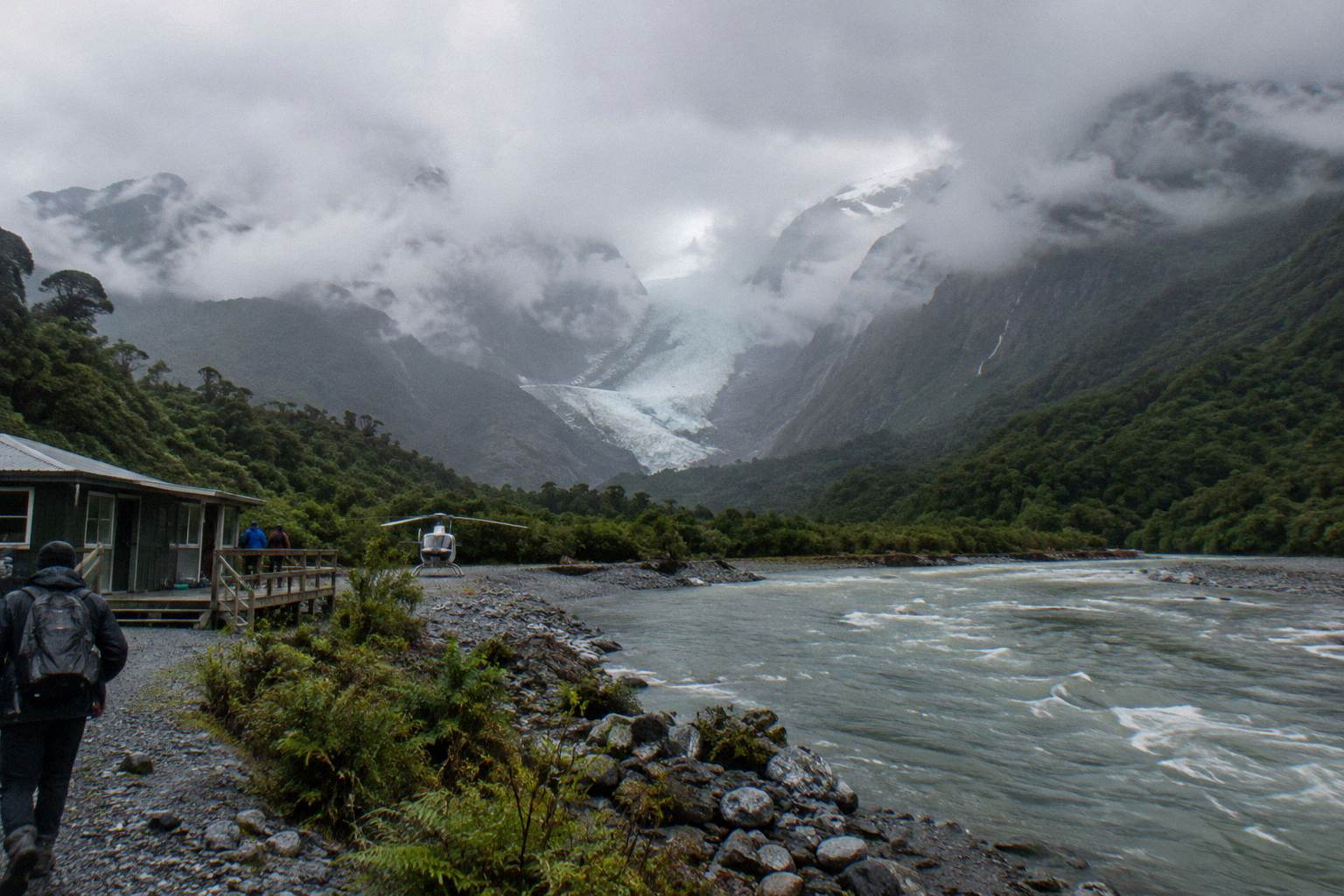
The third is calendar risk. A single night in Franz Josef gives your heli hike exactly one weather window, and the region's 6 to 8 m of annual rainfall means windows are earned, not assumed. The operator's advice to book the first day of a two-day stay is the single best difficulty-mitigation tip on this page, because a rescheduled trip is a trip that still happens.
A fourth, quieter mistake is comparing grades across operators. Moderate on Franz Josef Glacier Guides' scale and moderate on Fox Glacier Guiding's scale are separate statements from separate companies with separate terrain. The decision should be made per product, per operator, with that operator's numbers, which is exactly how every table on this site presents them.
Finally, remember that the glacier cannot be walked onto from the valley: DOC states the river has cut off access and that helicopters are the only safe way onto the ice for guided walks, per the DOC Franz Josef Glacier valley walk page. There is no cheaper walking shortcut that is also harder; there is no walking shortcut at all.
If difficulty was the blocker and the operator's own grade has answered it, the classic trip and its two stablemates are below for one last look:
Common Questions About The Franz Josef Glacier Heli Hike Difficulty
Is The Heli Hike On Franz Josef Glacier Hard?
The operator grades it moderate and states no previous experience is needed. Moderate means comfortable walking 2 to 3 hours on uneven terrain, including steps cut into the ice. The trip runs up to 2.5 hours on the ice and up to 4 hours from check-in, with a guide for every 11 guests.
Do I Need To Be Fit To Do The Franz Josef Heli Hike?
You need moderate fitness as the operator defines it: comfortable walking 2 to 3 hours on uneven terrain. No previous experience is needed, all technical gear is supplied, and the guide may assess fitness on the day and set the pace for the group.
Can Children Do The Franz Josef Heli Hike?
From age 10, with a minimum weight of 35 kg and a minimum height of 137 cm, and every under 18 must be accompanied by a paying parent or guardian. The Glacier Landing is the operator's family option from age 4.
Is The Heli Hike Harder Than The Fox Glacier Heli Hike?
Both operators grade their heli hikes moderate. Franz Josef runs up to 2.5 hours on the ice with a minimum age of 10; the Fox trip runs up to 3 hours on the ice with a minimum age of 9 and a 116 kg weight limit on all its helicopter trips. Neither operator compares them, and no verdict is made here.
What Health Conditions Must I Declare For The Heli Hike?
Ankle or knee injuries, ACL damage, joint replacements or dislocations, neck or back injuries, heart conditions, high or low blood pressure, diabetes and severe asthma, plus pregnancy, which the operator does not recommend beyond 12 weeks. Check with your doctor and tell the operator when you book.
What Gear Do I Need To Bring On The Heli Hike?
Merino or polypropylene base layers, long pants, jeans excluded, sunglasses, sunblock, a camera and a small water bottle. The operator supplies crampons, harness, helmet, waterproofs, boots, socks, trekking poles, a waist pack, hat and gloves.