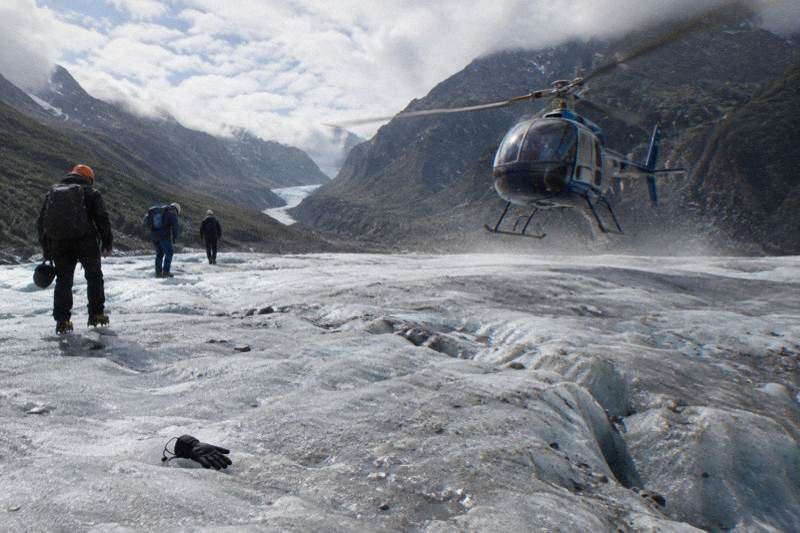
Why Is Fox Glacier Closed?
Fox Glacier is not closed to visitors: guided heli hikes run year round. What is closed is walking onto the ice from the valley, and here is what that means for your trip.
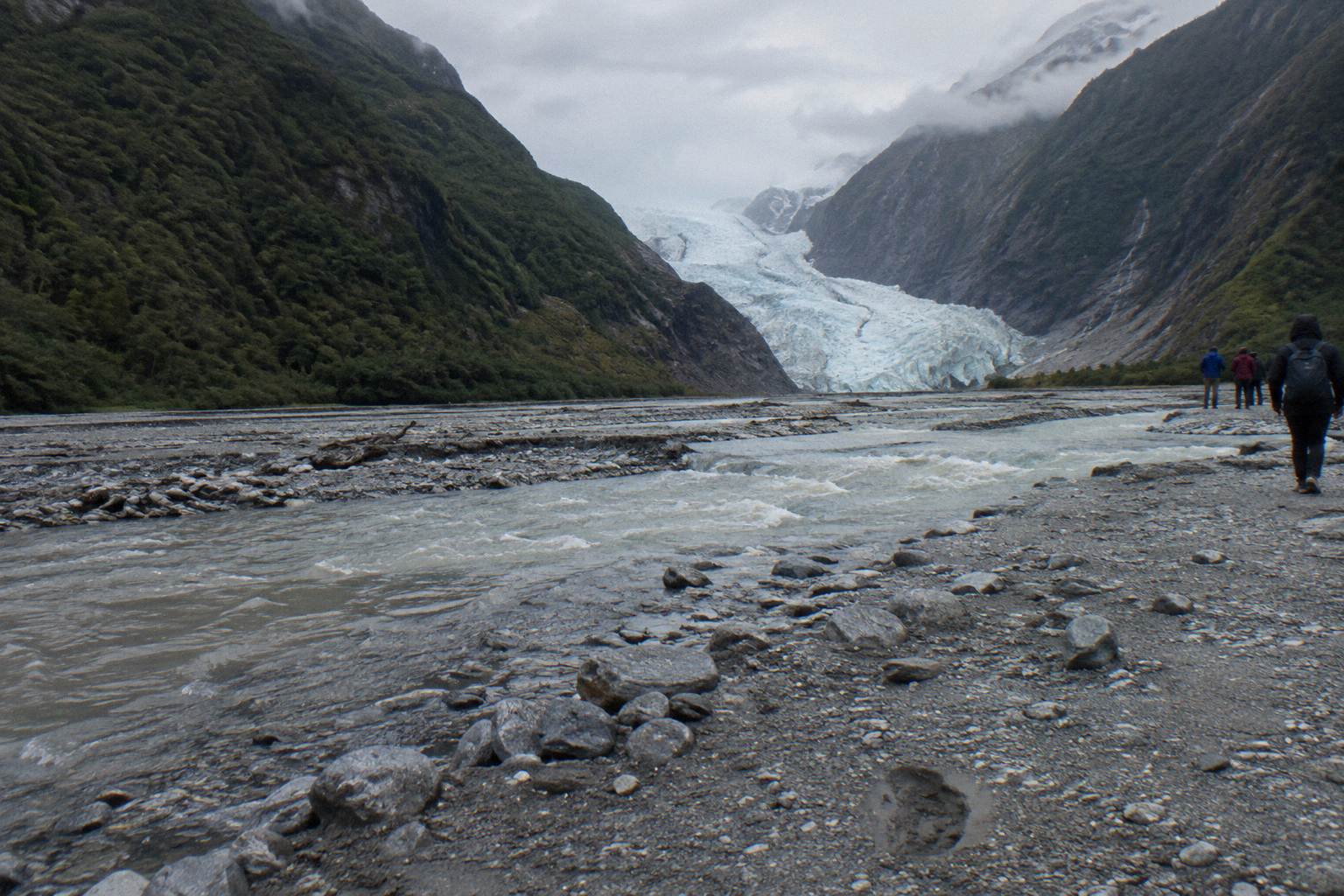
Fox Glacier is not closed. Guided trips onto the ice run year round: Fox Glacier Guiding operates its Flying Fox Heli Hike every day of the year with departures at 8:50am and 11:50am, plus extra departures on demand. What is closed, permanently and by design, is walking onto the glacier from the valley floor on foot. The Department of Conservation says helicopters are the only safe way to get people onto the glacier for guided walks, because the river has cut off access up the valley. So the short answer to the question is that the glacier is open, but only from the air.
That distinction trips up a lot of travellers. Somebody hears that a walk is closed, or arrives to find barriers across a valley track, and concludes the whole glacier is shut. Others read about a helicopter trip being cancelled on a given morning and assume a long-term closure. Neither is quite right, and the difference matters when you are planning a West Coast trip, because the two things have completely different fixes: one has no fix at all, and the other is usually just weather.
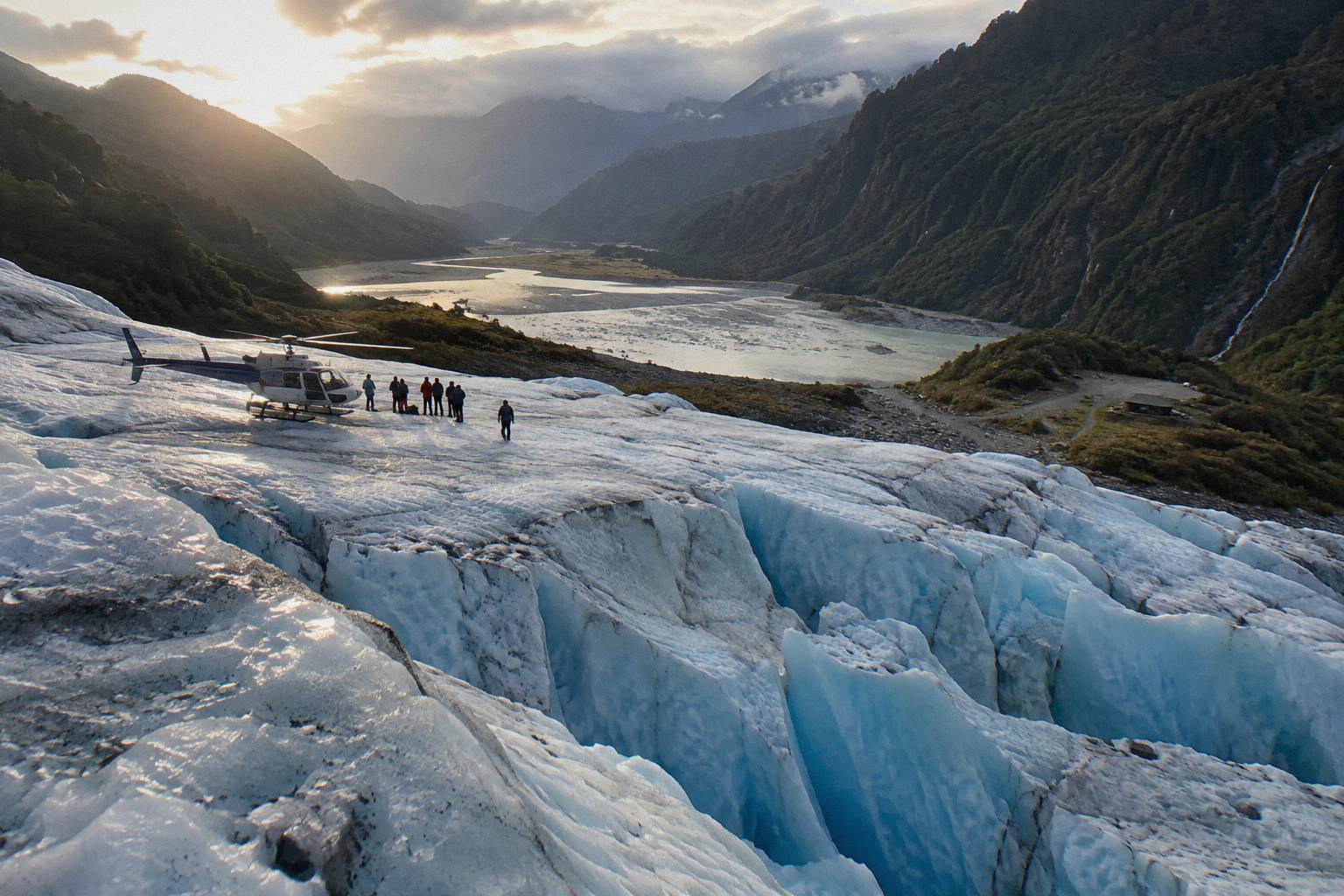
This article separates the real closures from the rumoured ones. It covers why foot access onto the ice ended, what weather cancellations actually look like on the day, which guided trips do run and how they differ, and what you can still walk near Fox Glacier without a helicopter. The facts come from the Department of Conservation and from the operators' own published pages.
The reason a question like this matters for buyers is simple: if you are asking whether Fox Glacier is closed, what you almost always want to know is whether you can still get onto the ice. You can. These are the three guided products that do exactly that, across both glaciers.
Why Nobody Walks Onto The Ice From The Valley
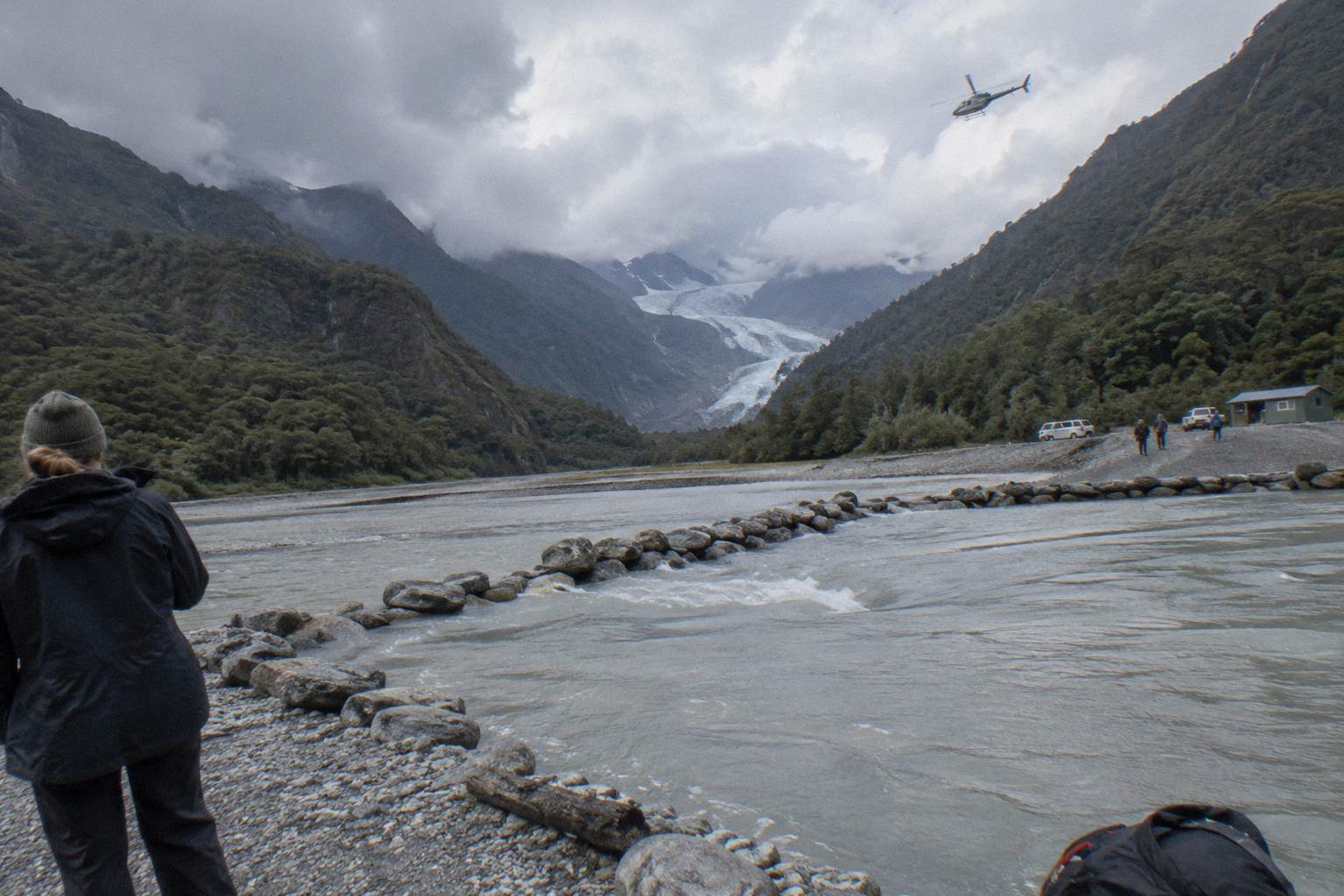
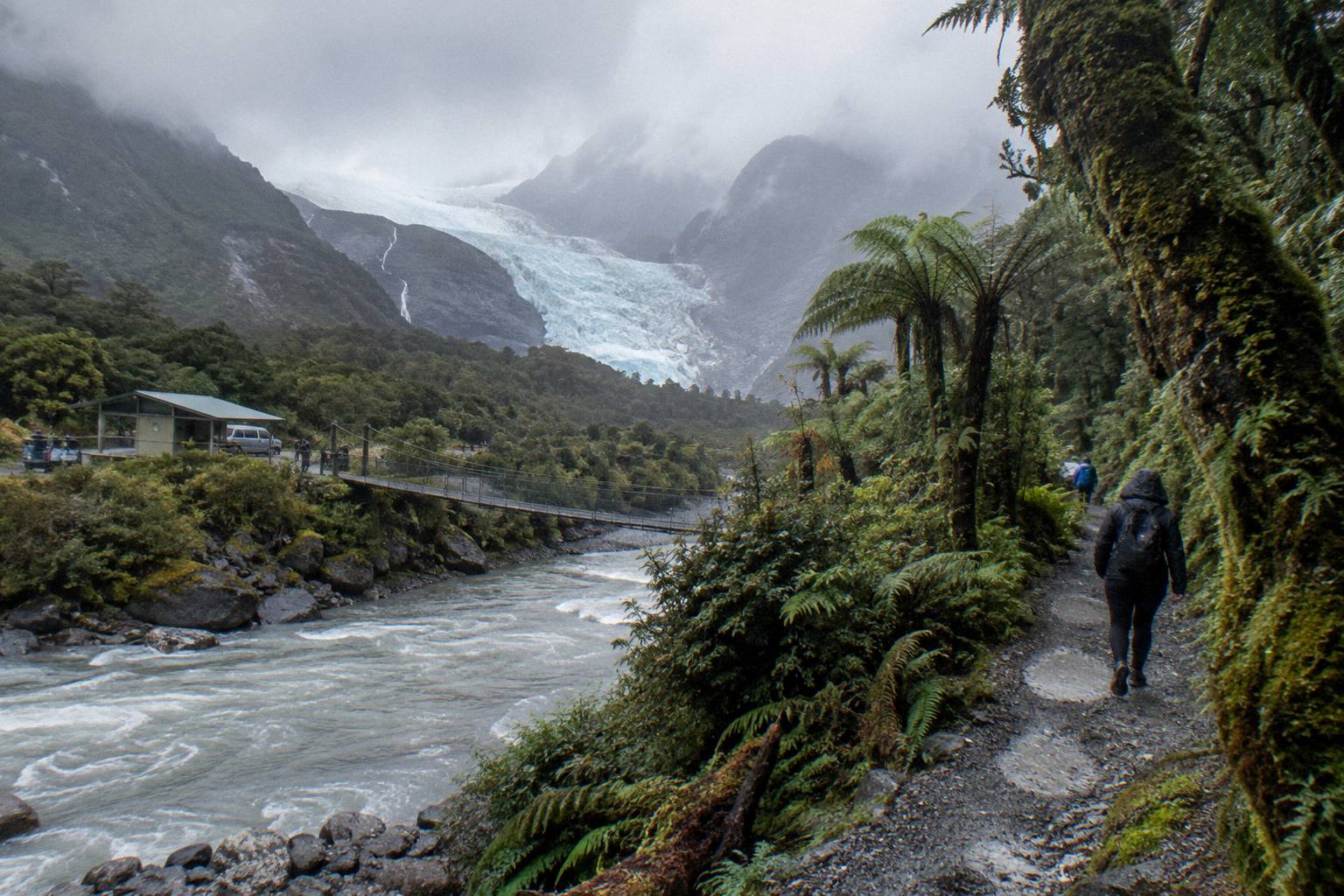
Nobody walks onto the ice from either valley because access simply no longer exists. At Franz Josef, the Department of Conservation states that the river has cut off access up the valley, so going further on foot is not possible and barriers must not be crossed, while at Fox Glacier the landscape itself no longer allows it, and with no closure notice or reason stated, ask the DOC visitor centre for current track status.
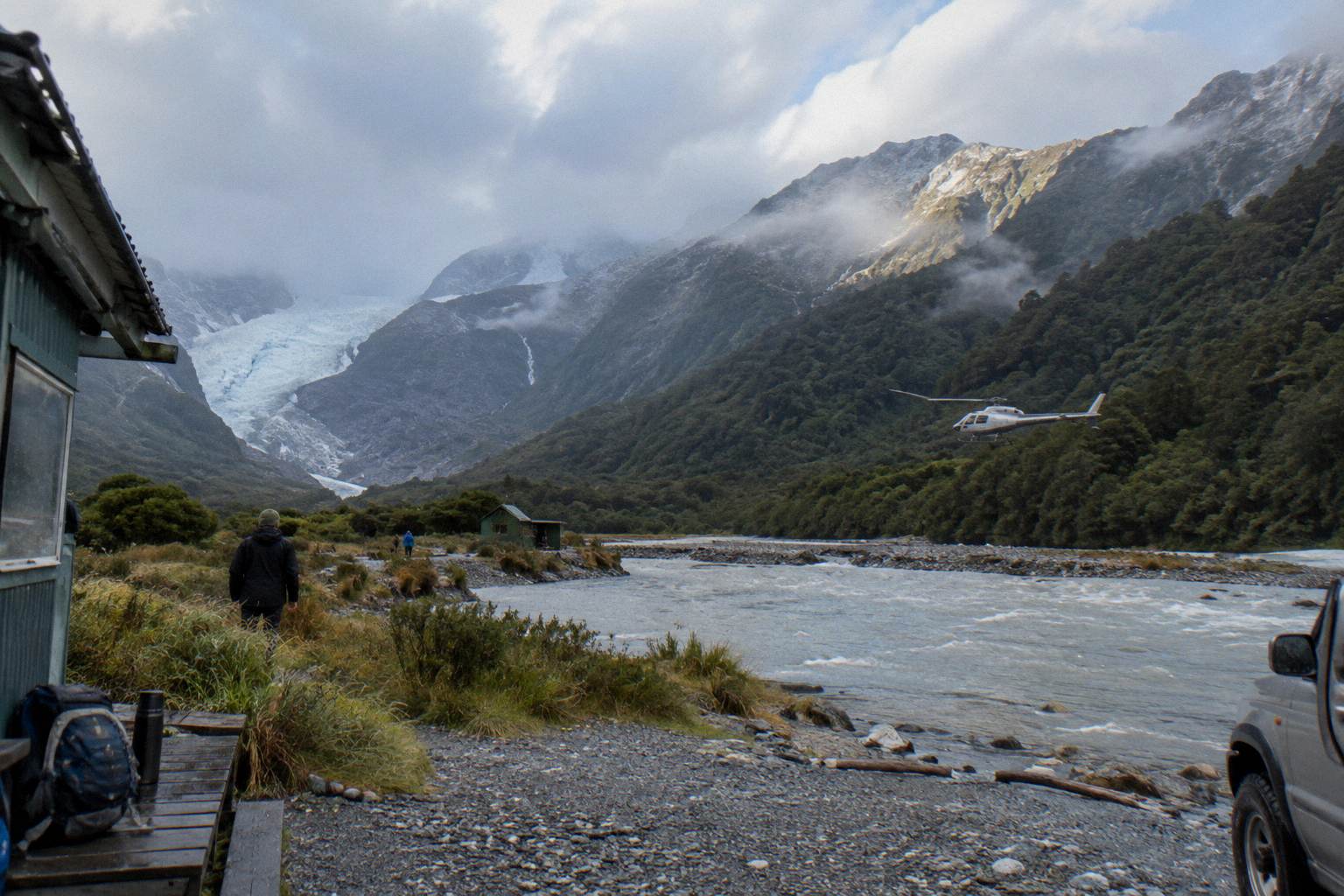
The detail worth understanding is that this is a landscape problem, not an administrative one. A glacier valley is not a static place. Rivers underneath and beside the ice migrate, dump tonnes of gravel, and undermine the ground a track used to sit on. When the Department of Conservation says the river has cut off access, it means the physical route a foot track once used is gone or too dangerous to maintain. Reopening it is not a matter of repairing a bridge.
Glacier Helicopters makes the same point about the Franz Josef glacier in its own words: following a spectacular collapse of the terminal face in 2012, the glacier is now only accessible by helicopter. That is an operator describing its own operating environment, and it matches the Department of Conservation's guidance that DOC's valley walk page describes for the neighbouring glacier. The two valleys tell the same story from two sources.
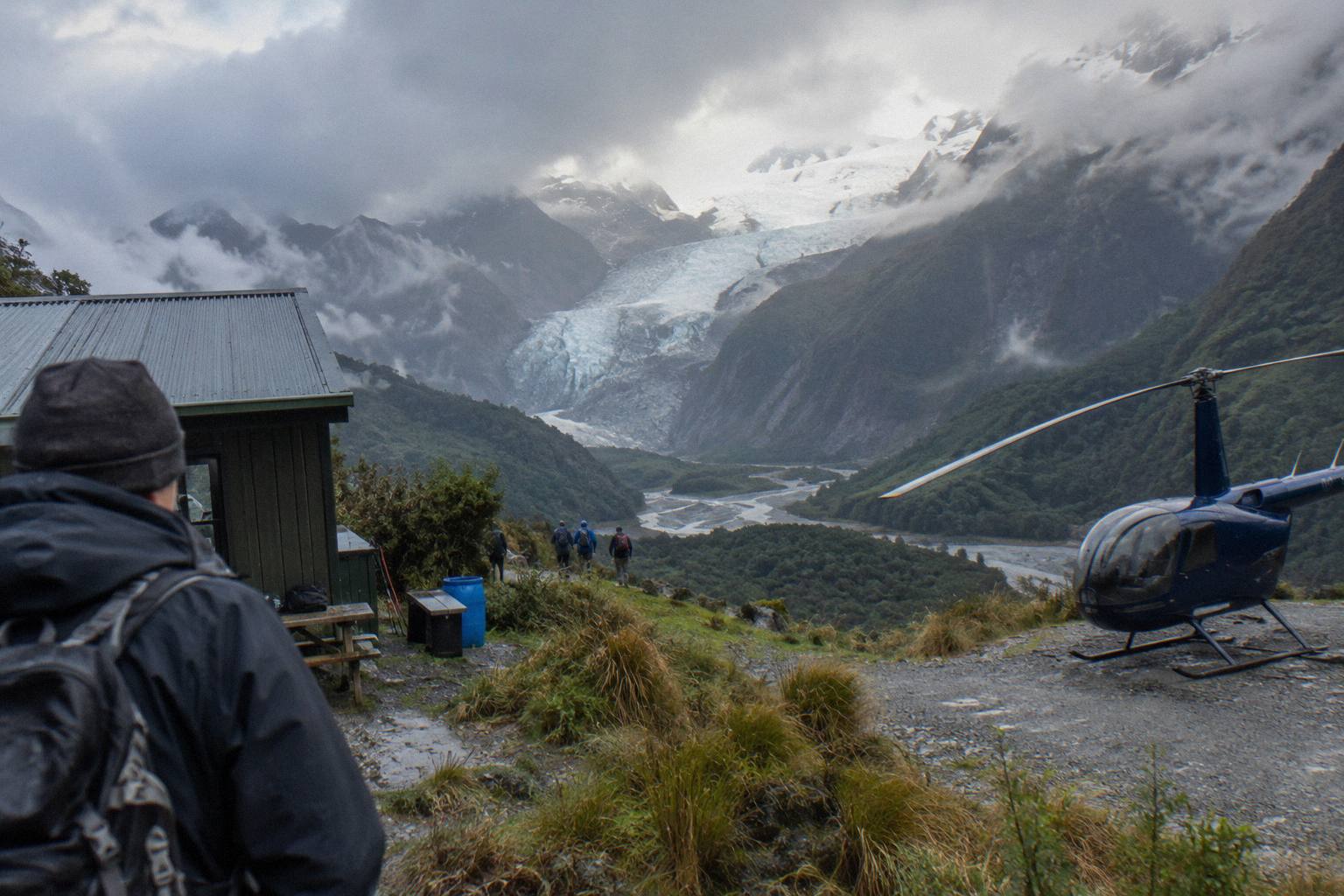
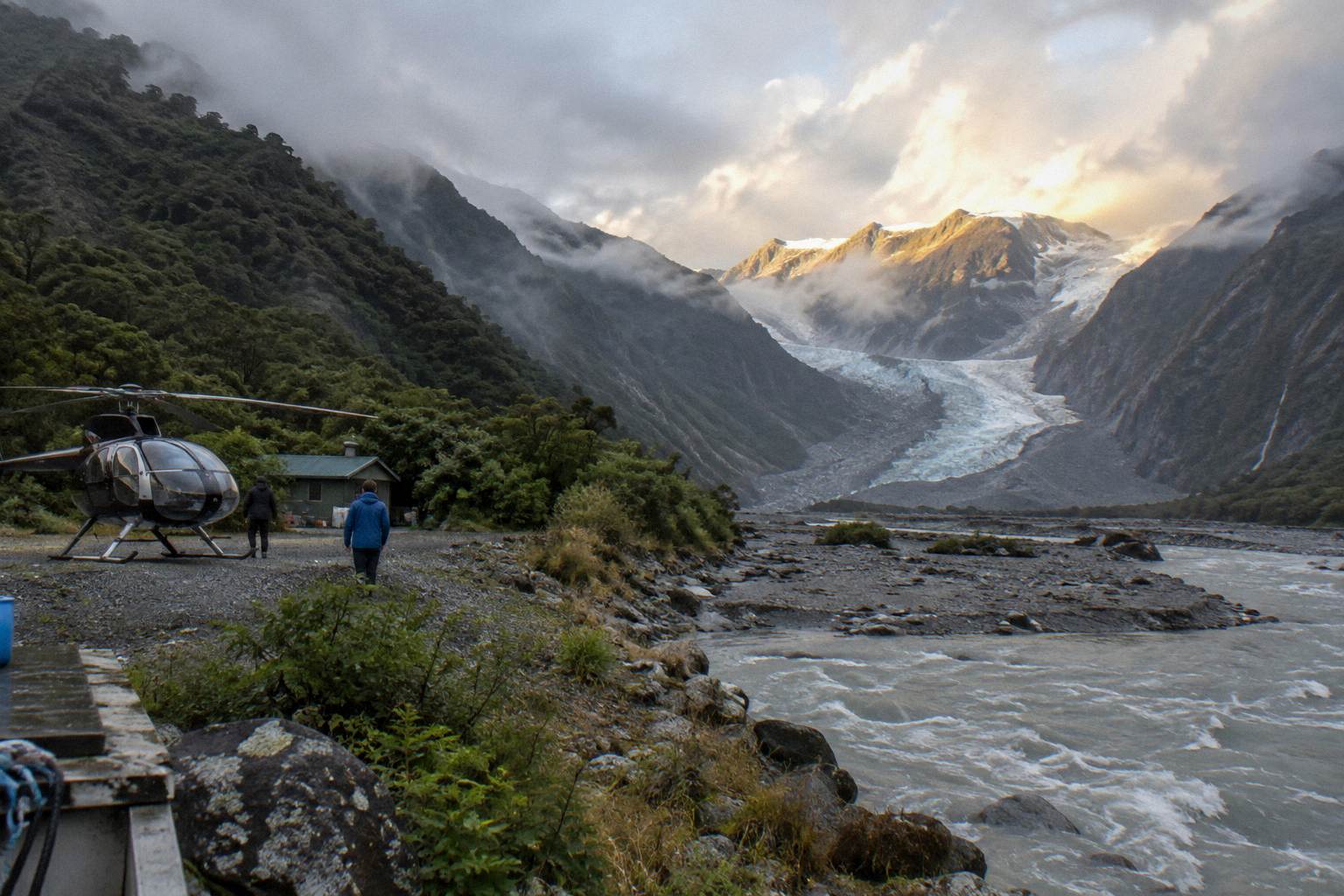
What this means in practice is that every product that puts a paying guest on glacier ice at Fox Glacier starts with a helicopter flight. Fox Glacier Guiding describes all of its trips as heli in and heli out. There is no cheaper walk-on option hiding behind the flights, and nobody should sell you one. If a webpage or a flyer offers a guided glacier walk with no flight involved at Fox Glacier, that is a red flag worth questioning, because it contradicts what both the department and the operators publish.
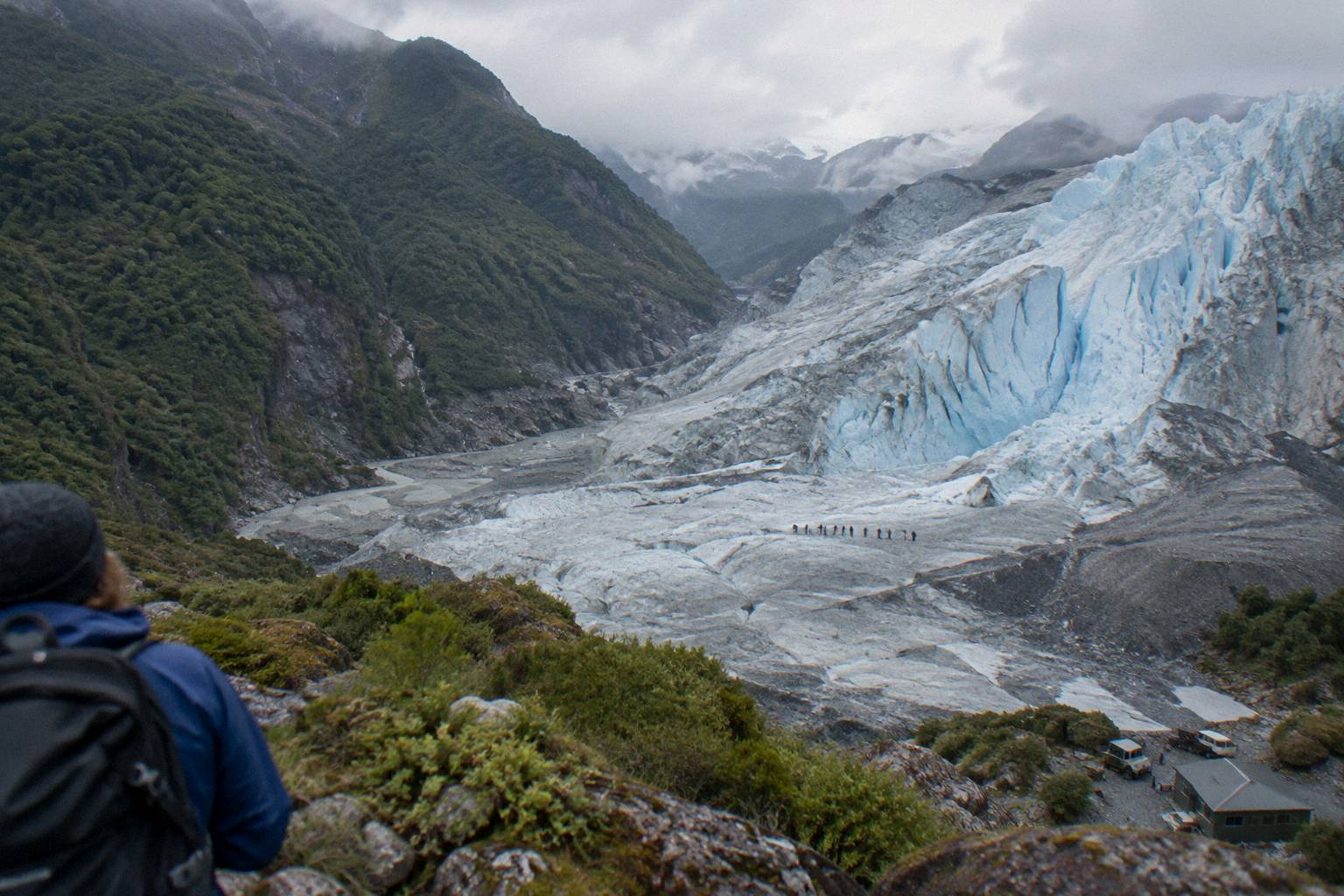
The same logic applies to reading old content. Plenty of travel articles, older guidebooks and forum threads describe walking to or near a terminal face at one or both glaciers. Those pieces describe a valley that no longer exists in that form. Treat anything written before the terminal changes of recent years with suspicion on this specific point, whatever its other merits.
It also means the barriers you meet are load-bearing parts of the safety system, not bureaucracy. The hazards the Department of Conservation lists for the Franz Josef valley, river surges, rock fall and flooding, are exactly the kind that arrive without much warning. Crossing a barrier to get a better photo of ice is the single clearest way to convert a good trip into a rescue. If you want more on this angle, see whether you can reach Franz Josef Glacier without a helicopter, which covers the same access question on the other glacier.
What Weather Cancellations Actually Look Like
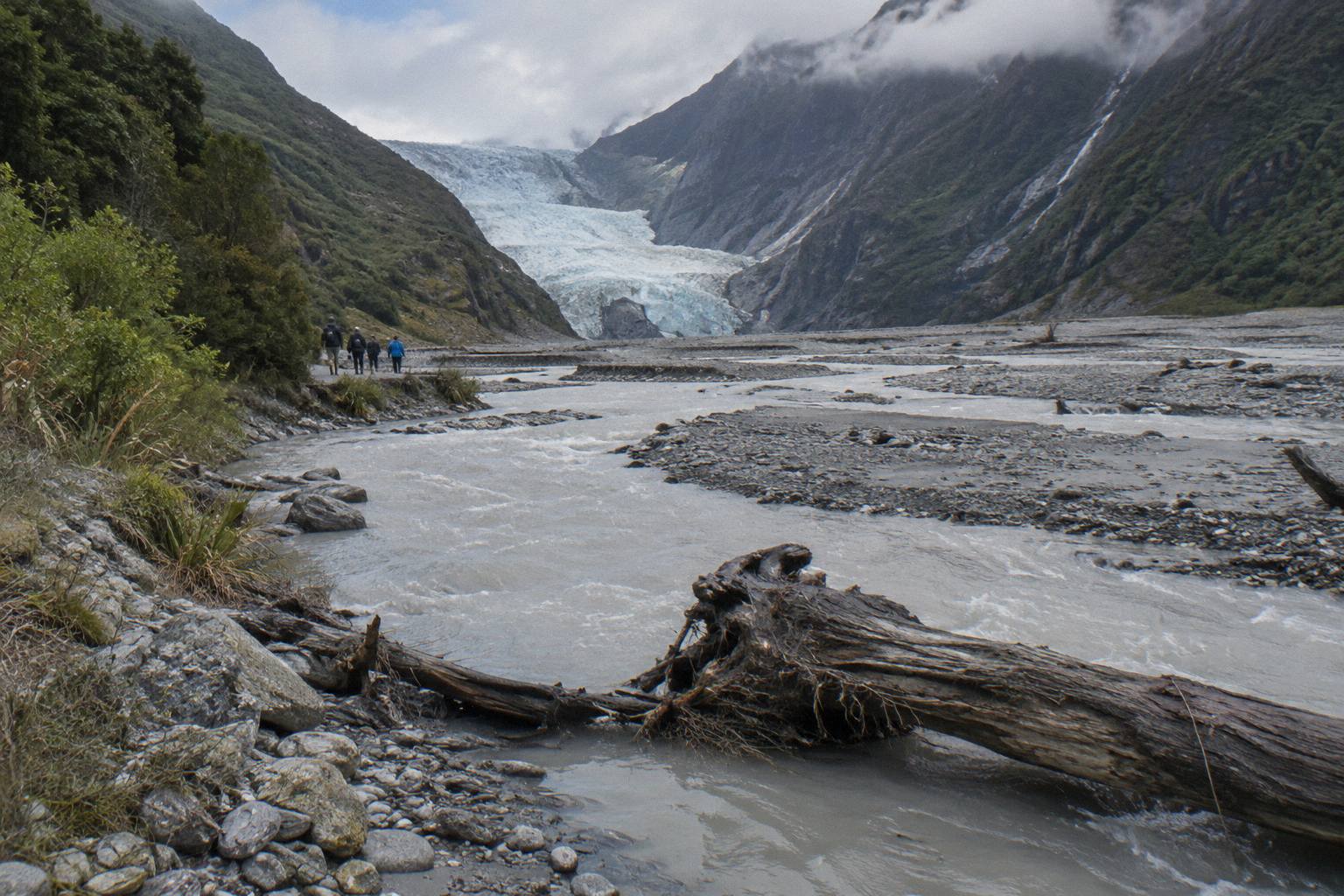
A weather cancellation is a same-day event, not a closure, and it ends in a refund or a reschedule rather than a lost booking. Fox Glacier Guiding makes the final decision 10 minutes before departure, and if it cancels you get a full refund or a move to another departure subject to availability. Neither operator publishes a weather-cancellation rate, so plan around the possibility rather than a percentage.
The mechanics are worth knowing before you book, because they shape how you should schedule a West Coast stay. Fox Glacier Guiding's cancellations are free with at least 24 hours notice, and 100 percent of the price is charged inside 24 hours. Franz Josef Glacier Guides runs the same shape of policy: changes and cancellations are free up to 24 hours before check-in, and the full amount is charged within that window. The weather itself is the operator's risk, not yours; your own late change inside 24 hours is your cost.
| Policy point | Fox Glacier Guiding | Franz Josef Glacier Guides |
|---|---|---|
| Final weather call | 10 minutes before departure | Usually just before departure |
| Operator cancels for weather | Full refund or move to another departure, subject to availability | Full refund or reschedule to the next available slot |
| Free cancellation by you | At least 24 hours notice | Up to 24 hours before check-in |
| Charge inside 24 hours | 100 percent | Full amount |
| Group minimum | 3 people; fewer, they try to place you with others | Generally 4 guests, confirmed 48 hours ahead |
One line in that table deserves emphasis for anyone booking through a third party rather than direct. Franz Josef Glacier Guides states that a refund may be subject to the terms of your booking agent if you booked through one. In plain terms, a refund or reschedule is the operator's offer, but the exact mechanics can run through whoever took your payment. Check the cancellation terms on your booking page before you rely on them, and keep the confirmation handy.
There is also an honest edge to the Fox Glacier Guiding material that few buyers ever read. The operator publishes a stranding disclosure: if helicopters cannot return, emergency tents, sleeping bags and food are stored on the glacier, and guests are told to bring essential medication. That is not a reason to avoid the trip, it is a reason to carry what you need for a few hours of delay, which is the actual worst case the operator plans for.
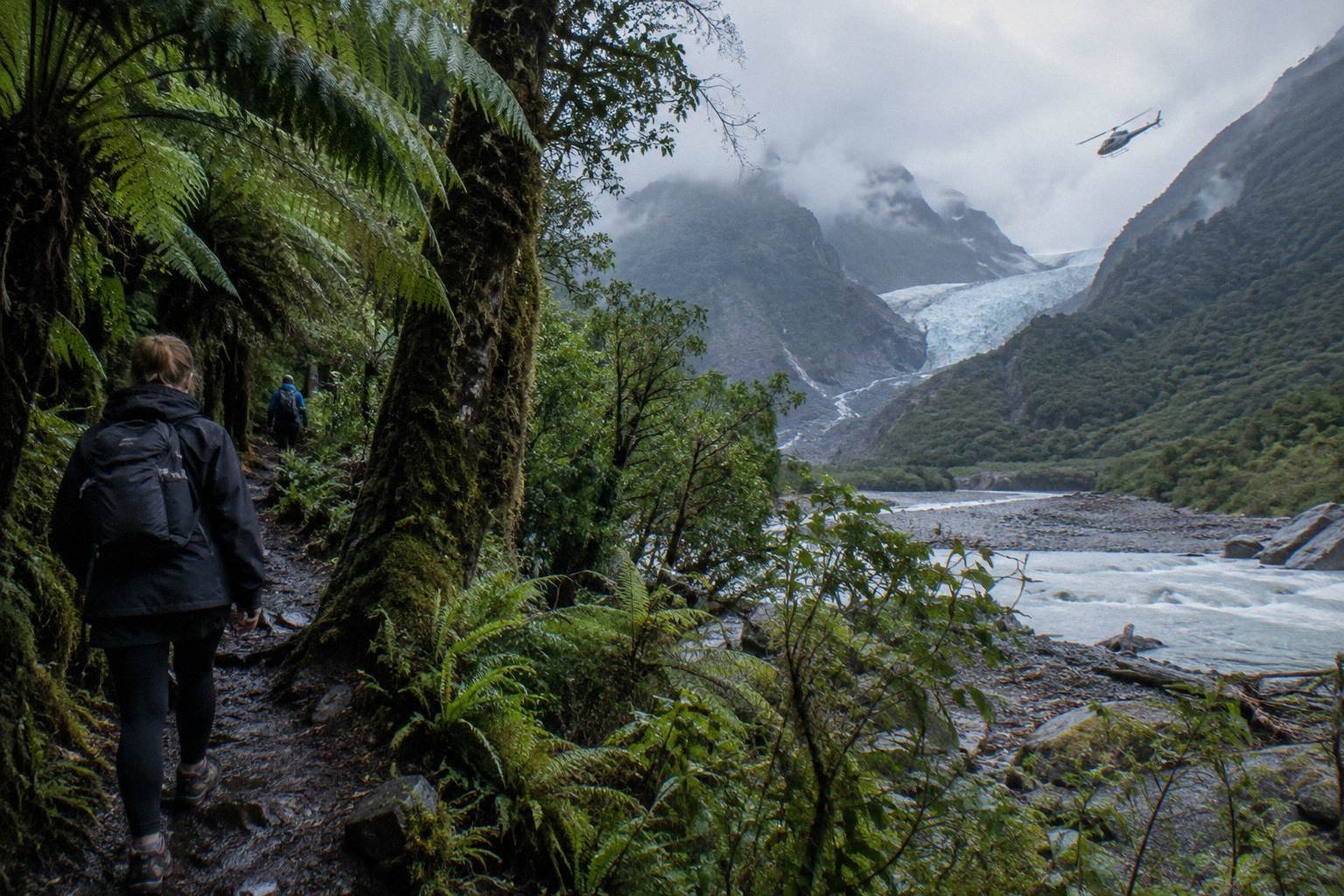
The best practical defence against weather is calendar slack. Franz Josef Glacier Guides advises spending at least two days in Franz Josef and booking the first day of your stay, so a cancelled departure leaves you a second shot. The region's annual rainfall is 6 to 8 metres, which is the climate fact behind that advice. Anyone with one night in town and one departure time has handed the weather a veto over the whole experience.
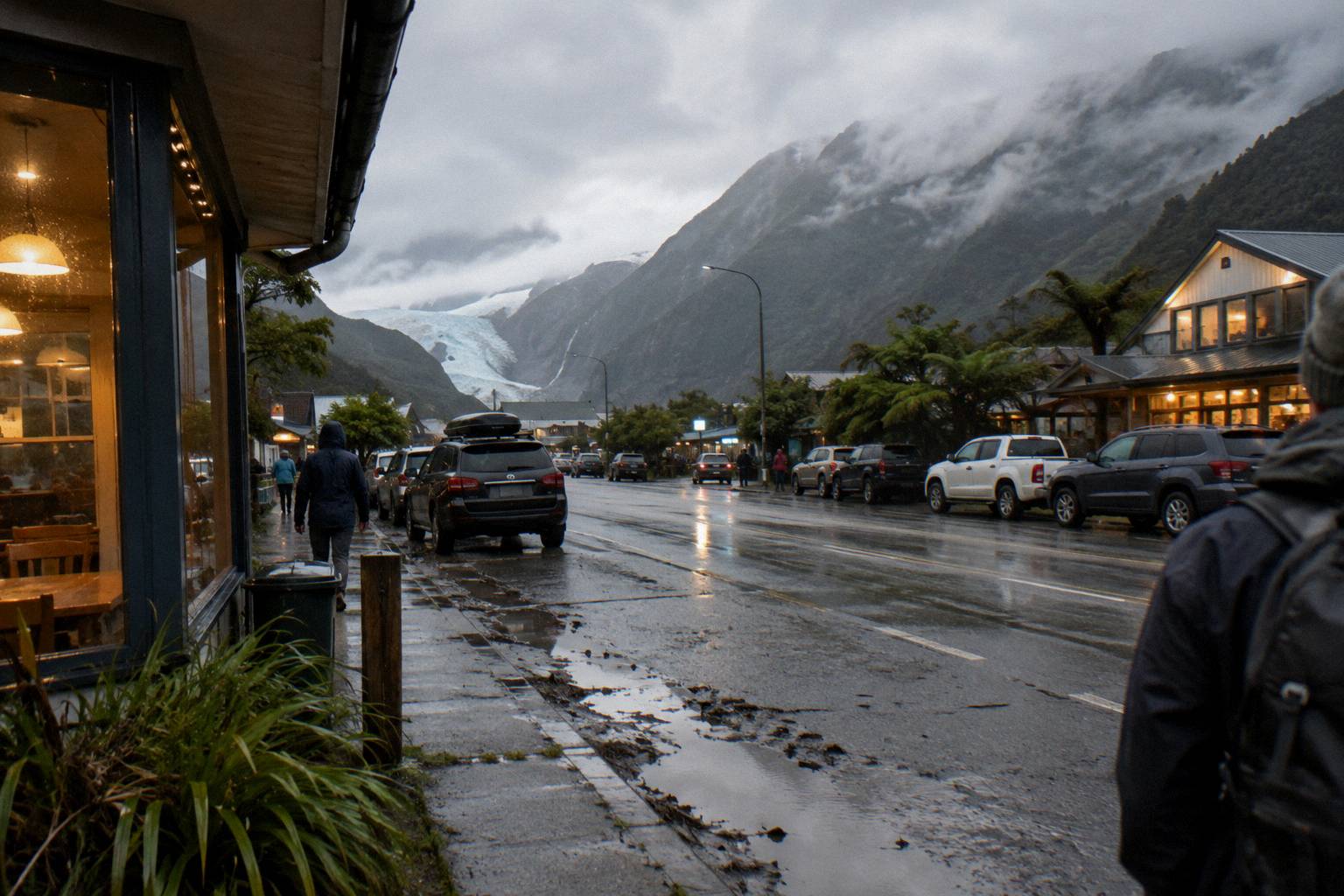
If a cancellation does land on you, the options are broader than sitting in a cafe. Where possible, Franz Josef Glacier Guides offers an alternative experience such as its Glacier Landing, a shorter helicopter product, and its team suggests other things to do in the area. For a fuller walkthrough of that day, see what your options are when a heli hike is cancelled.
The Guided Trips Onto Fox Glacier That Do Run
Three Fox Glacier Guiding products put guests on the ice, all by helicopter. The Flying Fox Heli Hike is the core trip: up to 4 hours in total with up to 3 hours of ice time, weather permitting, from the operator's price of NZD 849. The Extreme Fox All Day Heli Hike stretches that to up to 8 hours total. The Fox Glacier Express is the short version, from NZD 749 per person.
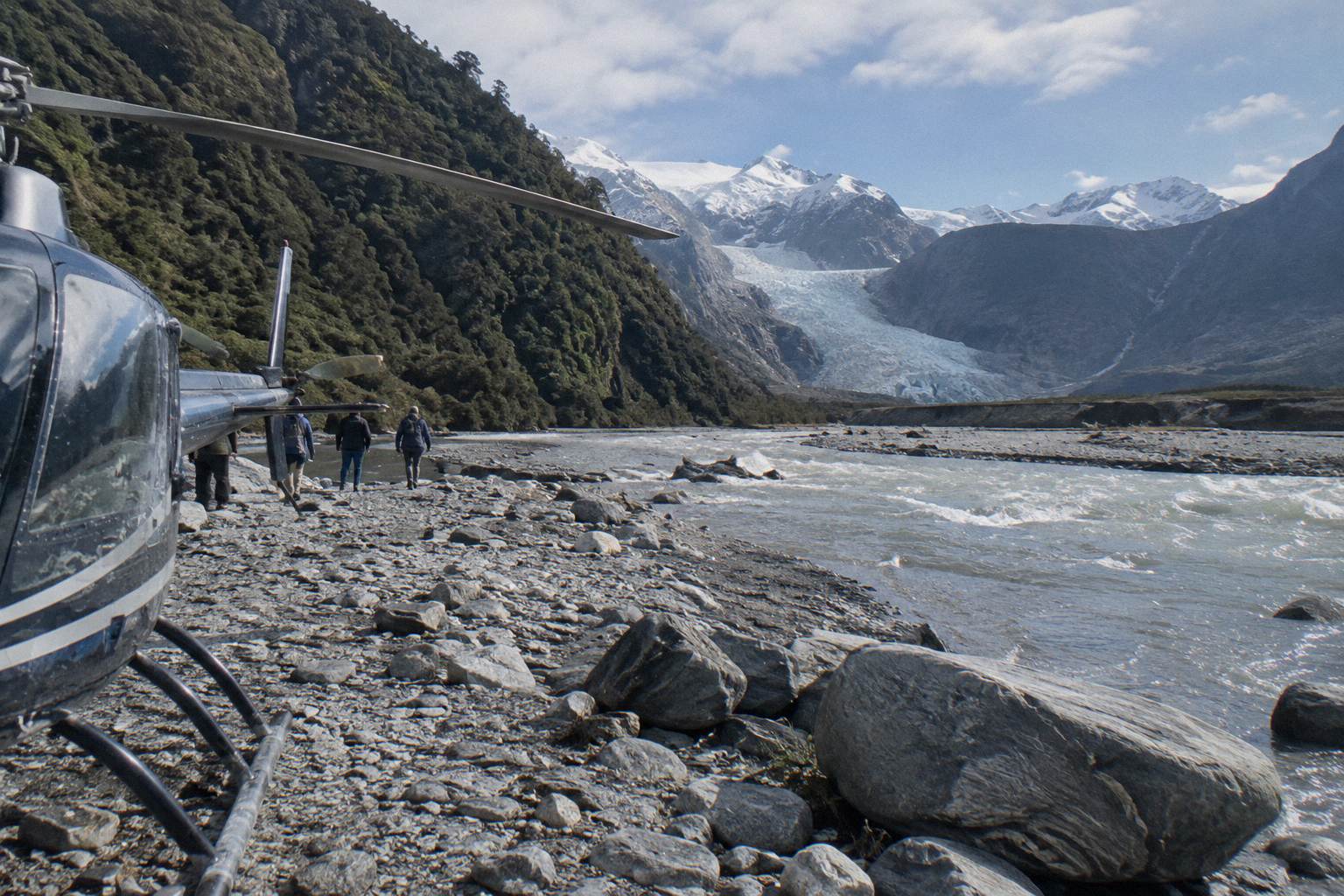
The Flying Fox Heli Hike is the one most visitors mean when they say they are doing the Fox Glacier heli hike. Departures run at 8:50am and 11:50am year round, with extra departures on demand, and check-in is 20 minutes before at the Fox Glacier Guiding building, 44 Main Road, Fox Glacier township, where there is a large car park to the north of the building. The minimum age is 9, with children aged 9 to 16 needing an adult along, and the operator calls the fitness requirement moderate. A family deal exists at NZD 3,050 for 2 adults and 2 children aged 9 to 16, which the operator says saves NZD 346. The product is rated 4.9 on one booking page, though no review count is stated. You can read the full details on the Fox Glacier Heli Hike tour page, or check availability if you have dates in mind.
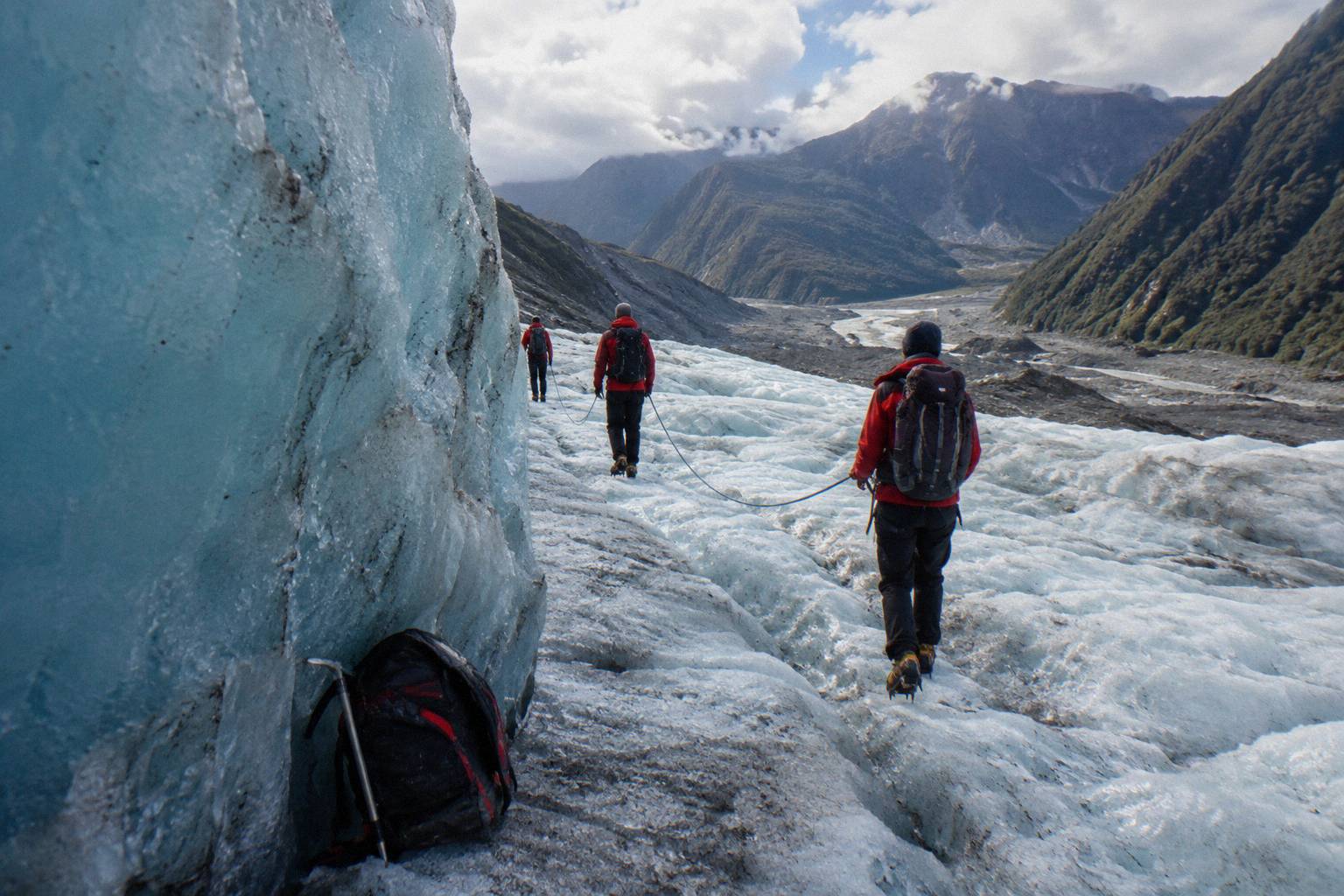
The gear situation on Flying Fox is generous. Fox Glacier Guiding supplies boots, socks, crampons, a waterproof raincoat and over-trousers, hat and gloves, and a small backpack with a maximum of 3 kg, with leather boots on the Flying Fox specifically. About all a guest genuinely needs to think about is clothing layers and whatever personal items fit that 3 kg pack. The operator's FAQ page carries the current versions of these details.
The two other trips serve different travellers. The Extreme Fox All Day Heli Hike, from NZD 1,049 per adult, is for people who want a full mountain day: up to 7 hours of ice time, ropes, short ice pitches and abseil where the trip calls for it, an 8:00am start, a minimum age of 13, good fitness and good English required for safety instruction. The Fox Glacier Express, from NZD 749 per person, runs the other direction: up to 2 hours in total, up to 1 hour on the ice, low physical demand, minimum age 9. Note that the Express and the Extreme Fox are sold by the operator, and this site carries a booking card for the Flying Fox only.
| Trip | Ice time | Total time | Minimum age | Operator price |
|---|---|---|---|---|
| Flying Fox Heli Hike | Up to 3 hours | Up to 4 hours | 9 | NZD 849 adult or child |
| Extreme Fox All Day Heli Hike | Up to 7 hours | Up to 8 hours | 13 | NZD 1,049 per adult |
| Fox Glacier Express | Up to 1 hour | Up to 2 hours | 9 | From NZD 749 per person |
Every figure in that table belongs to Fox Glacier Guiding and its weight limit of 116 kg on all helicopter trips. Do not carry these numbers over to the Franz Josef products, which have their own limits, ages and prices set by a different company. A useful rule for the whole West Coast: the glacier names look like a pair, but the operators, limits and policies are entirely separate. The Franz Josef Glacier Heli Hike, for instance, is run by Franz Josef Glacier Guides with a minimum age of 10 and a weight range of 35 to 115 kg, from NZD 899.
The Franz Josef operator also runs bigger days if the Flying Fox or its sibling products leave you wanting more. The Franz Josef Glacier Adventure runs up to 8 hours in total with up to 5.5 hours on the ice, a maximum of four guests per booking, lunch and drinks included, from NZD 1,549. It exists because some travellers want the longest possible ice time, and the two operators each answer that demand in their own way.
What You Can Still Walk Near Fox Glacier Without A Helicopter
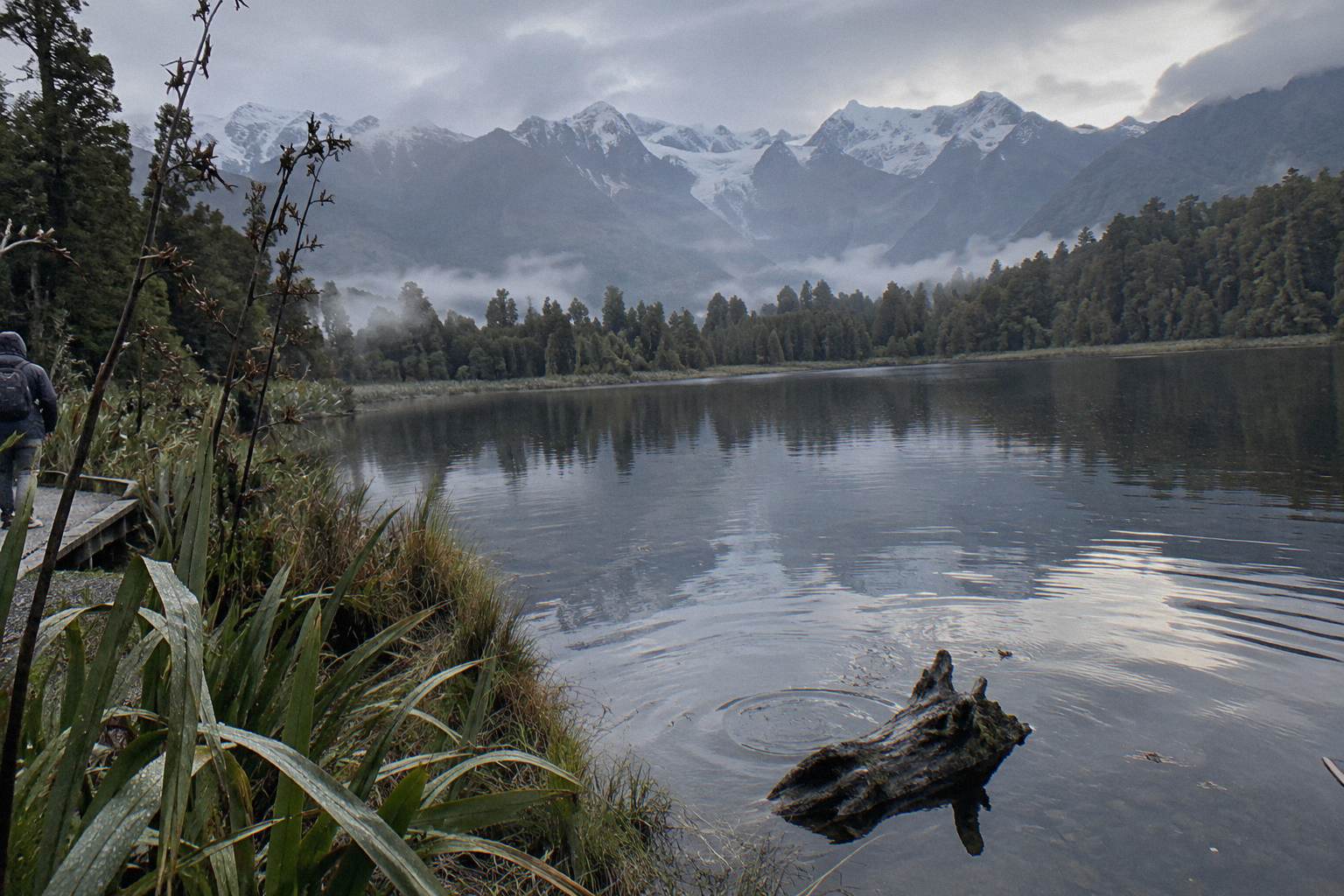
The valley floor is not off limits, only the ice is, and the Fox Glacier area carries several genuine Department of Conservation walks. Lake Matheson takes about 1 hour 30 minutes and sits at the easiest end of the scale. The Te Weheka Walkway and Cycleway takes 40 minutes to a viewpoint of what DOC calls the largest active landslide in New Zealand. The Lake Gault Track runs 3 hours return.
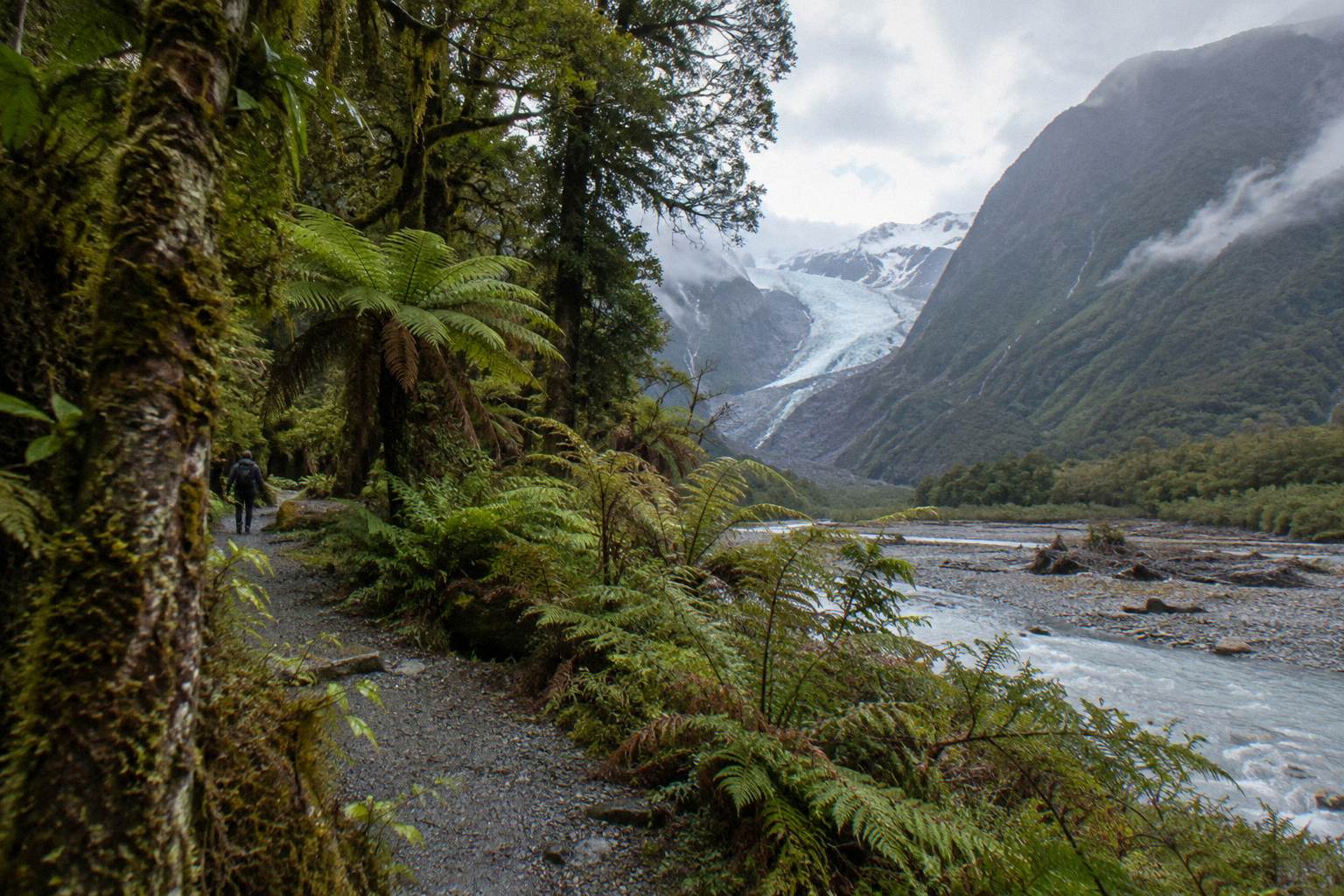
These walks answer the need that the closed foot access used to serve: seeing the landscape with your own legs under you. Lake Matheson is the gentlest and the most famous of them, graded easiest to easy by the department. The Te Weheka route is the quick one with an unusual payoff, a documented landslide viewpoint rather than a glacier view, which is a reminder of how geologically lively this valley system is. Lake Gault is the half-day commitment.
If your heart is set on a view of Franz Josef Glacier specifically without a flight, the Department of Conservation points to the Alex Knob Track, 8 hours and advanced, which DOC says has the best views of Franz Josef Glacier without taking a helicopter flight. Canavans Knob is a shorter climb, 1 hour to 1 hour 40 minutes. These are on the Franz Josef side of the divide, so they suit a two-township itinerary rather than a single base.
| Walk | Time | Grade or note |
|---|---|---|
| Lake Matheson walk | 1 hour 30 minutes | Easiest to easy |
| Te Weheka Walkway and Cycleway | 40 minutes to the viewpoint | View of the largest active landslide in NZ, DOC wording |
| Lake Gault Track | 3 hours return | Half-day track |
| Alex Knob Track | 8 hours | Advanced; best Franz Josef Glacier views without a flight, DOC says |
| Canavans Knob | 1 hour to 1 hour 40 minutes | Short climb |
Two practical notes from the Department of Conservation's material. Drones are banned, so leave them behind on any of these tracks. And track status changes: at the last read of the DOC alerts, the Tatare Tunnels Walk was closed due to a slip, the Almer Hut radio was not working, and the Copland Shelter was closed, while no Franz Josef valley walk alert was shown. Check the DOC Fox Glacier area page for current alerts before you set out, and ask at a visitor centre if anything looks unclear on the ground.
The honest framing for a visitor is this: the walking around here did not become bad when the glacier walks ended. It became helicopter-plus-walking. The valley walks that remain are real, graded, maintained tracks, and the glacier experience that remains is a guided flight onto the ice. For a comparison of those two ideas side by side, read how a heli hike compares with a valley walk.
Common Mistakes When Planning A Fox Glacier Trip
The most common mistake is treating a weather cancellation or a closed valley track as a closed glacier, and building the trip around a false problem. The second is booking a single night in town with a single departure time, which hands the weather full control of the outcome. The third is assuming the two glaciers share one operator, one weight limit and one policy, when in fact they are separate companies with separate rules.
Take each in turn. Someone who reads that a river has cut off valley access, or sees a barrier on a walk, may cancel a whole West Coast leg believing there is nothing left to do. The fix is knowing the product landscape before you travel: the Flying Fox Heli Hike runs year round, the Franz Josef equivalents run daily through summer, and the valley tracks that remain are worth walking in their own right. The closure that exists is narrow, specific and decades in the making.
The single-night booking is the expensive one. With free cancellation up to 24 hours out and a full charge inside that window, a traveller who books one departure on their only morning has no fallback if the operator makes the weather call 10 minutes before departure. Two nights, first-day booking, second day as the spare: that is the structure the operators themselves recommend, and it costs one extra night of accommodation to roughly double the chance of getting onto the ice.
Crossing operator facts between glaciers is a subtler trap. A family whose 12-year-old is old enough at Fox, minimum age 9 on the Flying Fox, may assume the same at Franz Josef, where the minimum age is 10. A guest who weighs 116 kg is within the Fox limit but over the Franz Josef heli hike range of 35 to 115 kg. Prices, ages, weights and group minimums all belong to the operator that states them, so check each trip on its own facts.
The final mistake is expecting the ice to be walkable in ordinary shoes from a car park, or believing an old article that says it was. Nobody walks onto either glacier from the valley; the Department of Conservation is unambiguous, and every legitimate product that reaches the ice starts with a helicopter. Planning from that reality, rather than from a memory of how the valley used to be, is the difference between a trip that works and a morning spent arguing with a barrier.
For the depth on the neighbouring glacier's version of this story, the Franz Josef Glacier valley walk explained covers the track, the viewing barrier and the car park fees, NZD 2.50 per half hour or NZD 20 a day, free under 10 minutes. And if your real question is which township to sleep in for the weather odds and the driving, the operators' stated travel facts, about 5 hours by road from Christchurch or Queenstown and 2.5 hours from Greymouth to Franz Josef, are laid out in the guide to choosing Franz Josef or Fox Glacier.
If the question in your head is really whether it is still worth coming, the honest answer is yes, with the helicopter budget included. The site you are reading, Franz Josef Heli Hikes, exists precisely because the flight onto the ice became the way this landscape is visited. Nothing about the closed foot access changes the glacier itself, the guiding, or the two operators that have run it for a combined lifetime.
Between the two glaciers, these are the three trips worth a first look.
Common Questions About Fox Glacier Closures
Why Is Fox Glacier Closed?
Fox Glacier is not closed. Guided heli hikes onto the ice run year round. What ended is walking onto the glacier from the valley floor on foot: the Department of Conservation says helicopters are the only safe way onto the ice for guided walks.
Can I Walk Onto Fox Glacier Without A Helicopter?
No. Nobody walks onto either glacier from the valley. Fox Glacier Guiding's trips are all heli in and heli out, and the valley-floor walks in the area are viewpoint walks that never reach the ice.
Is A Heli Hike Ever Cancelled, And What Happens Then?
Yes, trips are weather-dependent. Fox Glacier Guiding makes the final call 10 minutes before departure and offers a full refund or a move to another departure subject to availability. Book your first day in town and keep a spare.
What Is The Cheapest Way Onto The Ice At Fox Glacier?
Among the operator's stated products, the Fox Glacier Express starts from NZD 749 per person for up to 1 hour on the ice, and the Flying Fox Heli Hike is NZD 849 with up to 3 hours of ice time. Both are sold by Fox Glacier Guiding.
Are The Valley Walks Near Fox Glacier Also Closed?
The Department of Conservation lists no closure for the Fox Glacier area walks. Lake Matheson, the Te Weheka Walkway and the Lake Gault Track are listed as open; check the Department of Conservation alerts page before you go, since status can change.
Do Fox Glacier And Franz Josef Glacier Have The Same Rules?
No. They are separate operators with separate ages, weights, prices and policies. Fox Glacier Guiding sets a 116 kg weight limit and a minimum age of 9 on its core trips; Franz Josef Glacier Guides sets a minimum age of 10 and a weight range of 35 to 115 kg on its heli hike.