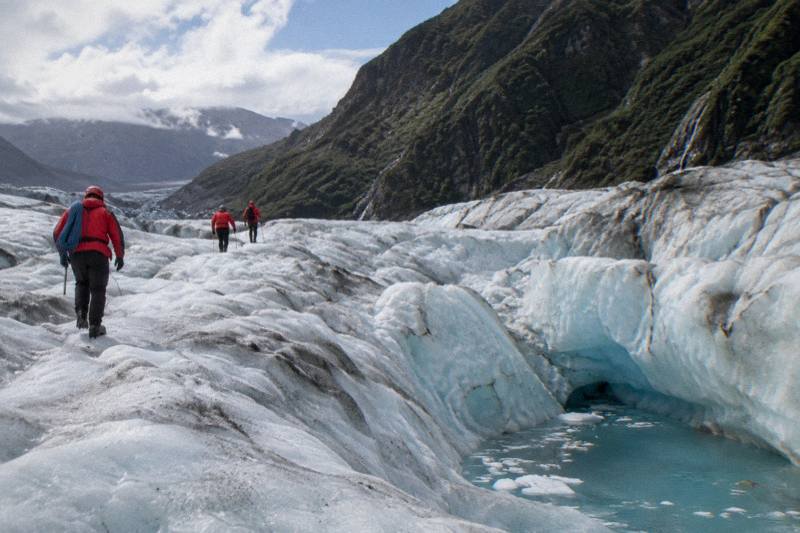
What To Wear On A Glacier Heli Hike
The operators supply nearly all the technical gear, so the packing question comes down to base layers, long pants, sunglasses and what you must leave behind. Here is what each guiding company actually states.
Short answer
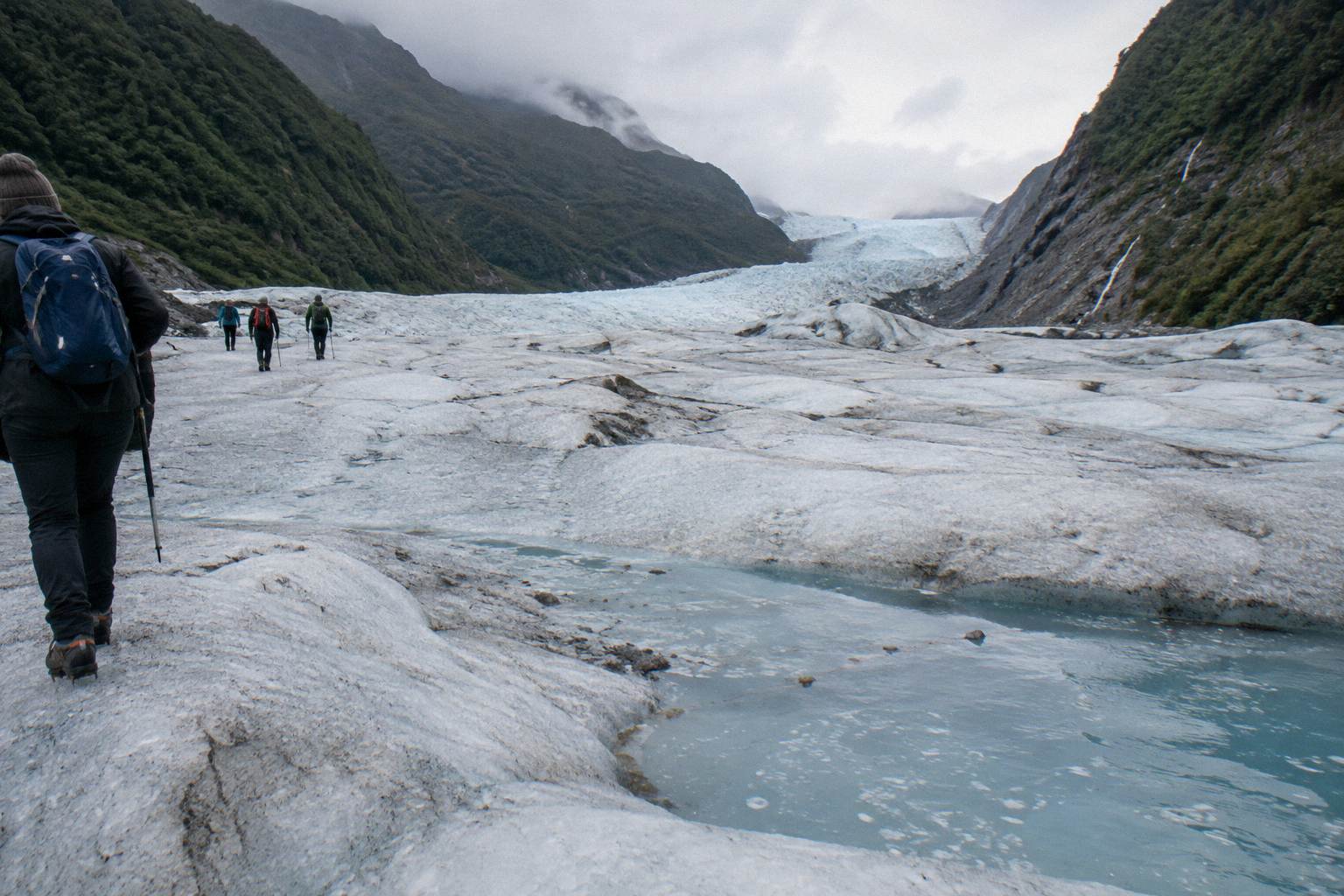
Franz Josef Glacier Guides supplies crampons, harness, helmet, waterproofs, boots, socks, poles, hat and gloves on its heli hike from NZD 899. You bring merino or polypropylene base layers, long pants (not jeans), sunglasses, sunblock, a camera and a small water bottle. Fox Glacier Guiding supplies similar kit plus a small backpack with a 3 kg limit.
Most of the answer to "what do I wear" is already decided for you. Both guiding companies on the West Coast, Franz Josef Glacier Guides and Fox Glacier Guiding, hand you the technical kit at check-in: boots, crampons, helmet, waterproofs, hat and gloves. The packing you actually control is short, and the rules around it are specific. Jeans are named as unsuitable, sunglasses are described by the Franz Josef operator as essential, and a list of everyday items, from power banks to drones, is explicitly left behind.
This page sets out both operators' own lists, exactly as they state them, with nothing added about temperatures, layer counts or brands, because neither operator publishes advice of that kind. The lists differ slightly between the two companies, and they differ again for the shortest flight-and-landing products, so the trip you have booked matters as much as the township you start from.
What The Operator Supplies On The Ice
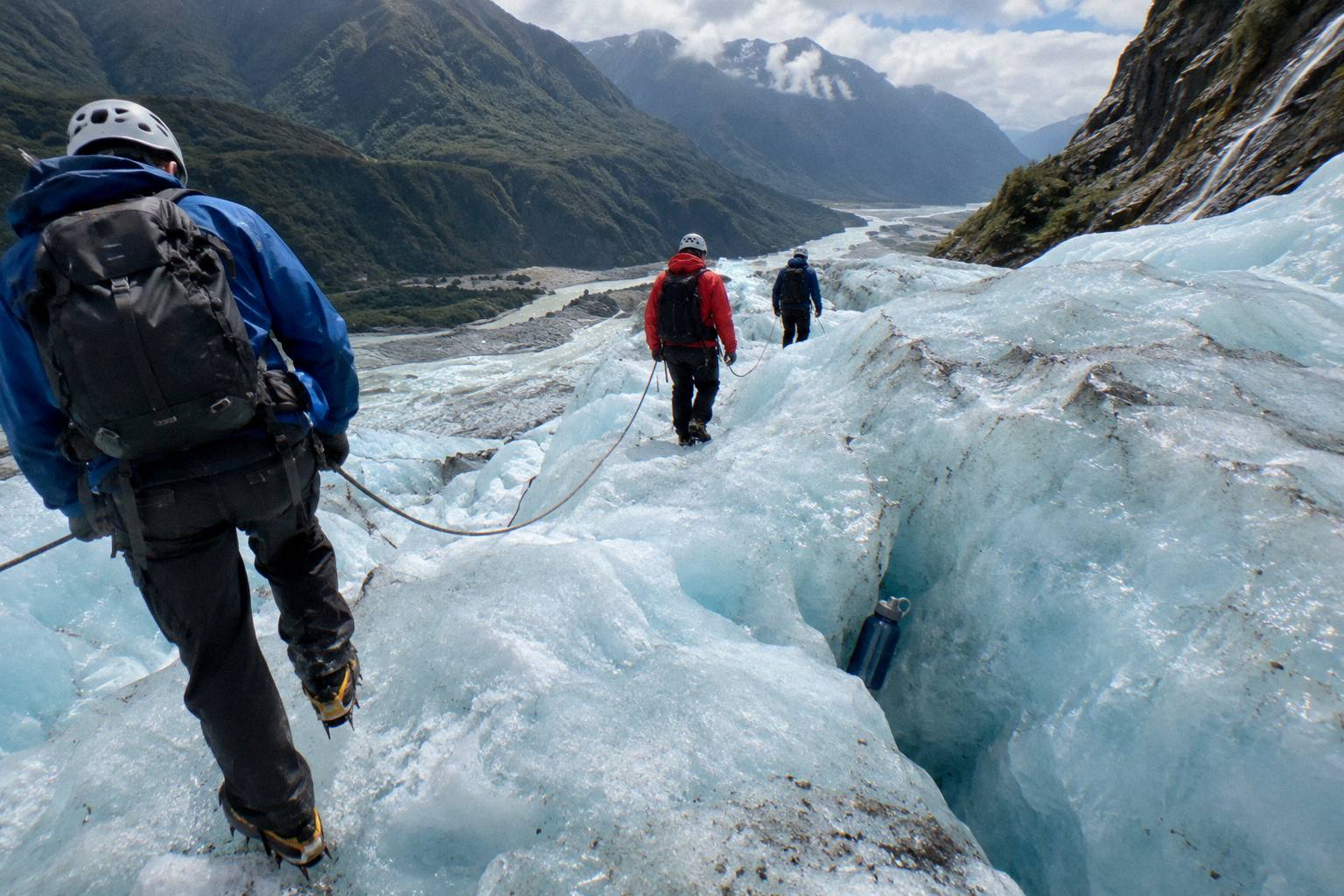
On the Franz Josef Glacier Heli Hike, Franz Josef Glacier Guides supplies crampons, harness, helmet, a waterproof jacket and over-trousers, weatherproof walking boots and socks, trekking poles, a small waist pack, and a warm hat and gloves. Fox Glacier Guiding supplies boots, socks, crampons, a waterproof raincoat and over-trousers, hat and gloves on all its trips, plus a small backpack limited to 3 kg. No technical gear needs to be owned or hired for either trip.
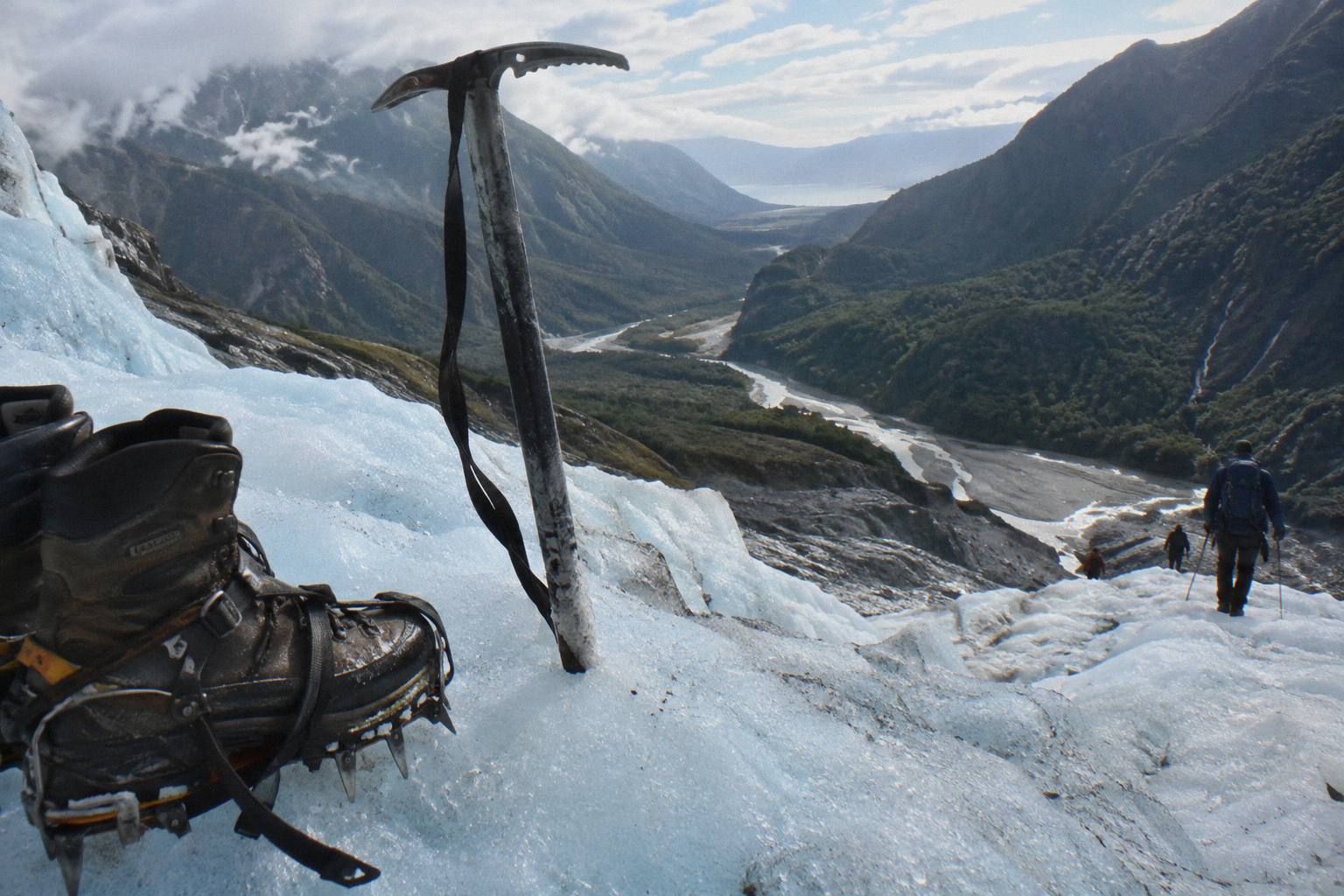
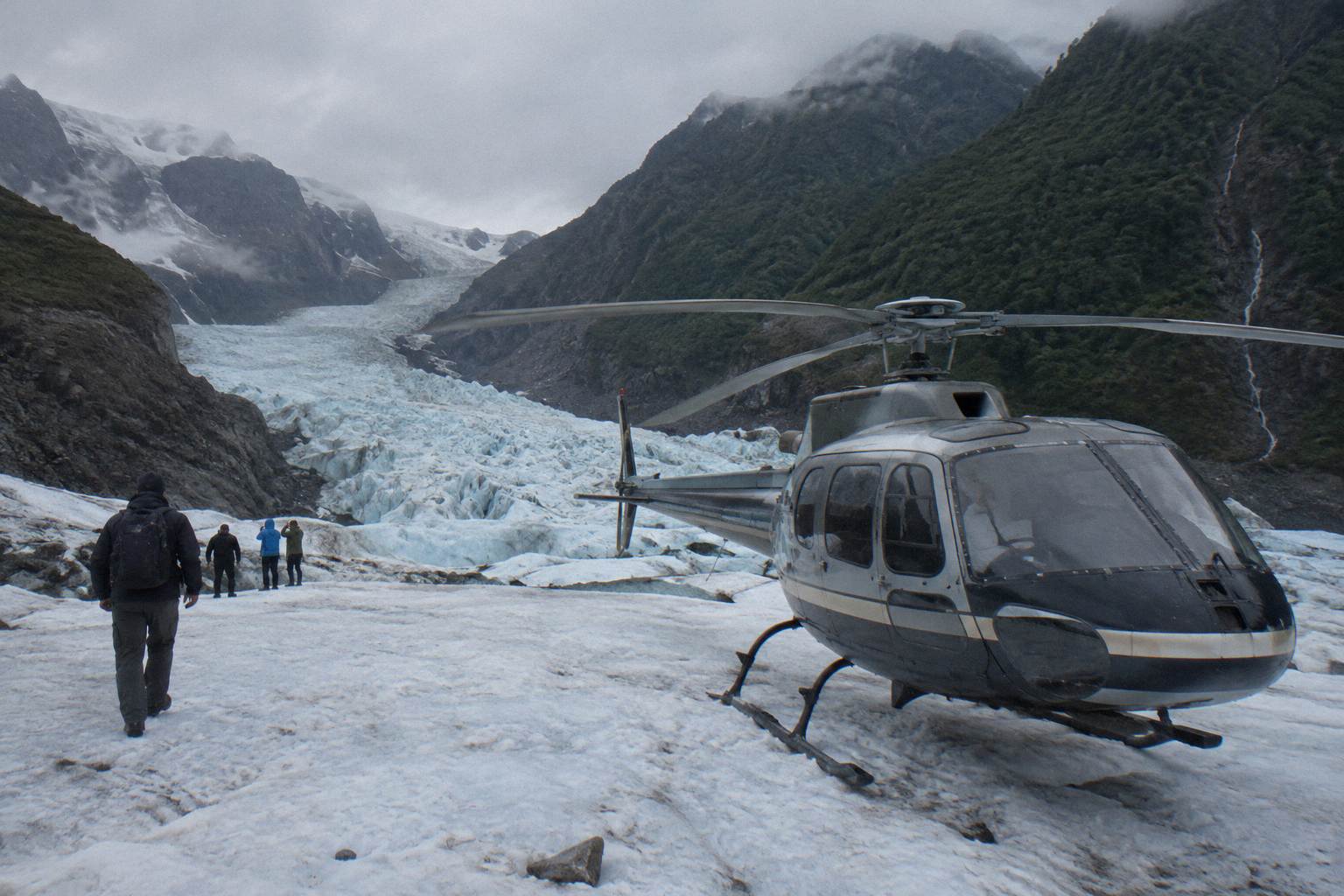
The Franz Josef list comes from the operator's own heli hike page, which also notes the trip is operated by Inflite with guiding services provided by Franz Josef Glacier Guides, and that the helicopter lands on the main ice fall for up to 2.5 hours on the ice, up to 4 hours from check-in to the end. Everything strapped, buckled or waterproofed is handed over at check-in, 15 minutes before departure at Glacier Base, 63 Cron Street, Franz Josef.
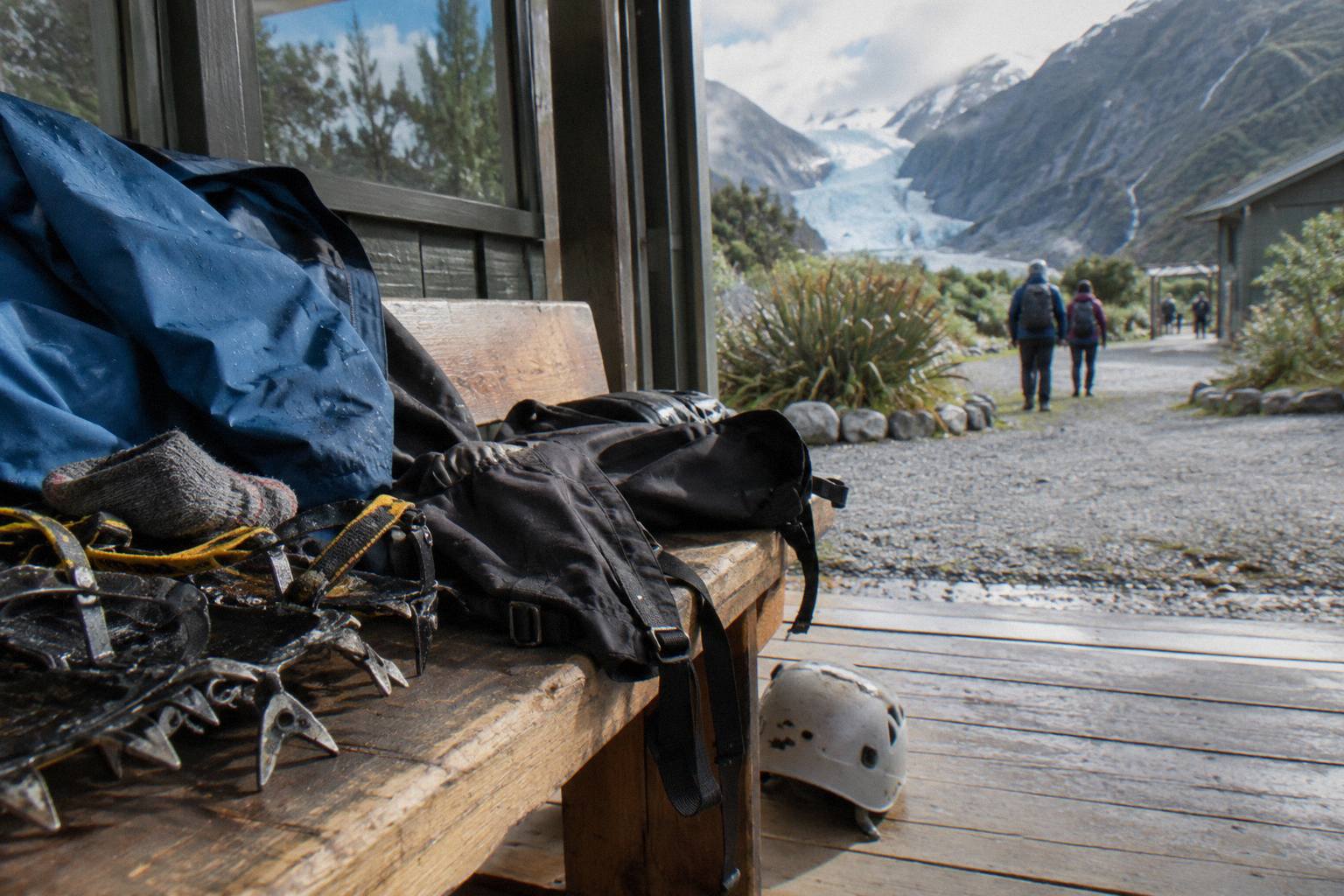
Fox Glacier Guiding's kit list applies to all its trips, with one product-specific note: leather boots are supplied on the Flying Fox Heli Hike. Check-in there is 20 minutes before departure at 44 Main Road, Fox Glacier township. The full comparison is easiest to read side by side.
| Item | Franz Josef Glacier Guides (Heli Hike) | Fox Glacier Guiding (all trips) |
|---|---|---|
| Boots | Weatherproof walking boots and socks supplied | Boots and socks supplied; leather boots on Flying Fox |
| Crampons | Supplied | Supplied |
| Waterproofs | Jacket and over-trousers | Raincoat and over-trousers |
| Hat and gloves | Warm hat and gloves | Hat and gloves |
| Harness | Supplied | Not stated |
| Helmet | Supplied | Not stated |
| Poles | Trekking poles supplied | Not stated |
| Bag | Small waist pack | Small backpack, maximum 3 kg |
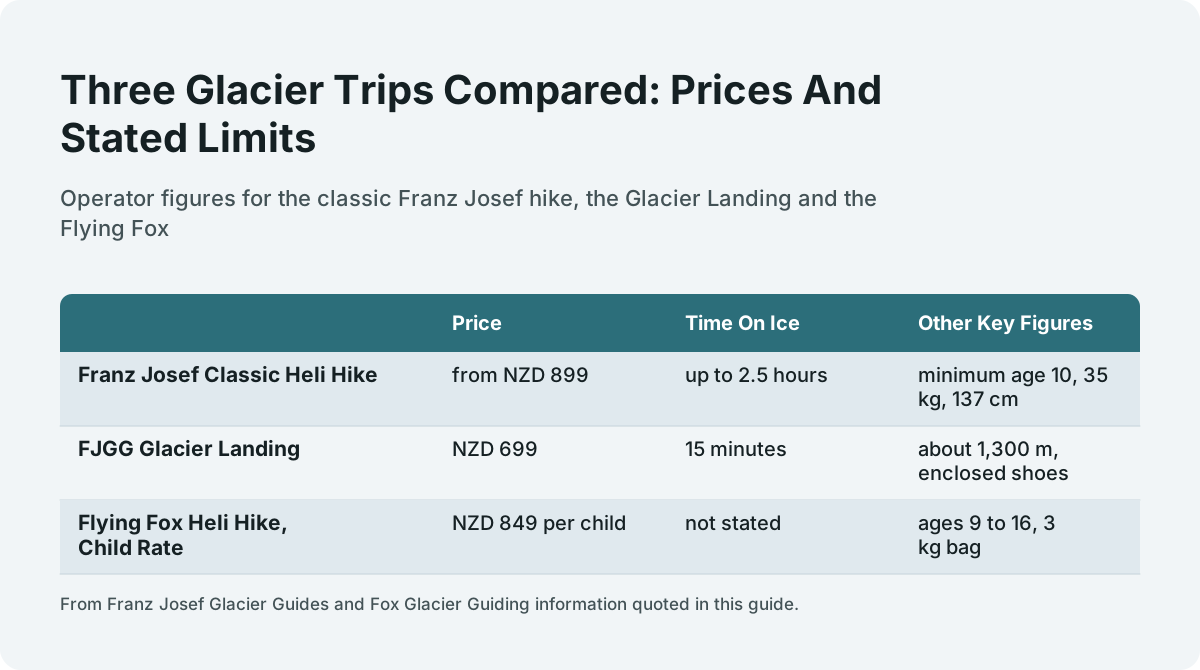
One trip needs even less. The FJGG Glacier Landing, NZD 699, spends 15 minutes on the glacier at about 1,300 m, and the operator states no special gear is needed, just enclosed shoes. If you are on a tight packing budget and considering a landing rather than a hike, the wardrobe problem largely disappears.
What You Bring Yourself
Bring merino or polypropylene base layers, long pants (jeans are explicitly named as not suitable), sunglasses, which the Franz Josef operator calls essential, sunblock, a camera and a small water bottle. That is the entire bring list for the FJGG heli hike. Fox Glacier Guiding does not publish a rival bring list beyond its supplied gear and the 3 kg backpack you carry it in, so the Franz Josef list is the practical reference for both.
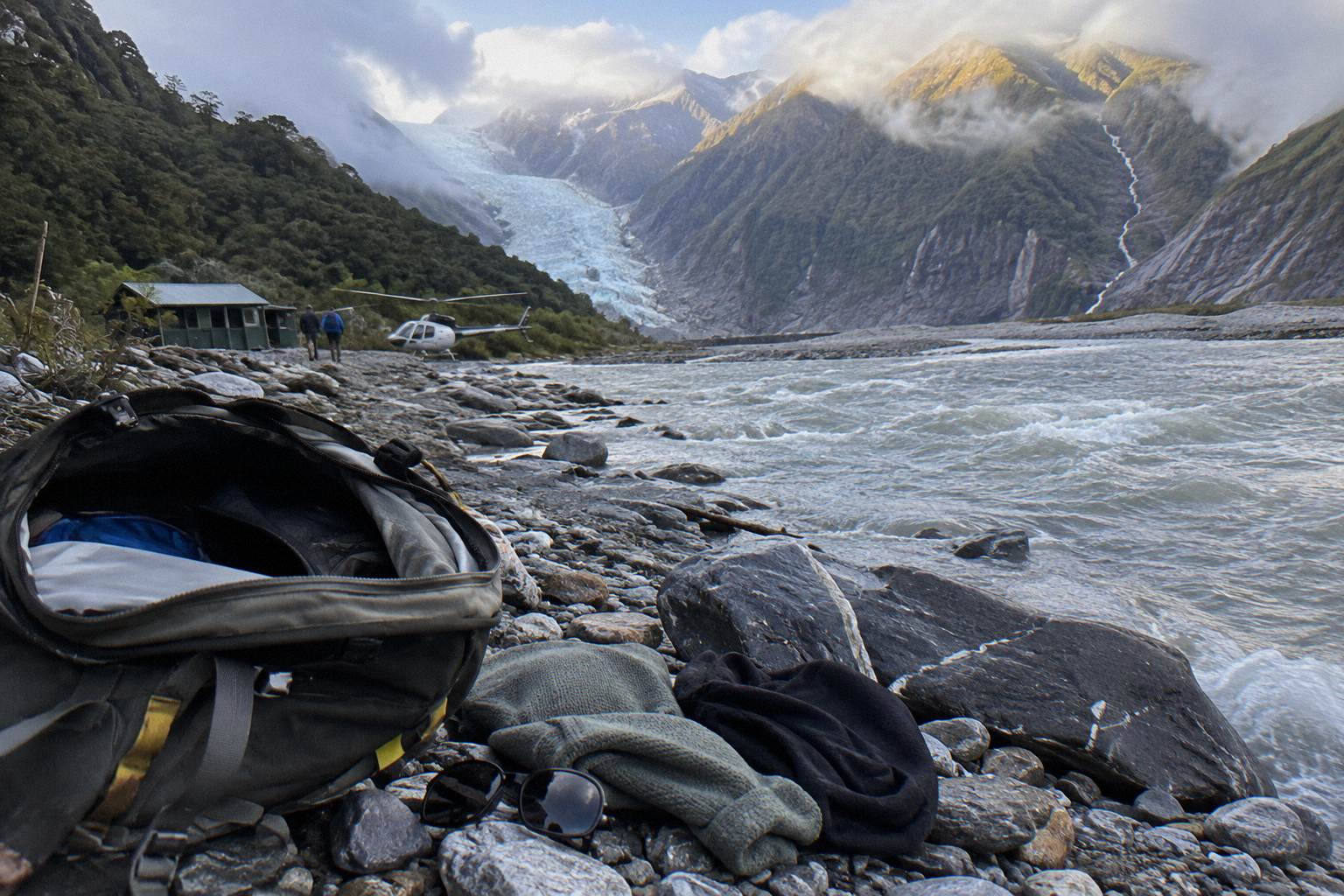
The base layer guidance is the one place the operator names materials. Merino or polypropylene, not cotton, and long pants rather than shorts or jeans. The jeans note is worth taking seriously: denim stays wet, and the region records 6 to 8 m of annual rainfall, so anything that holds water is a liability on a day that turns.
Sunglasses earn their "essential" label because glare off the ice is a real hazard on a white surface at altitude, and sunblock belongs in the same category of protection. A camera and a small water bottle round out the list. There is no stated case-size rule on the Franz Josef side beyond the small waist pack the operator hands you, and no stated volume limit beyond the 3 kg backpack on the Fox side.
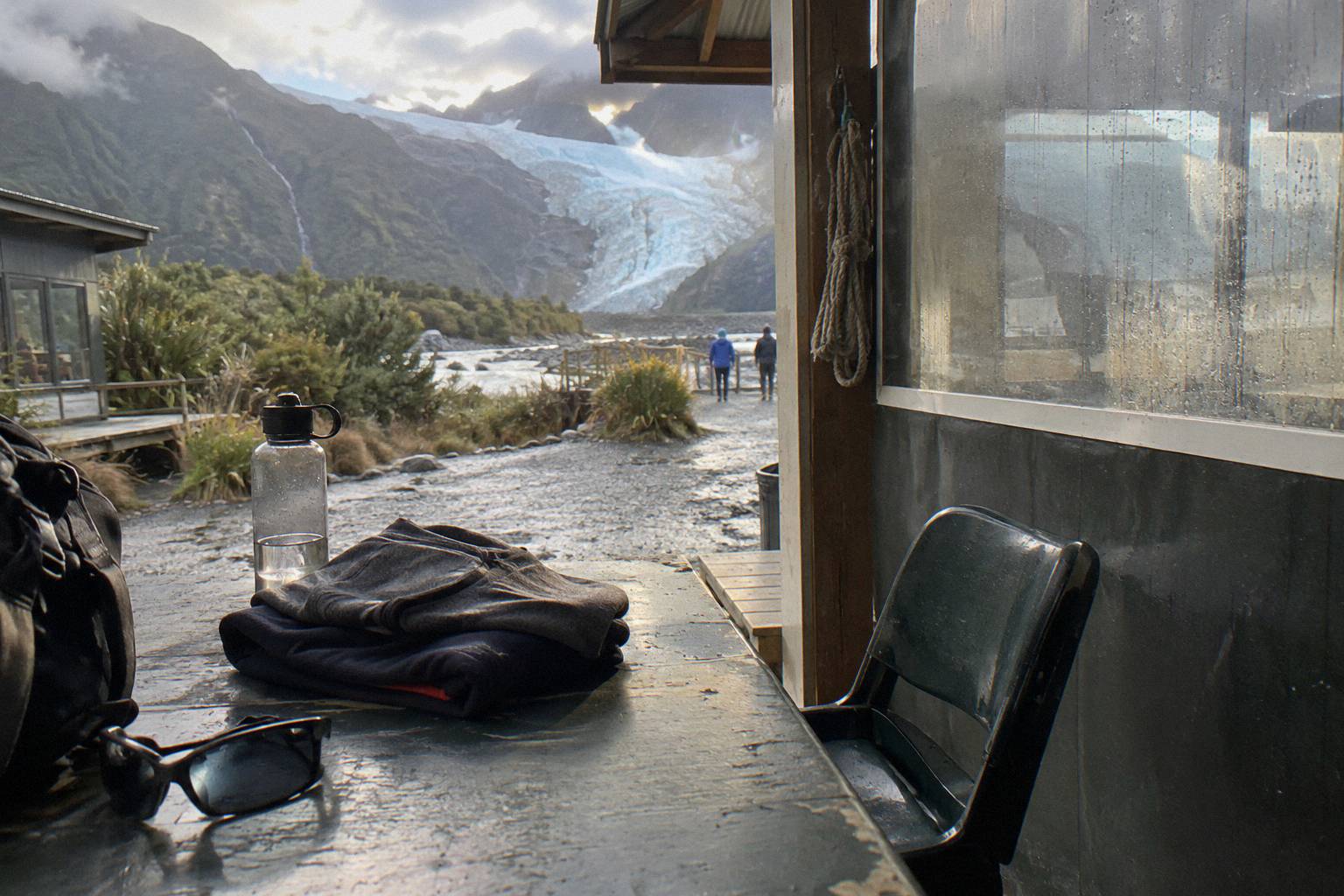
If you are still choosing which trip to pack for, the three options below span the range: the classic Franz Josef hike, the Fox equivalent with a different township and a 3 kg bag limit, and the small-group extended day where lunch and drinks are included.
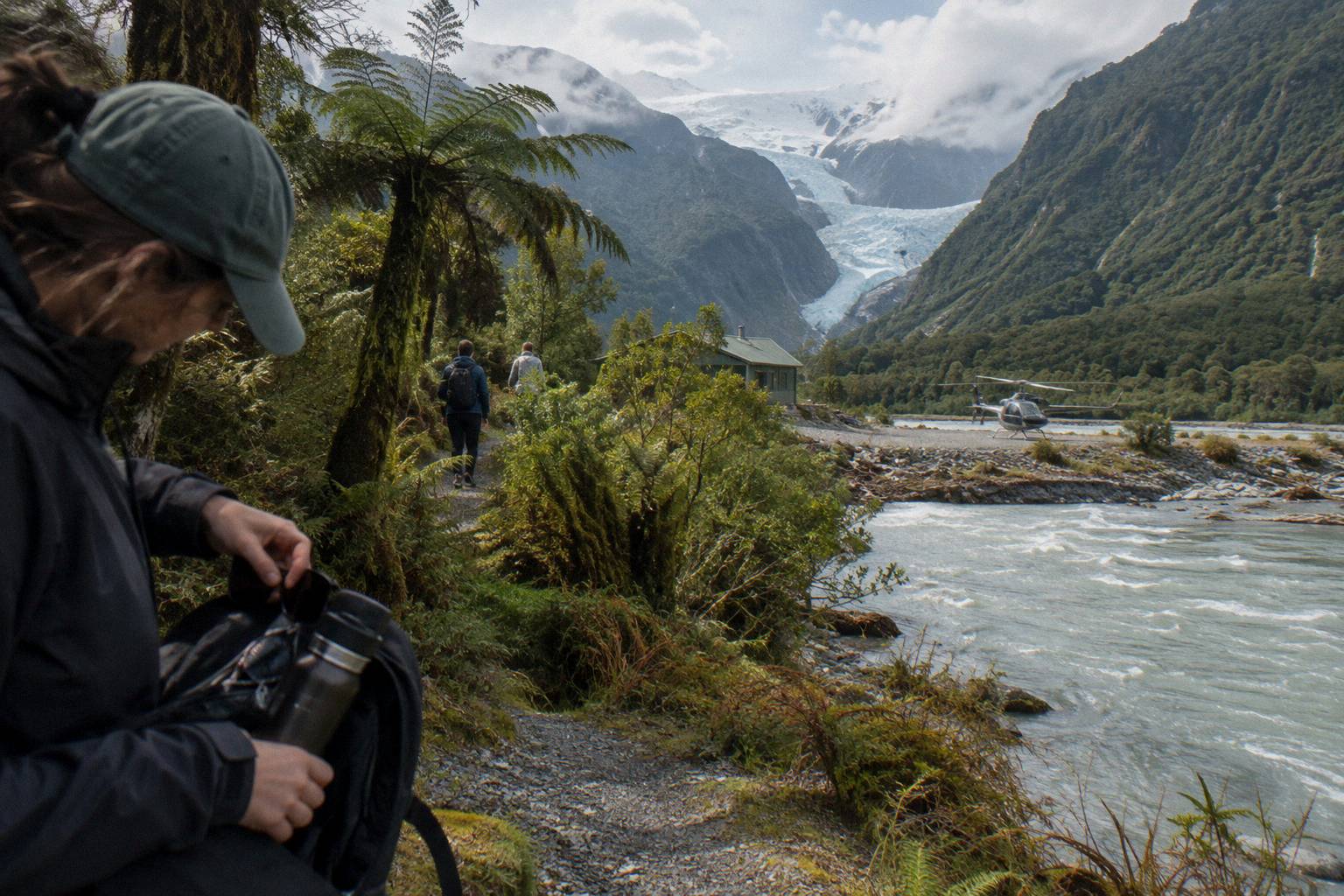
The classic glacier heli hike is rated 4.6 to 4.7, priced by the operator from NZD 899, and it is the trip whose gear and bring lists this page follows most closely. Check availability once your layers are settled, because departure times are limited and weather-dependent, as covered in the heli hike weather guide.
A worked example shows how short the bring list really is. A traveller packing for the classic Franz Josef hike puts merino base layers, long pants, sunglasses, sunblock, a camera and a small water bottle into a day bag, wears sturdy everyday clothing for check-in, and arrives 15 minutes early at Glacier Base to be fitted with boots, crampons, harness, helmet and waterproofs. Everything else, wallet, car keys, passport, stays locked in the vehicle in the free parking either side of the building. The total personal packing effort is roughly the same as a half-day valley walk, even though the trip itself runs up to 4 hours from check-in with up to 2.5 hours on the ice.
What To Leave Behind
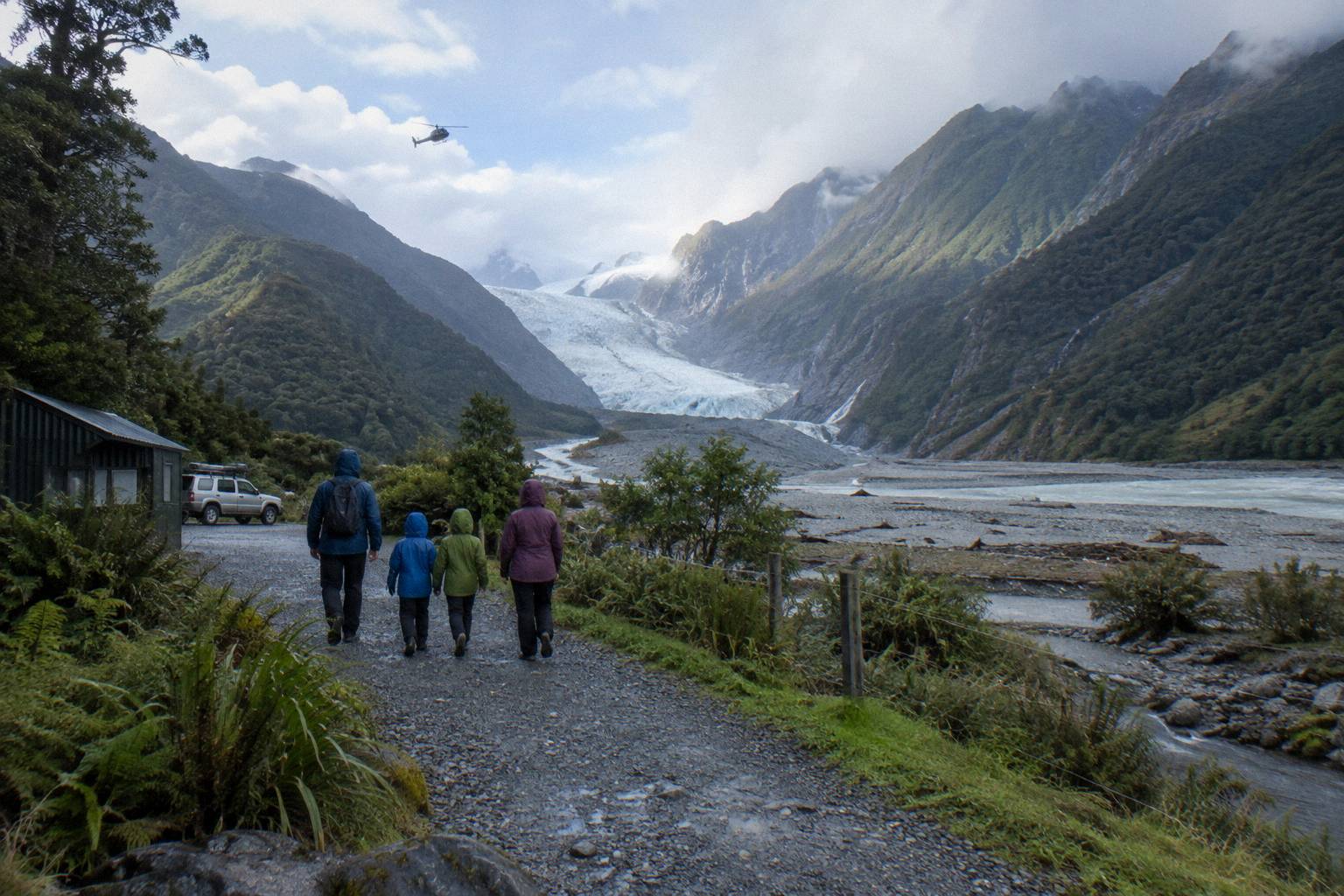
The FJGG heli hike page lists items to leave behind: passport, wallet, car keys, power banks, spare batteries, selfie sticks, vapes, lighters and drones. Drones are separately banned by DOC on the Franz Josef valley walk. The only photo ID worth carrying is proof of a child's age, a passport, which Fox Glacier Guiding requires at check-in for children on its trips. Everything else stays in your accommodation or the vehicle.
The logic of the leave-behind list is weight and helicopter safety: loose objects, lithium batteries and anything that could drop on the ice are excluded, and there is nowhere secure to store a wallet on a glacier. The FJGG base has free parking either side of the building for cars and campervans, which gives you a natural place to lock the valuables you cannot take.
The child-age proof rule is easy to miss. Fox Glacier Guiding states a passport is required at check-in to prove a child's age, and its children's pricing runs from 9 to 16 on the Flying Fox Heli Hike, NZD 849 per child. The Franz Josef operator sets a minimum age of 10 plus a minimum of 35 kg and 137 cm on the classic hike, so a family with a nine-year-old is automatically a Fox family, passport included.
| Situation | What the operator states | Where it goes |
|---|---|---|
| Passport as identity | Leave behind on the FJGG heli hike | Locked in vehicle or accommodation |
| Passport as child's proof of age | Required at FGG check-in | Carry it, Fox Glacier trips only |
| Power banks, spare batteries | Leave behind | At your accommodation |
| Drones | Leave behind; also banned by DOC on the valley walk | At home or locked away |
| Essential medication | FGG tells guests to bring it | On you, all trips |
The medication row deserves its own sentence. Fox Glacier Guiding's stranding disclosure explains that if helicopters cannot return, emergency tents, sleeping bags and food are stored on the glacier, and guests are told to bring essential medication with them. That is the one category where the leave-behind instinct is exactly wrong: medication travels with you on every Fox trip, whatever else stays in the car.
Footwear, Pants And Base Layers
You do not bring boots: both operators supply them, weatherproof walking boots with socks at Franz Josef, and leather boots on the Flying Fox at Fox Glacier. Your own clothing contribution is the merino or polypropylene base layer and long pants the Franz Josef operator specifies, with jeans named as not suitable. No brand, thickness or temperature figure is stated by either operator, so none appears here.
The reason jeans fail is straightforward from the stated facts: the region's 6 to 8 m of annual rainfall means wet-weather performance matters, and the operator hands you waterproof outer layers to go over your own base layers. Synthetic or merino under waterproofs is the stated combination. Long pants, not shorts, because crampons and harness straps sit against the legs.
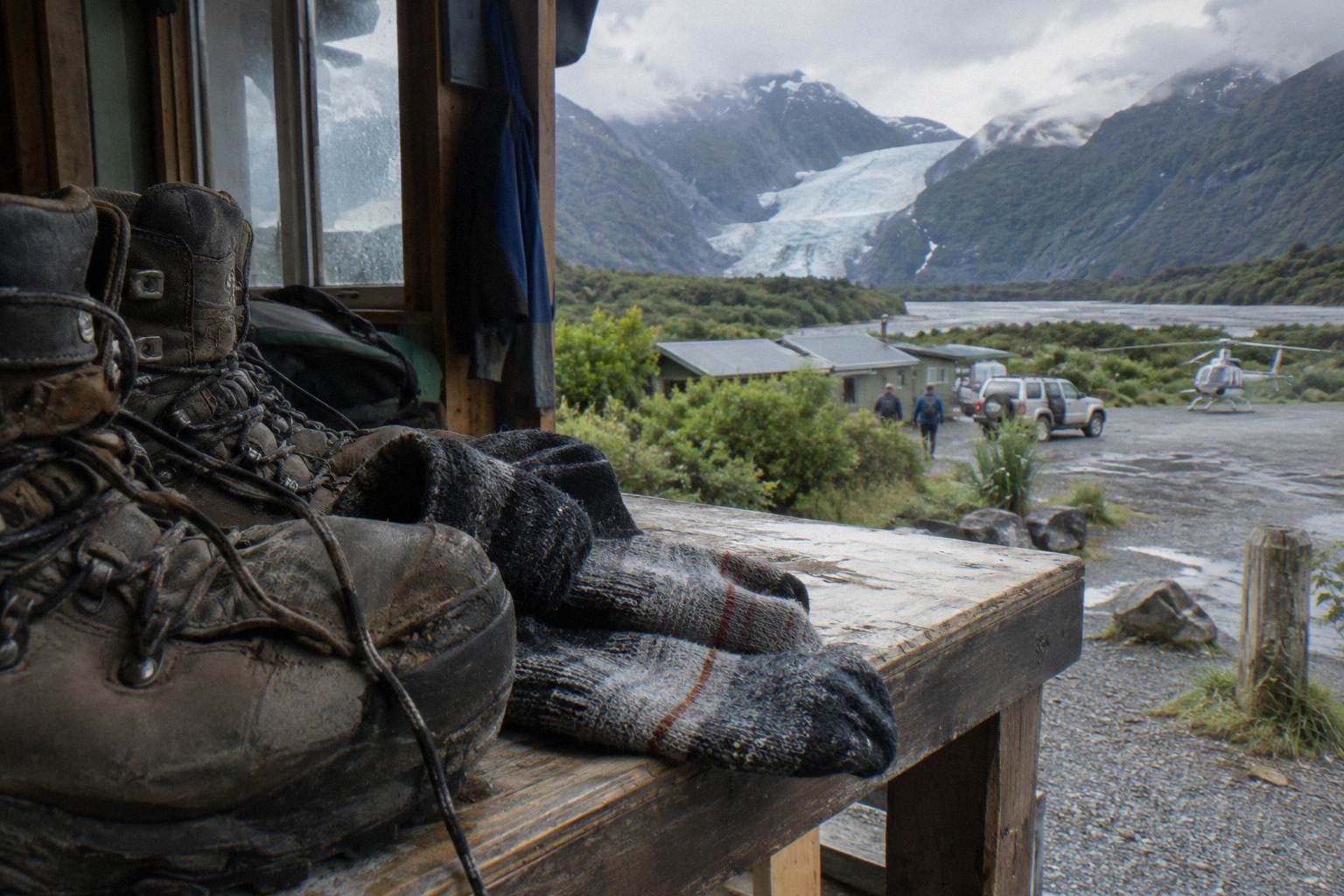
For footwear sizing, bring the socks you would normally hike in, since operator boots are fitted over your own socks at both companies. If you wear orthotics, that is a question for the operator rather than something the published lists answer: Franz Josef Glacier Guides can be reached on 0800 484 337 or +64 3 752 0763, and Fox Glacier Guiding on 0800 111 600 or +64 3 751 0825. Both companies fit gear at check-in, Franz Josef in the 15 minutes before departure, Fox in the 20 minutes before, so arriving already wearing your base layers keeps that window calm.
The Fox Glacier Heli Hike, rated 4.9 and from NZD 849 with the operator, is the natural comparison if your packing is driven by which township you wake up in, and its gear list is the one with the 3 kg backpack.
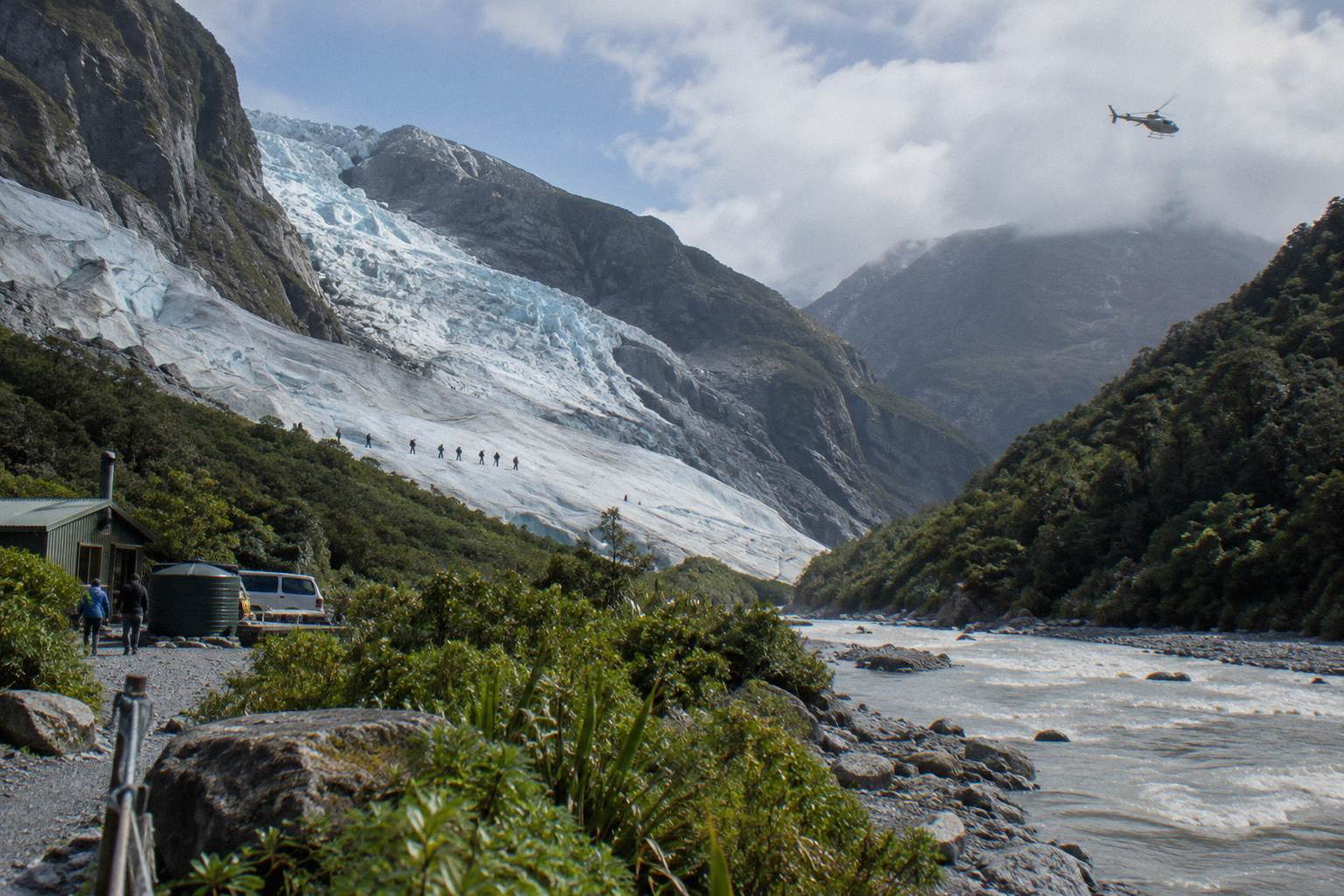
A family packing example makes the age and footwear rules concrete. Two adults and two children aged 10 and 12 meet both operators' minimums, and on the Flying Fox family deal the operator prices 2 adults and 2 children at NZD 3,050, which it says saves NZD 346. Every member of that family is fitted with supplied boots, socks, crampons, raincoat and over-trousers at the Fox Glacier Guiding building, so the family's own packing is four sets of base layers, long pants, sunglasses, sunblock and the child's passport for check-in.
Clothing Rules At Fox Glacier
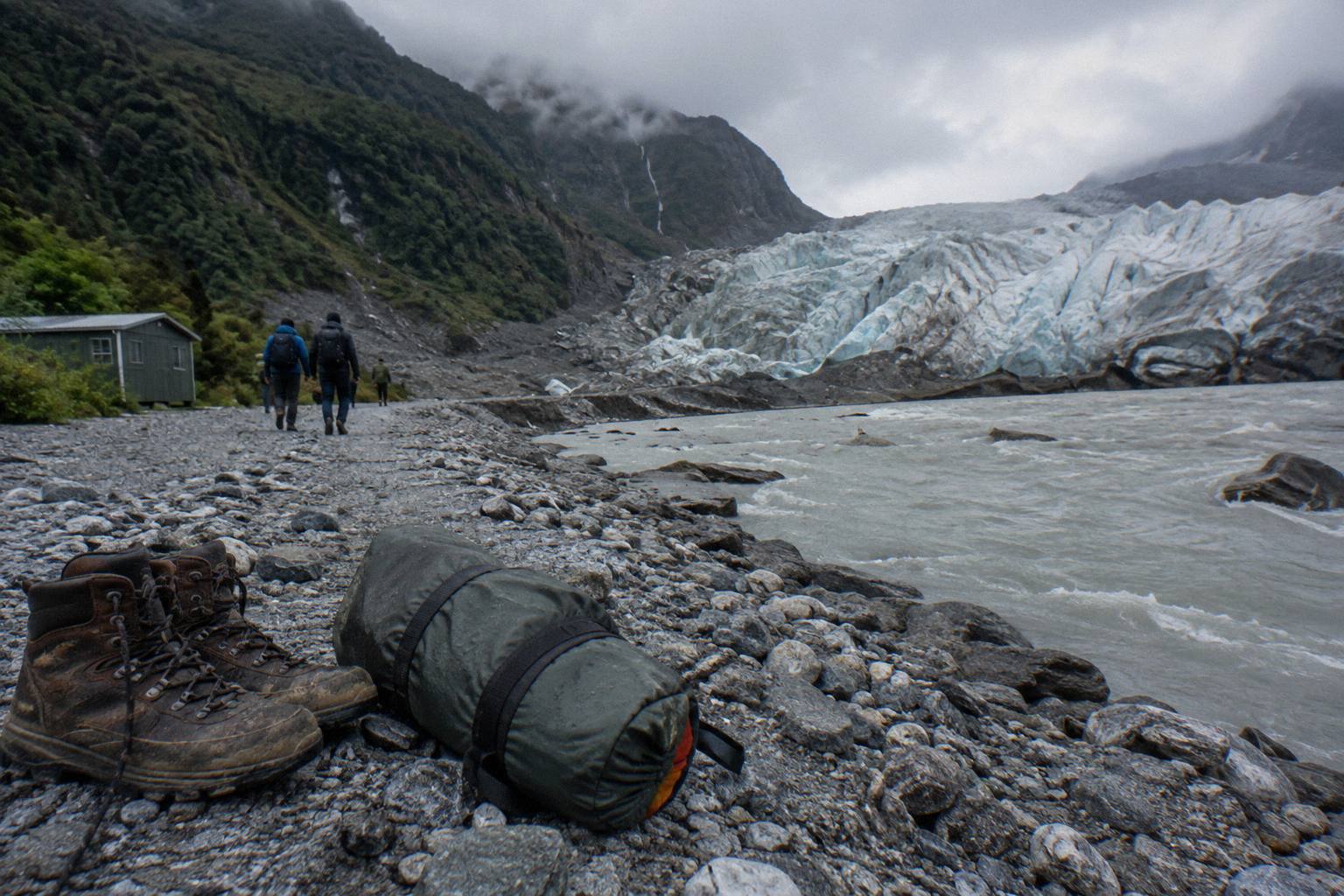
Fox Glacier Guiding handles most of the clothing rules for you: it supplies boots, socks, crampons, a waterproof raincoat, over-trousers, hat and gloves on every trip, and your small backpack cannot exceed 3 kg. Because the operator publishes no base-layer or pants list of its own, dress according to the Franz Josef guidance instead.
The 3 kg backpack cap is the practical constraint that shapes a Fox day. Camera, water bottle, sunblock, sunglasses and any medication fit inside it; anything heavier does not. The Flying Fox runs up to 4 hours in total with up to 3 hours of ice time weather permitting, departing 8:50am and 11:50am year round, so the bag also carries whatever you want for the full span of the day, not just the ice time.
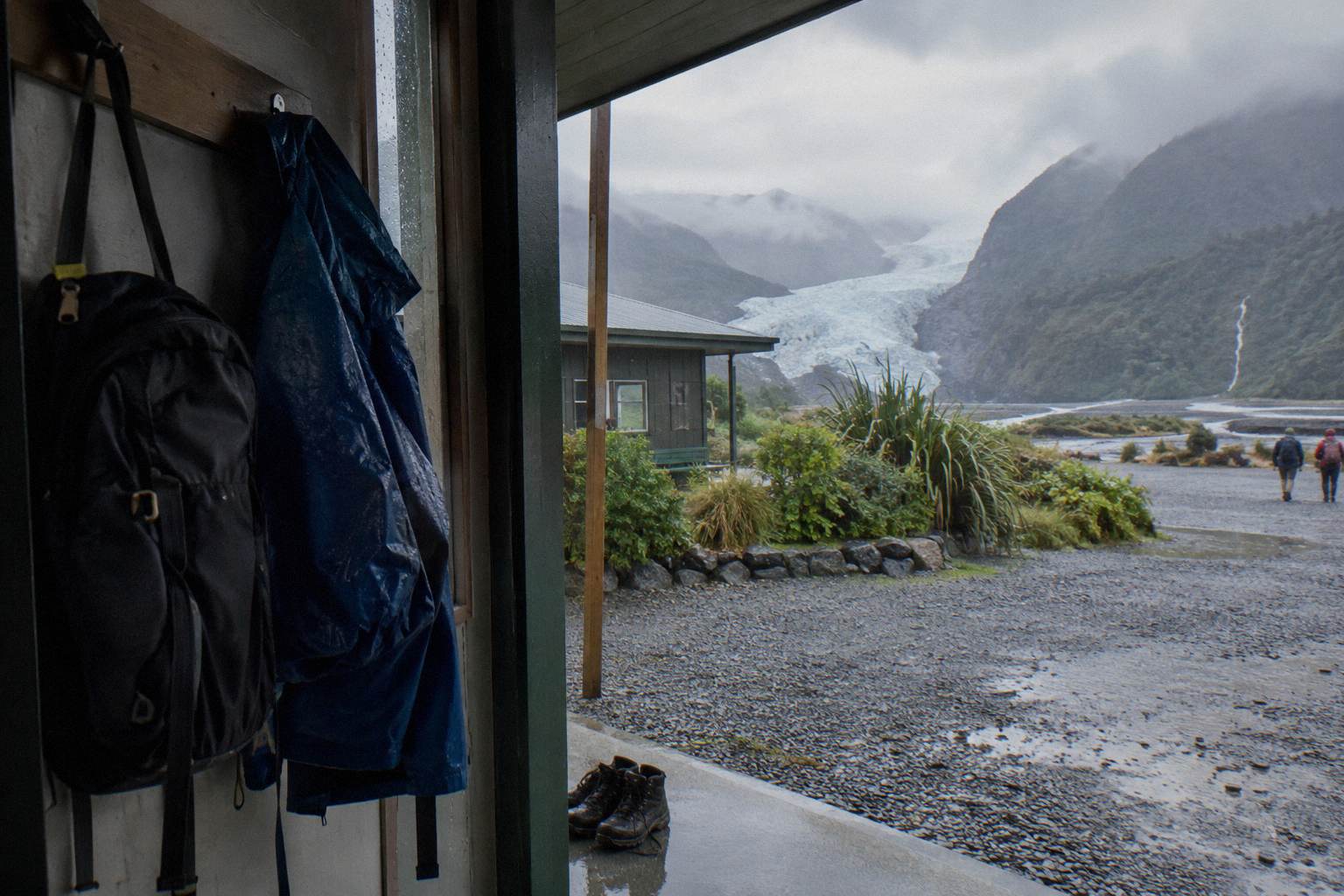
Fox Glacier Guiding's family deal prices 2 adults and 2 children aged 9 to 16 at NZD 3,050, which the operator says saves NZD 346, and the same supplied-gear list covers the whole family. The operator also says a 2021 travellers' choice award named the Flying Fox the number one "Out of the Ordinary Experience" in the world, its own claim.
The two companies' limits never cross over, and packing is where that bites. The Franz Josef heli hike caps weight at 35 kg to 115 kg with a minimum height of 137 cm; Fox Glacier Guiding caps all its helicopter trips at 116 kg and states no minimum height. Neither figure transfers to the other operator's products, so check your own trip's stated limits rather than assuming a shared rule across the valley.
Clothing And The Weather Call
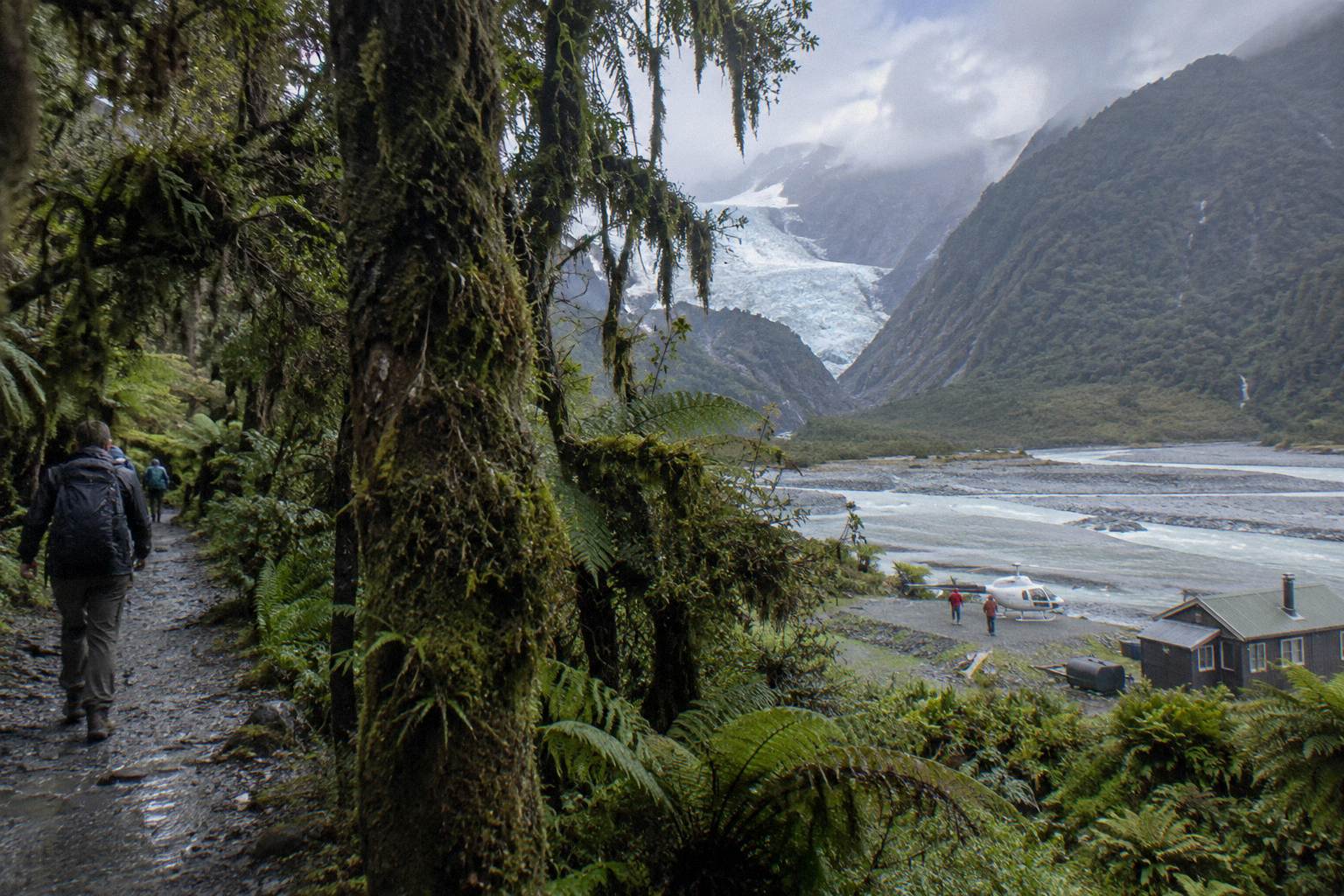
Clothing matters on a heli hike because the final weather call is usually made just before departure: the Franz Josef heli hike needs a four-hour clear weather window, and Fox Glacier Guiding makes its final decision 10 minutes before departure. FJGG advises spending at least two days in Franz Josef and booking the first day to allow a weather window. If the operator cancels for weather, you get a full refund or a reschedule.
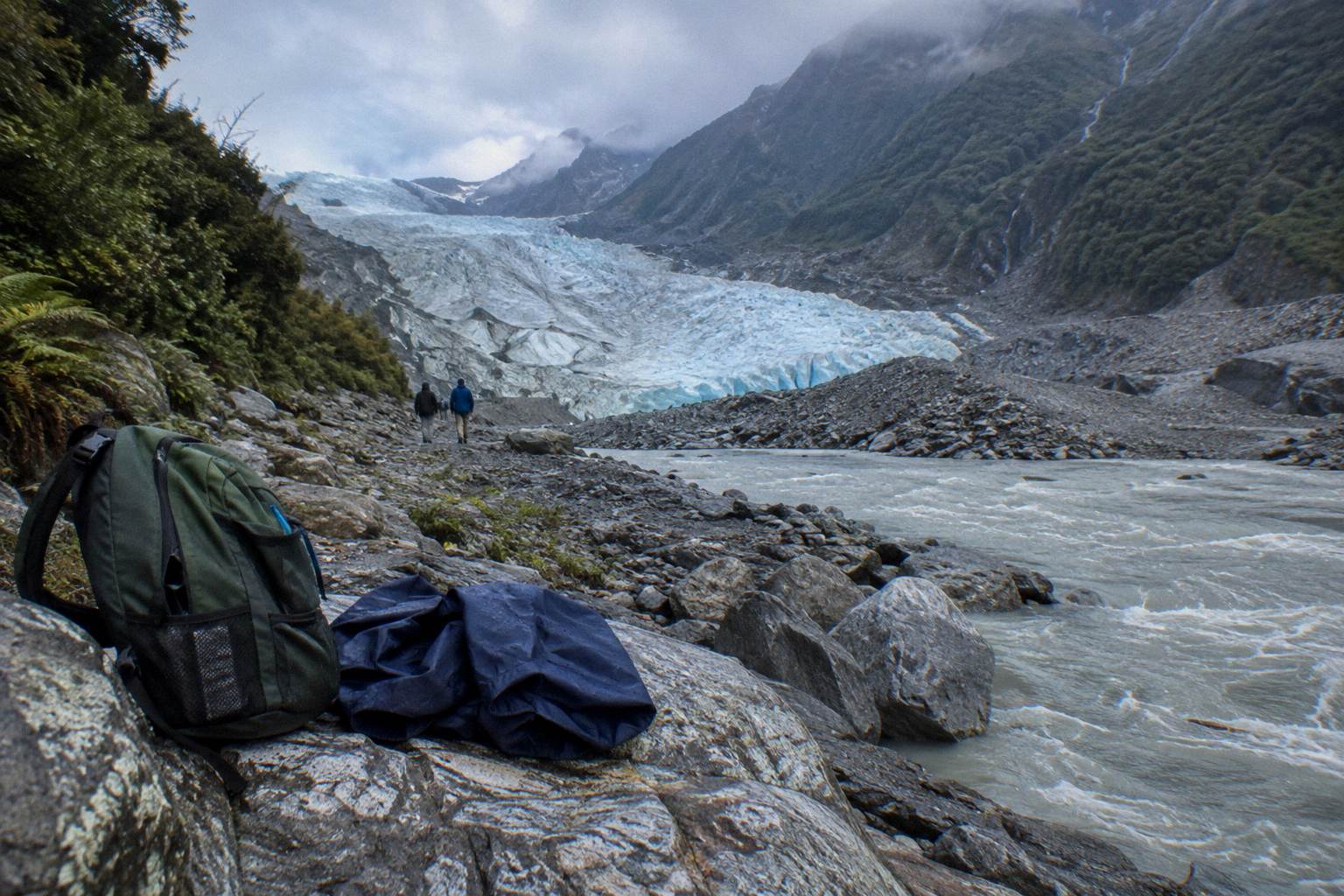
What that means for packing is flexibility rather than bulk. Your base layers, pants, sunglasses and sunblock work on whichever day the trip actually flies, and everything technical waits at check-in. Neither operator states a figure for how often trips cancel, so no rate or percentage appears here, and no operator promise that a trip will run should be assumed from any of this.
If weather cancels the Franz Josef trip, the operator offers a full refund or a reschedule to the next available slot, with an alternative such as the Glacier Landing offered where possible. The refund is subject to the terms of your booking agent if you booked through one, and customers can change or cancel free of charge up to 24 hours before check-in, with the full amount charged inside 24 hours. Fox Glacier Guiding matches that: free cancellation with at least 24 hours notice, 100 percent charged inside it.
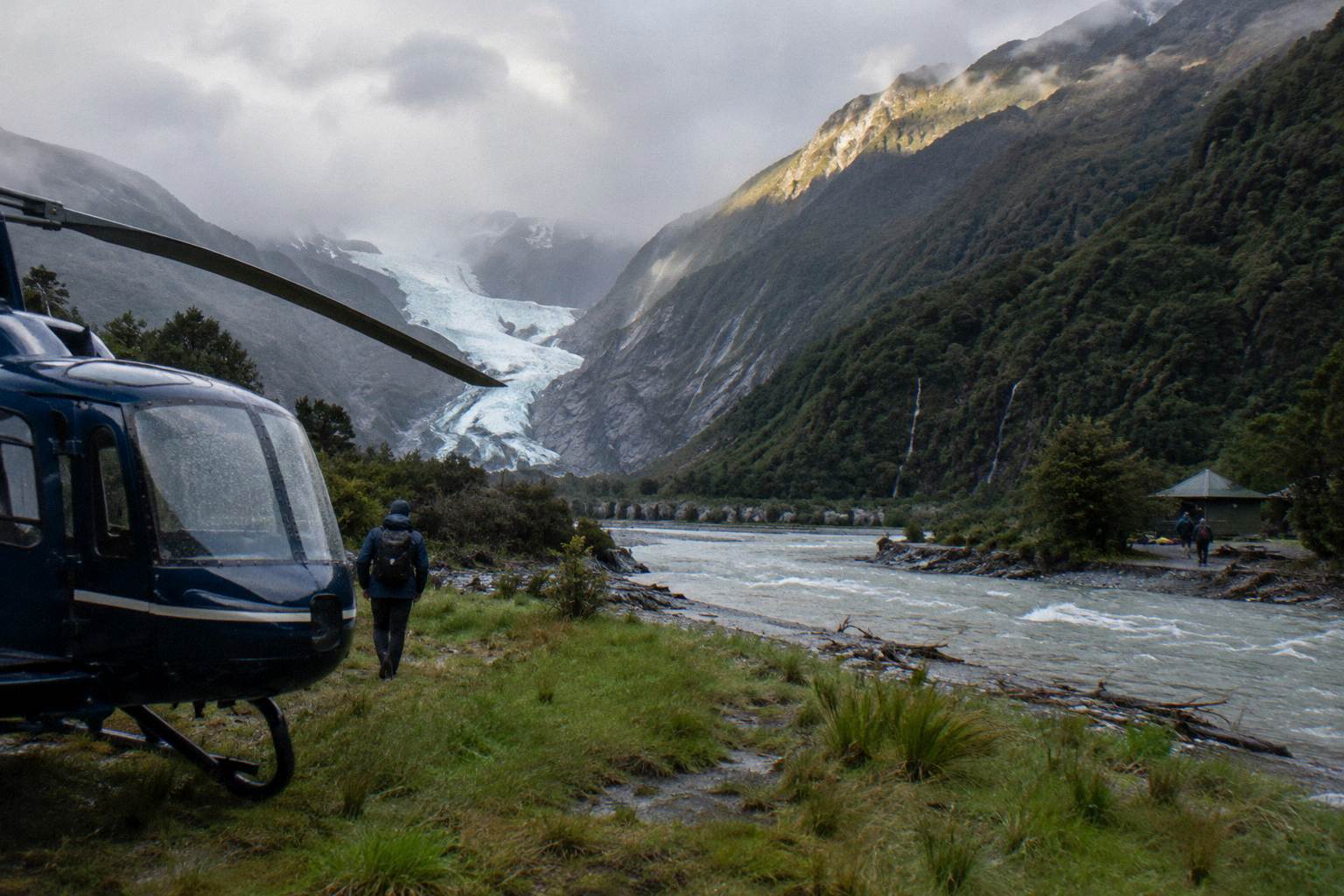
The classic Franz Josef heli hike, the trip whose gear lists fill most of this page, is the one those weather rules attach to most directly: one guide to 11 guests, up to 2.5 hours on the ice, up to 4 hours from check-in, and the operator's NZD 899 price with the note that the price on a booking page can differ from the operator's own.
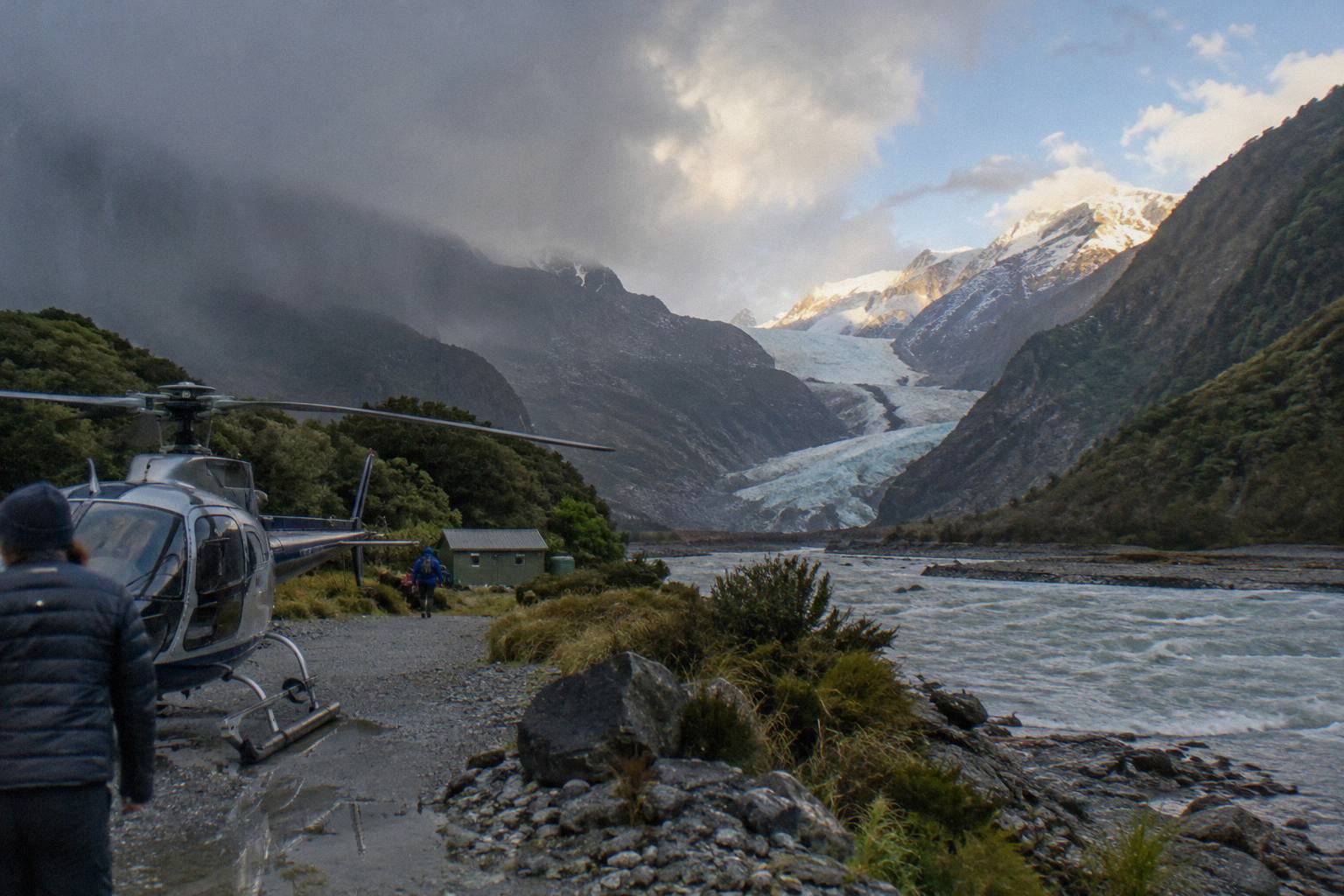
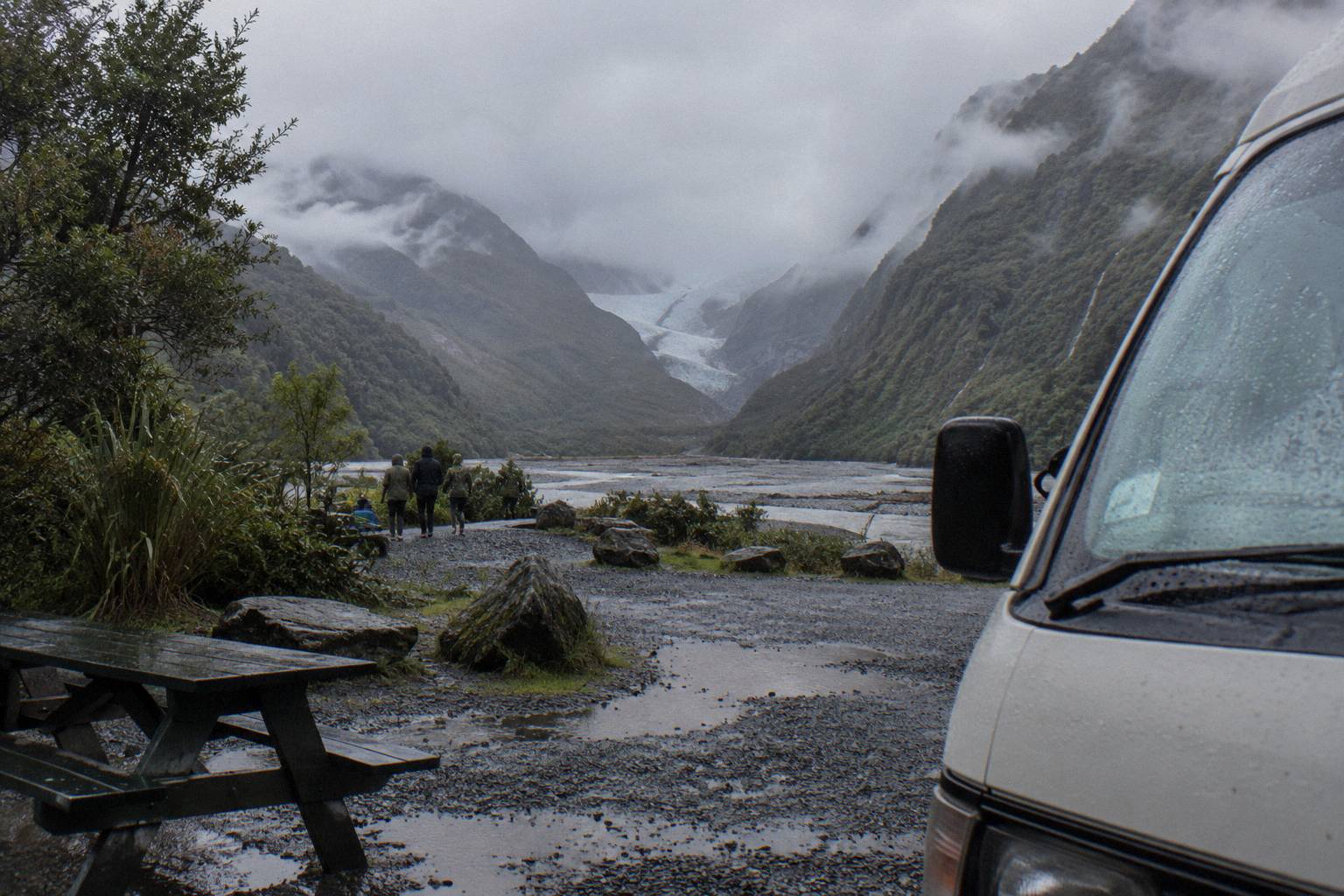
Longer Days, Different Packing
The FJGG Glacier Adventure runs up to 8 hours in total with up to 5.5 hours on the ice, includes lunch and drinks, and takes a maximum of four guests per booking, minimum age 14, at NZD 1,549. The Glacier Heli Ice Climb runs the same span for NZD 1,249, minimum age 16, with one guide to four guests. Longer trips use the same supplied kit, but FGG's stranding disclosure tells guests to bring essential medication.
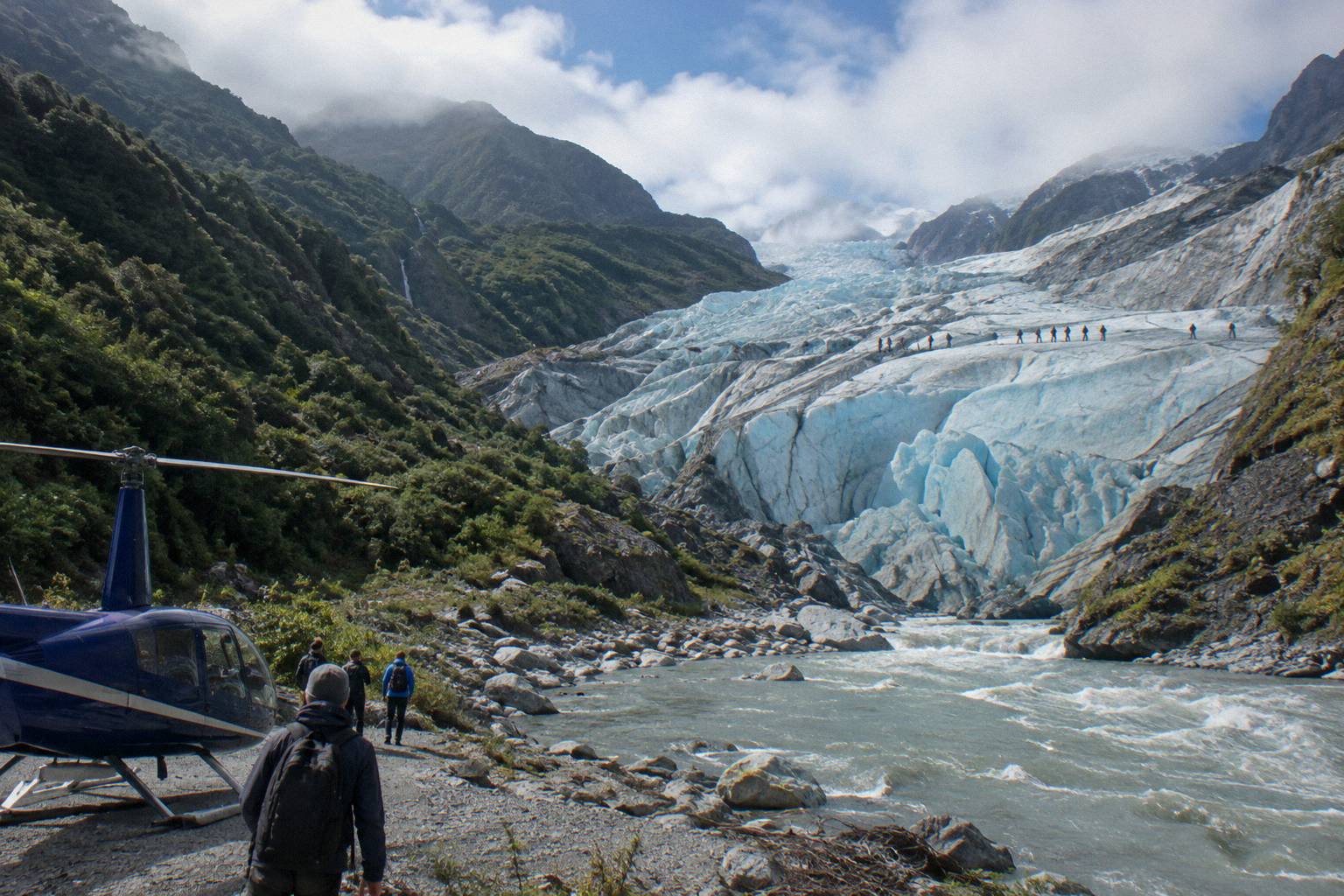
On the extended days, the lunch-and-drinks inclusion on the Adventure removes food from your packing list, while the ice climb and Adventure both need the six-hour and five-hour clear weather windows the operator states, so the odds of a full day shift with the forecast. The same bring list, base layers, long pants, sunglasses, sunblock, camera and water, applies, with more hours for each item to earn its place.
There is also a Queenstown-departure version of the day. The Heli Hike From Queenstown leaves at 8:30am daily, pairs a 60-minute fixed-wing flight with a 4-hour heli hike with 2.5 hours of ice time, about 6 hours in total, and needs a minimum of four passengers, at NZD 1,799 adult and NZD 1,599 for a child aged 10 to 14. It is a Queenstown product, not a Franz Josef check-in trip, and the gear logic is the operator's own list carried through, with the Franz Josef Glacier Heli Hike From Queenstown covered in detail on the dedicated Queenstown guide.
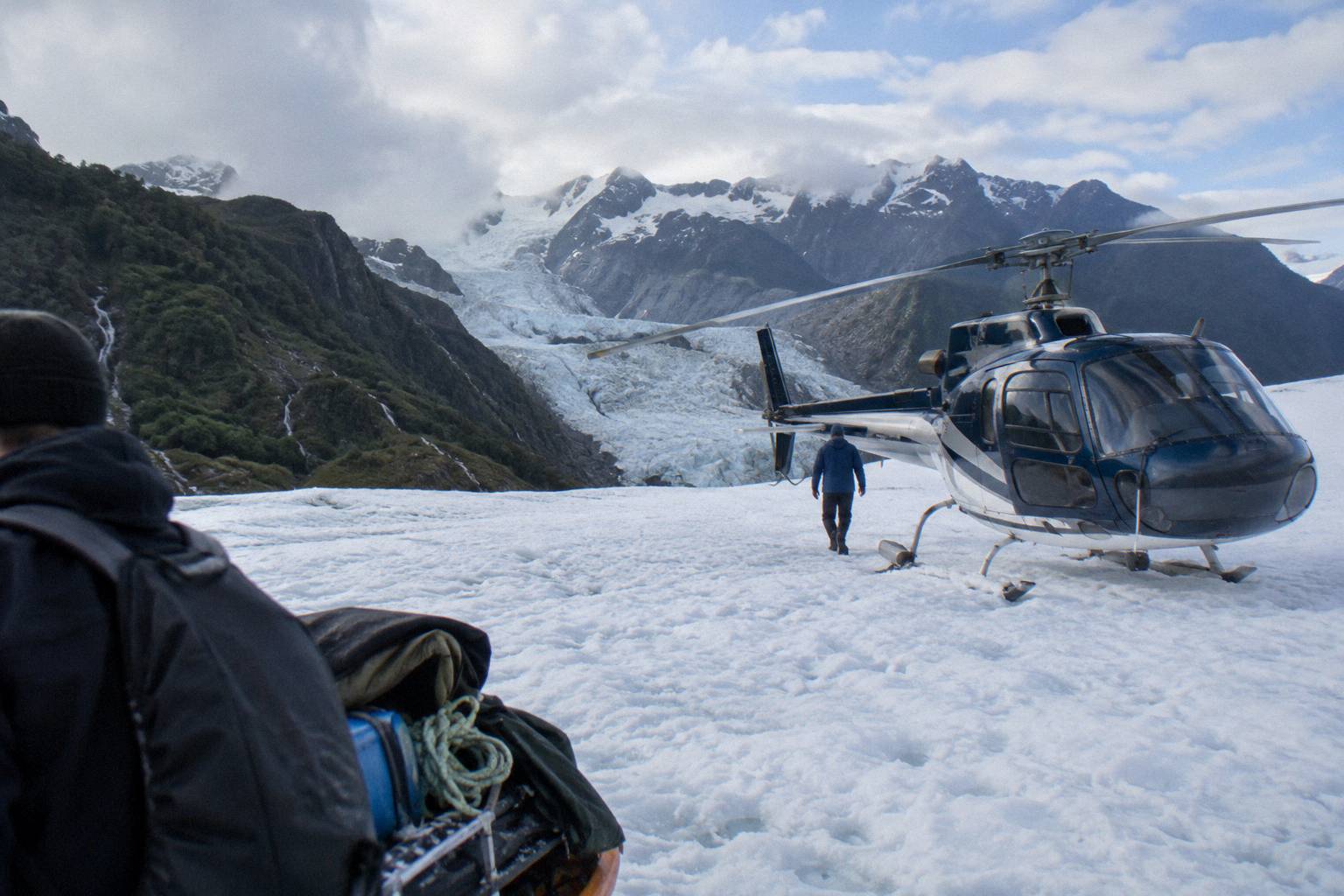
Packing for the Queenstown day differs in one respect: the trip spans about 6 hours from the Queenstown departure, so whatever you want for the fixed-wing legs and the waits between them travels with you, subject to the operator's gear rules. The supplied technical kit still appears at the Franz Josef end rather than in Queenstown.
Common Mistakes When Packing For A Heli Hike
The recurring mistakes are wearing jeans, which the operator names as unsuitable, skipping sunglasses, which it calls essential, packing prohibited items like power banks or drones, and arriving without a child's passport for Fox Glacier trips. A fifth is treating the supplied gear as optional: turning up in street shoes wastes check-in time on a schedule where departures cannot be delayed and a missed trip is charged in full. Each of these is avoidable with the lists above.
Check-in timing is the hidden packing constraint. Franz Josef check-in is 15 minutes before departure, Fox 20 minutes, and fitting supplied boots, harness and crampons happens inside that window, so arriving already dressed in your base layers and long pants keeps the process simple. The check-in and meeting point guide covers the locations in detail.
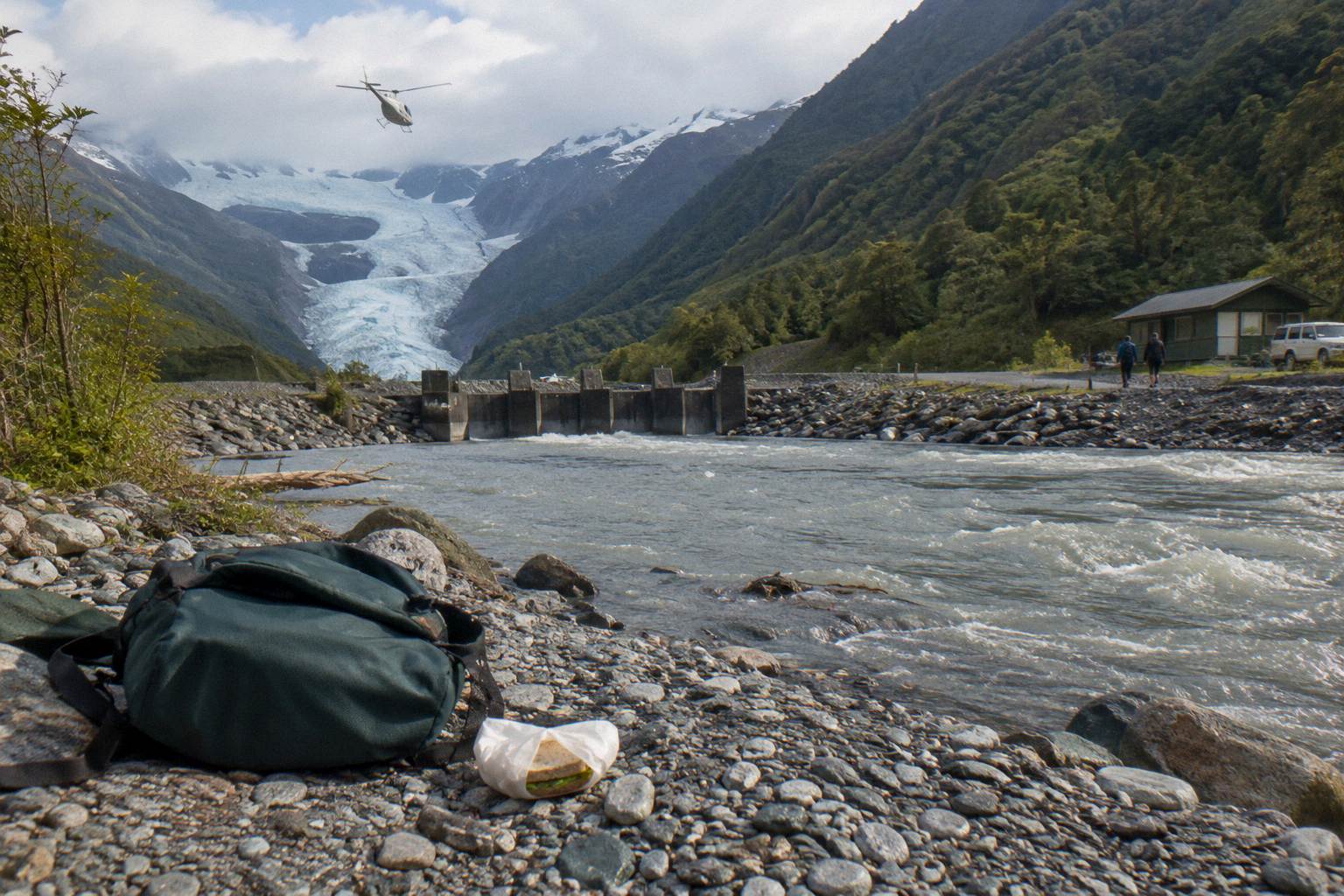
The drone rule deserves a second mention because it catches visitors twice: banned on the heli hike by the operator's own list, and banned on the DOC valley walk separately. The DOC valley walk is 1.7 km return to a viewing barrier, and DOC states the river has cut off access up the valley, so helicopters are the only safe way onto the glacier for guided walks, a fact worth knowing when you plan what photography gear to bring at all.
A late arrival is the mistake with the highest stated cost. The operator says departures cannot be delayed and a missed trip is charged in full, which turns a slow morning into the full NZD 899 on the classic hike. Packing the night before, with your base layers, long pants, sunglasses and sunblock in one place, is the simplest defence against it.
| Mistake | What the operator states | Consequence |
|---|---|---|
| Wearing jeans | Long pants required; jeans not suitable | Wet, unsuitable clothing on the ice |
| No sunglasses | Operator calls them essential | Glare exposure on ice |
| Bringing a power bank or drone | Both on the leave-behind list; drones also banned by DOC | Items excluded at check-in |
| No child's passport (Fox trips) | FGG requires proof of age at check-in | Child pricing or boarding may be affected |
| Late arrival | Departures cannot be delayed; missed trip charged in full | Full charge |
If the full packing picture has you leaning toward a shorter first glacier experience, Franz Josef Heli Hikes covers the flight and landing options too, where the wardrobe requirement drops to enclosed shoes.
Whatever you choose from the trips here, the packing rule of thumb is simple: the operator owns the technical layer, you own the clothing next to your skin, and everything that does not fit in a small waist pack or a 3 kg backpack was never coming anyway.
Common Questions About What To Wear On A Glacier Heli Hike
Do I Need To Buy Or Hire Boots For A Heli Hike?
No. Franz Josef Glacier Guides supplies weatherproof walking boots and socks, and Fox Glacier Guiding supplies boots and socks on all its trips, with leather boots on the Flying Fox Heli Hike. Bring the socks you would normally hike in; nothing else is needed for your feet.
Can I Wear Jeans On The Glacier Heli Hike?
No. The Franz Josef operator's bring list specifies merino or polypropylene base layers and long pants, and states jeans are not suitable. With 6 to 8 m of annual rainfall in the region, clothing that holds water is a poor choice under the supplied waterproofs.
Is A Jacket Supplied Or Should I Bring My Own?
Both operators supply the waterproof outer layer: a jacket and over-trousers at Franz Josef Glacier Guides, a raincoat and over-trousers at Fox Glacier Guiding. You bring the base layers that go underneath, not the shell.
What ID Do I Need At Check-In?
The only stated photo ID requirement is Fox Glacier Guiding's rule that a passport is required at check-in as proof of a child's age. On the FJGG heli hike, a passport is on the leave-behind list, so ID normally stays locked away unless you are proving a child's age at Fox.
Can I Bring A Drone Or A Power Bank?
No. Both are on the Franz Josef operator's leave-behind list, along with wallets, car keys, spare batteries, selfie sticks, vapes and lighters. Drones are also banned by DOC on the Franz Josef valley walk.
What Do I Wear On A Glacier Landing Instead Of A Hike?
The FJGG Glacier Landing needs no special gear: enclosed shoes only, with all technical equipment unnecessary because the trip spends 15 minutes on the glacier rather than walking on it. It is the easiest option on the wardrobe front, at NZD 699.