What You See On A Glacier Heli Hike: Ice, Crevasses And Caves
A heli hike on the West Coast puts you on the ice of a glacier that moves metres a day, but what you actually see depends on the trip, the weather and the guide's route on the day.
Short answer
The Franz Josef heli hike lands on the main ice fall, where FJGG says ice has been recorded moving up to 5 m a day, and gives you up to 2.5 hours on the ice from NZD 899. The Fox Glacier Heli Hike gives up to 3 hours of ice time from NZD 849. No operator guarantees crevasses or ice caves: features are natural and weather-dependent.
The ice of Franz Josef Glacier is not a museum piece. Franz Josef Glacier Guides says the main ice fall has been recorded moving at speeds up to 5 m a day, which means the surface a guide walks you across in the morning can be a different landscape by the following week.
That single fact shapes everything about what you see on a glacier ice walk in New Zealand: the features are natural, moving and never guaranteed. This page sets out what the operators themselves describe, what the flight over the valley shows you, and what nobody can promise, so you can weigh the experience honestly before you spend NZD 899 or more.
The Helicopter Flight Onto The Ice
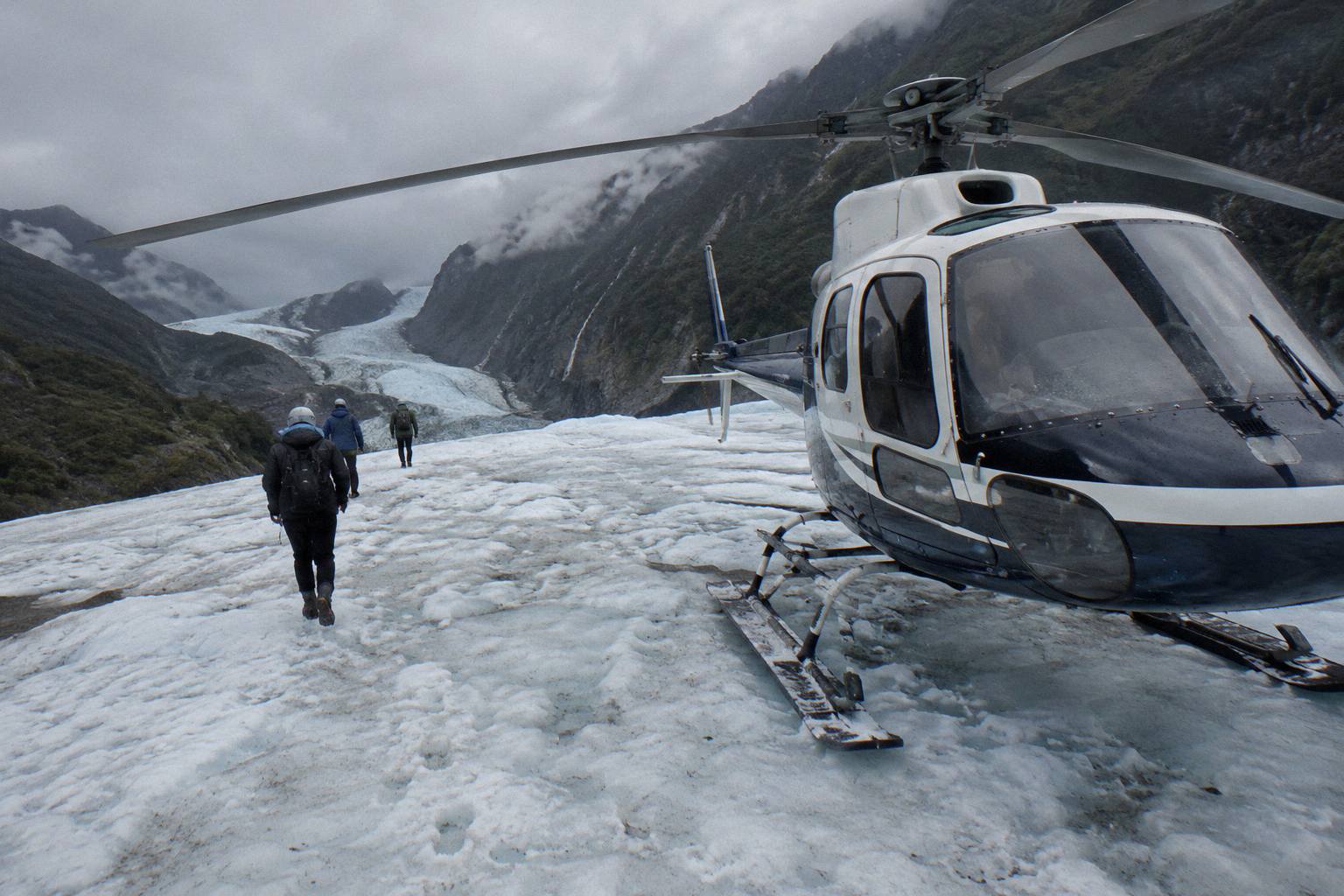
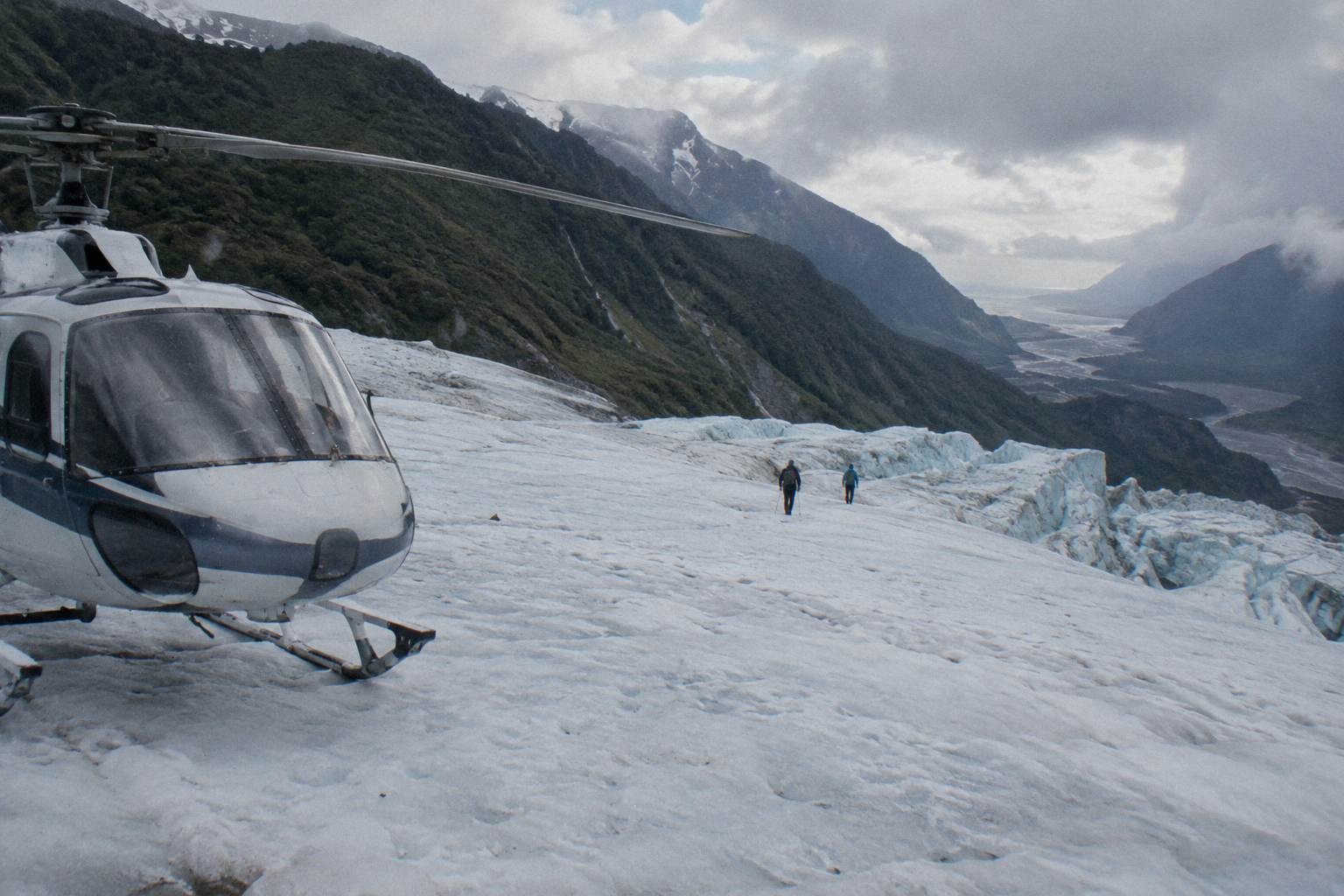
The flight is the doorway to the glacier, not a warm-up act. Every guided ice walk on Franz Josef Glacier begins with a helicopter transfer, because DOC states that the river has cut off access up the valley and helicopters are the only safe way onto the glacier for guided walks. On the Franz Josef Glacier Heli Hike the helicopter lands on the main ice fall, so you go from township to ice in a single flight.
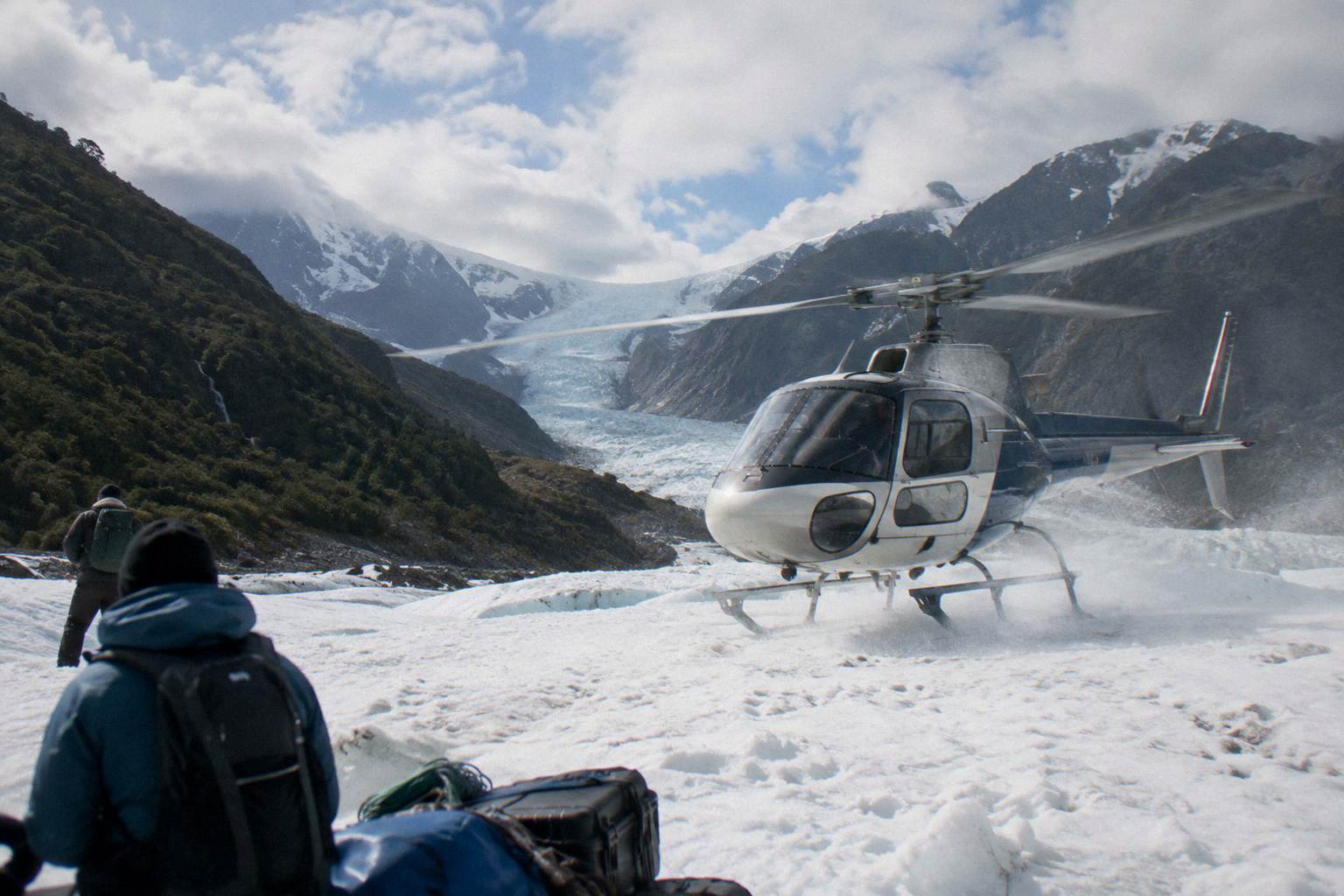
Franz Josef Glacier Guides operates its heli hikes with flights by Inflite, and every one of its experiences departs and returns to Glacier Base, Te Ao Marama, at 63 Cron Street in Franz Josef. Check-in is 15 minutes before departure. The helicopter is not a shuttle bolted onto a walk: it is the only way the trip exists.
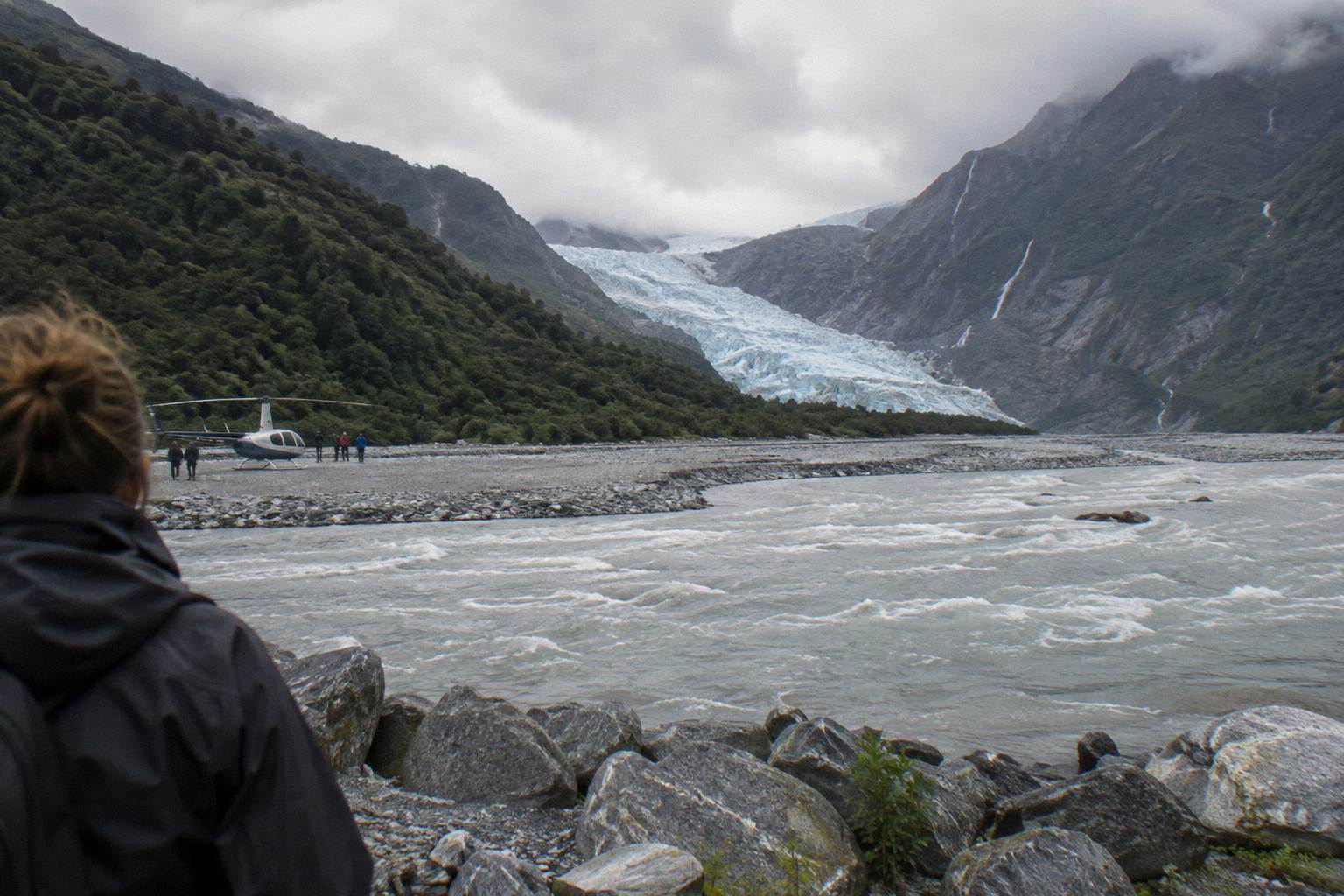
Glacier Helicopters' own page notes that following the 2012 collapse of the terminal face, the glacier "is now only accessible by helicopter", and the same is true of guided access on Fox Glacier, where Fox Glacier Guiding runs heli in and heli out on every trip it sells.
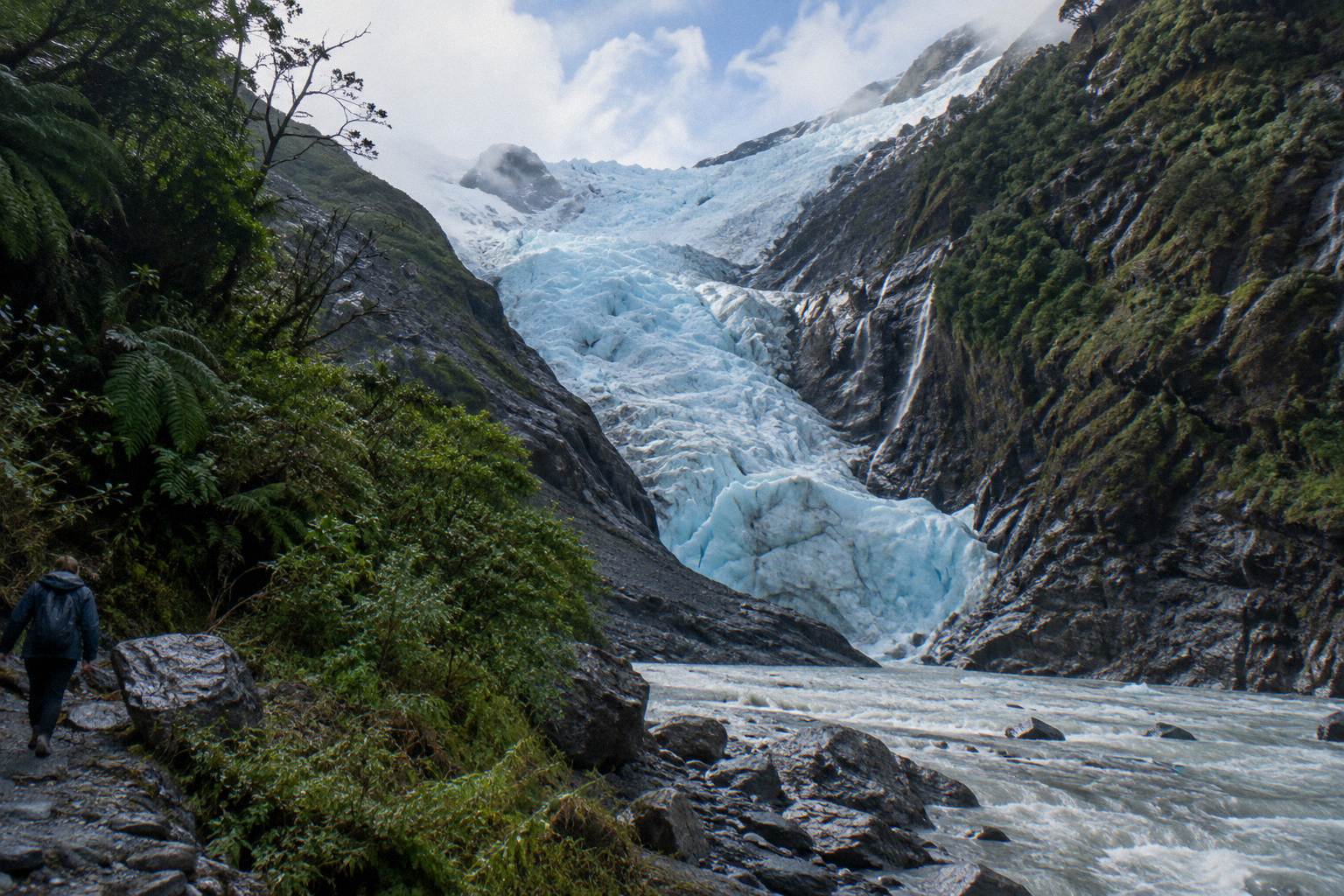
From the air the landscape changes quickly. FJGG states the glacier descends from 3,000 m above sea level to 500 m over 9 km, and calls it one of the steepest glaciers in the country. Seen from a helicopter, that means the ice pours down through a valley of dark rock, and the township, the rainforest and the river plain sit in a completely different world below it.
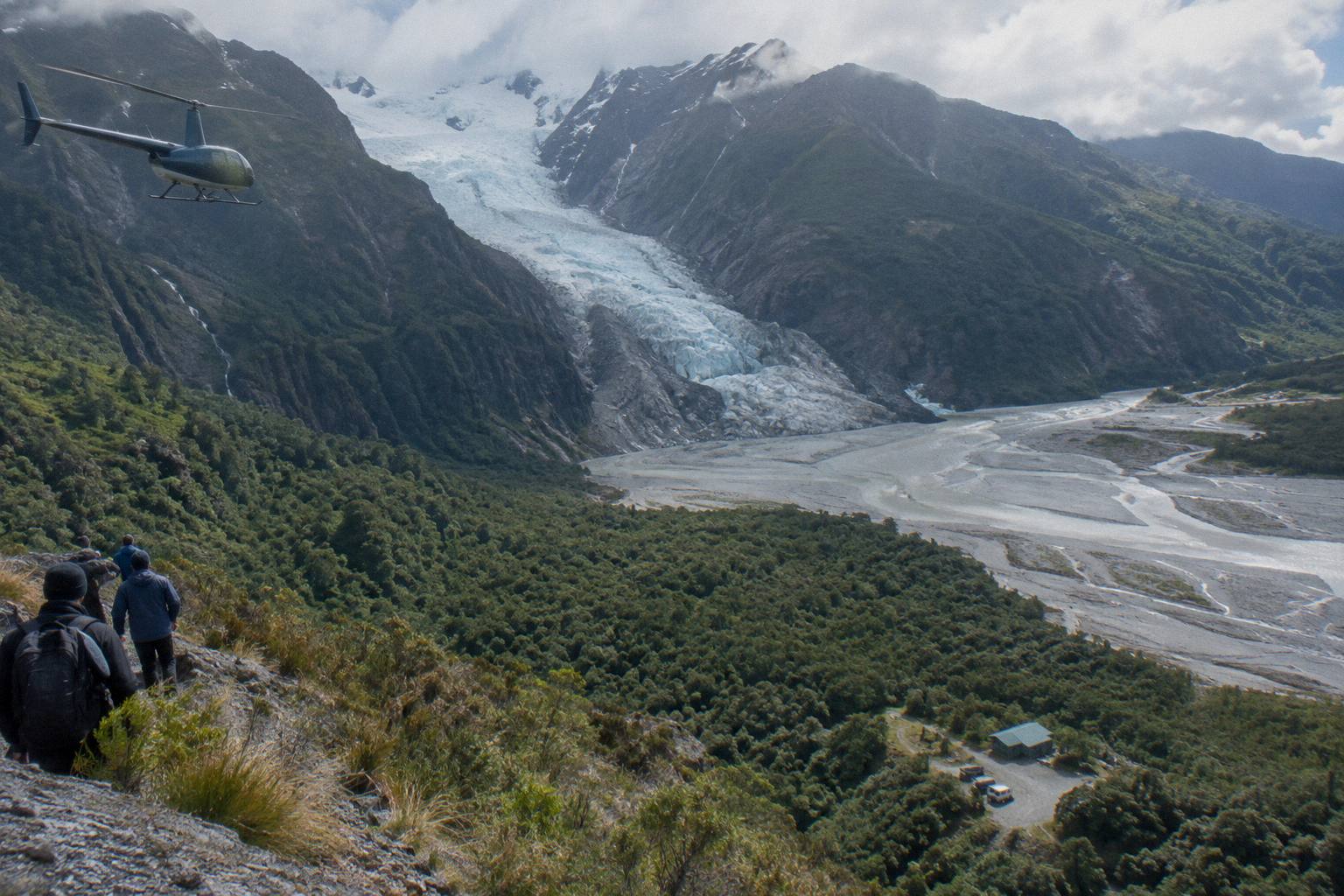
The operator also claims Franz Josef is the "lowest terminal face elevation of any glacier flowing into a temperate rainforest": a glacier ending beside green bush rather than bare mountain, which is the pairing you fly over on the way up.
The flight is short and functional. The trip facts give up to 4 hours from check-in to the end for the Franz Josef heli hike, of which up to 2.5 hours is on the ice, so the flying portions are a fraction of the day.
On the flight-only products the flying is the whole product: the Franz Josef 25-Minute Helicopter Flight With Snow Landing from Glacier Helicopters is about 25 minutes and lands you on the snow, while the FJGG Glacier Landing, also called Glacier Encounter, spends 15 minutes standing on the icefall at about 1,300 m with no hiking at all.
| Trip | Flight role | Time on the ice | Price stated by the operator |
|---|---|---|---|
| Franz Josef Glacier Heli Hike | Lands on the main ice fall | Up to 2.5 hours | NZD 899 |
| FJGG Glacier Landing | Lands on the icefall at about 1,300 m | 15 minutes | NZD 699 |
| Fox Glacier Heli Hike | Heli in and heli out | Up to 3 hours | NZD 849 |
| FJGG Glacier Adventure | Lands on the ice fall | Up to 5.5 hours | NZD 1,549 |
| 25-Minute Flight With Snow Landing | Snow landing, no guide walk | Standing time only | NZD 395 |
The distinction matters because the words "heli hike" cover very different amounts of ice. If standing on a glacier and looking around is the goal, the Glacier Landing does that in an hour from check-in with a minimum age of 4 and no special gear beyond enclosed shoes.
If walking on the ice is the goal, you need one of the guided hikes, and the amount of ice time ranges from up to 1 hour on the Fox Glacier Express to up to 7 hours on the operator-only Extreme Fox. The Franz Josef Heli Hikes covered on this site span that whole range, and the sections below break down what each one lets you actually see.
The Main Ice Fall Where The Trip Lands
The Franz Josef heli hike lands on the main ice fall, the steep, fast-moving upper section of the glacier where FJGG says ice has been recorded at speeds up to 5 m a day. That is the specific part of the glacier the operator has guiding access to. The landing zone and the route across the ice are chosen on the day by the guide.
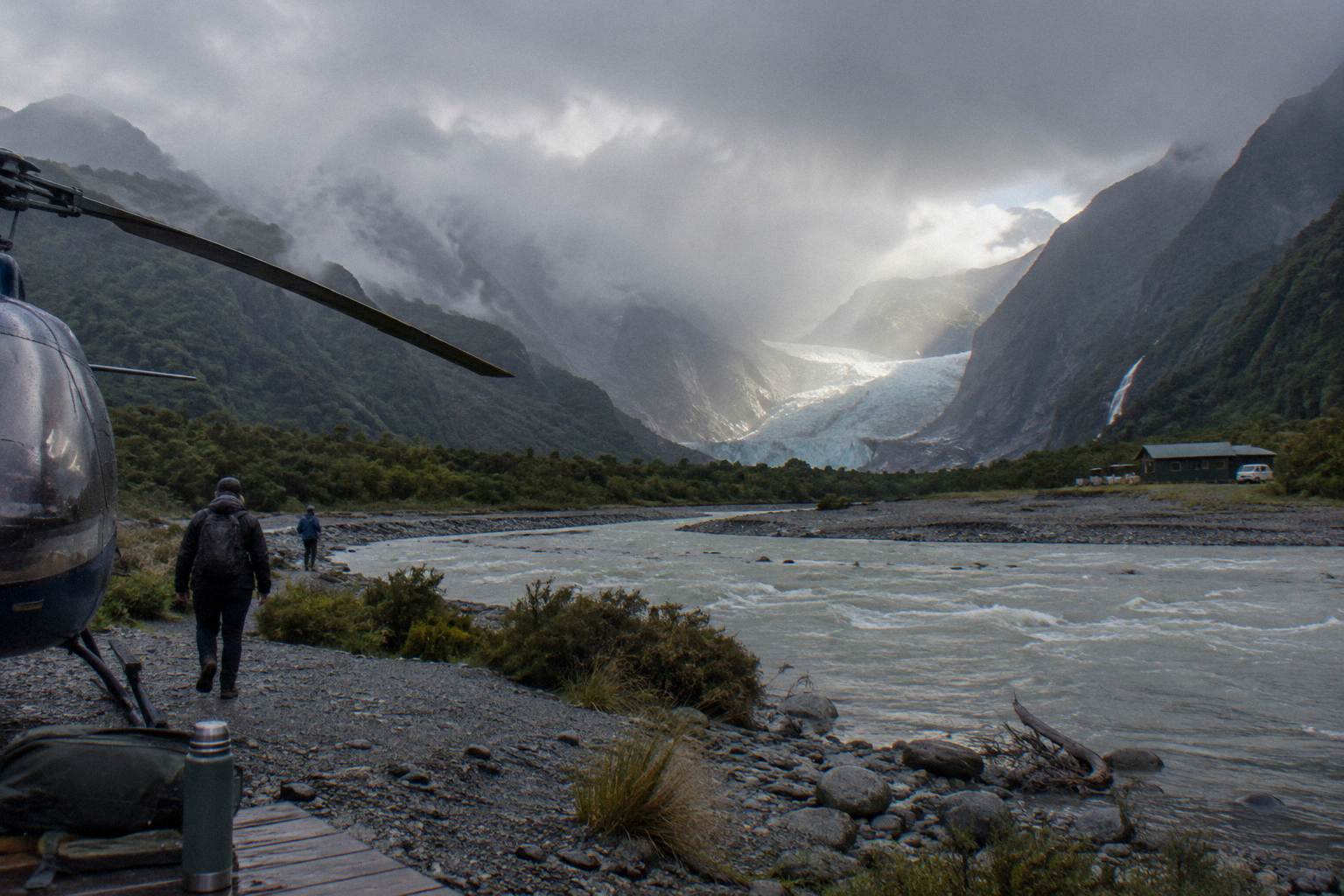
The main ice fall is where the glacier's speed is concentrated. FJGG claims exclusive guiding access and describes itself as the only operator certified to offer guiding experiences on this glacier, its own claim, stated on its heli hike page.
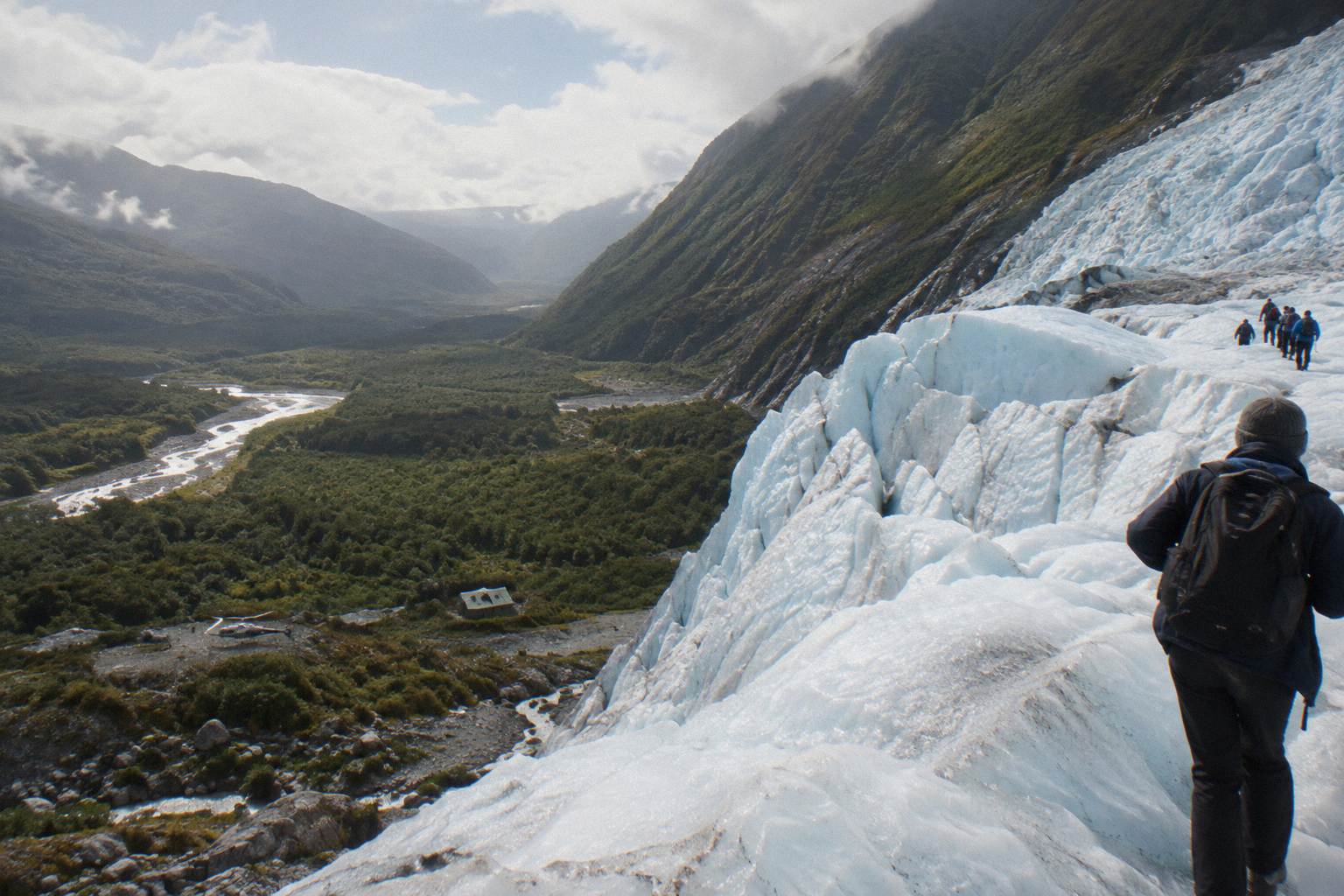
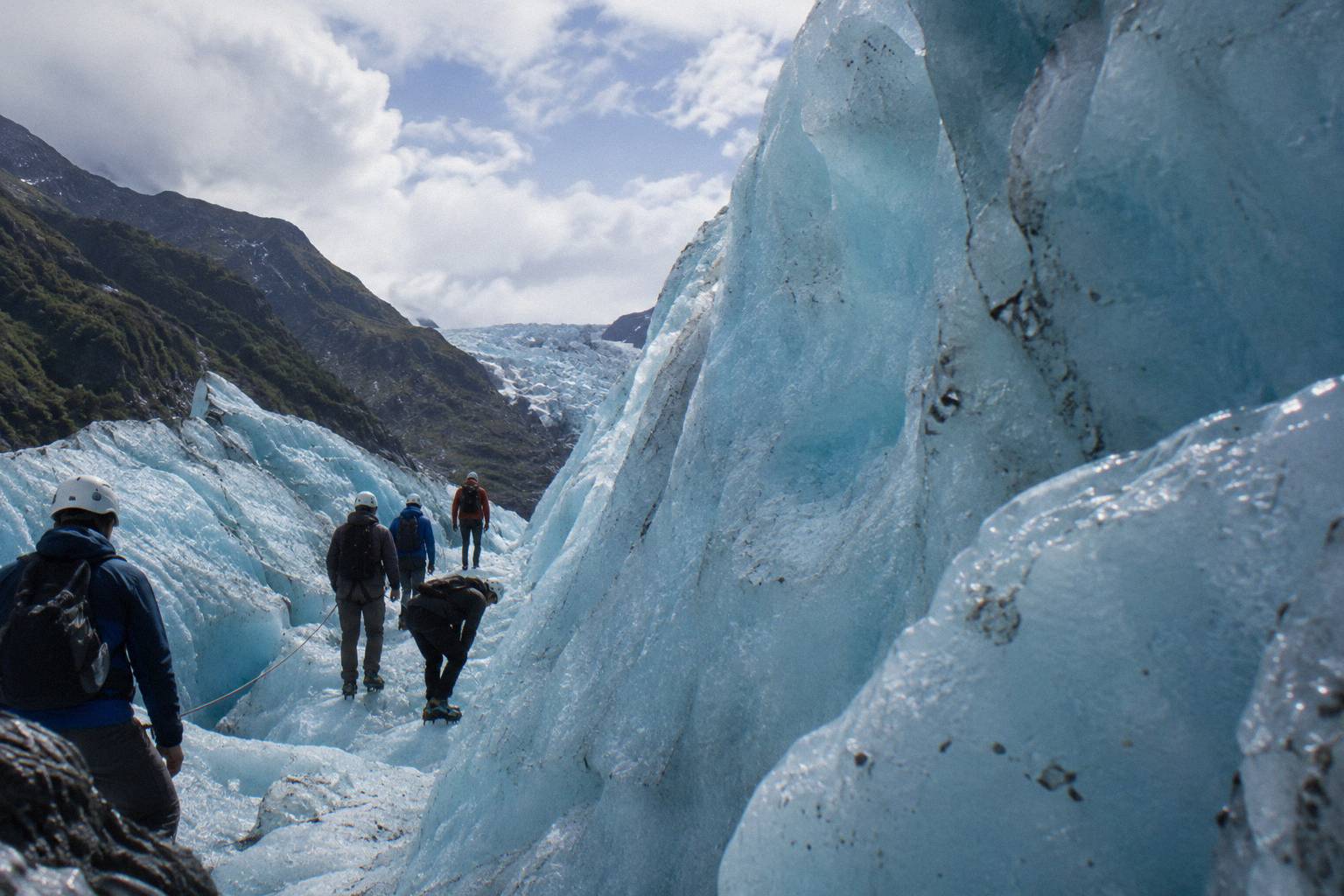
A glacier that moves several metres a day does not hold a tidy surface: it fractures, towers collapse, and meltwater carves through it. This is why the trip is guided at a ratio of 1 guide to 11 guests on the heli hike, and why the guide, not a fixed trail, decides the route.
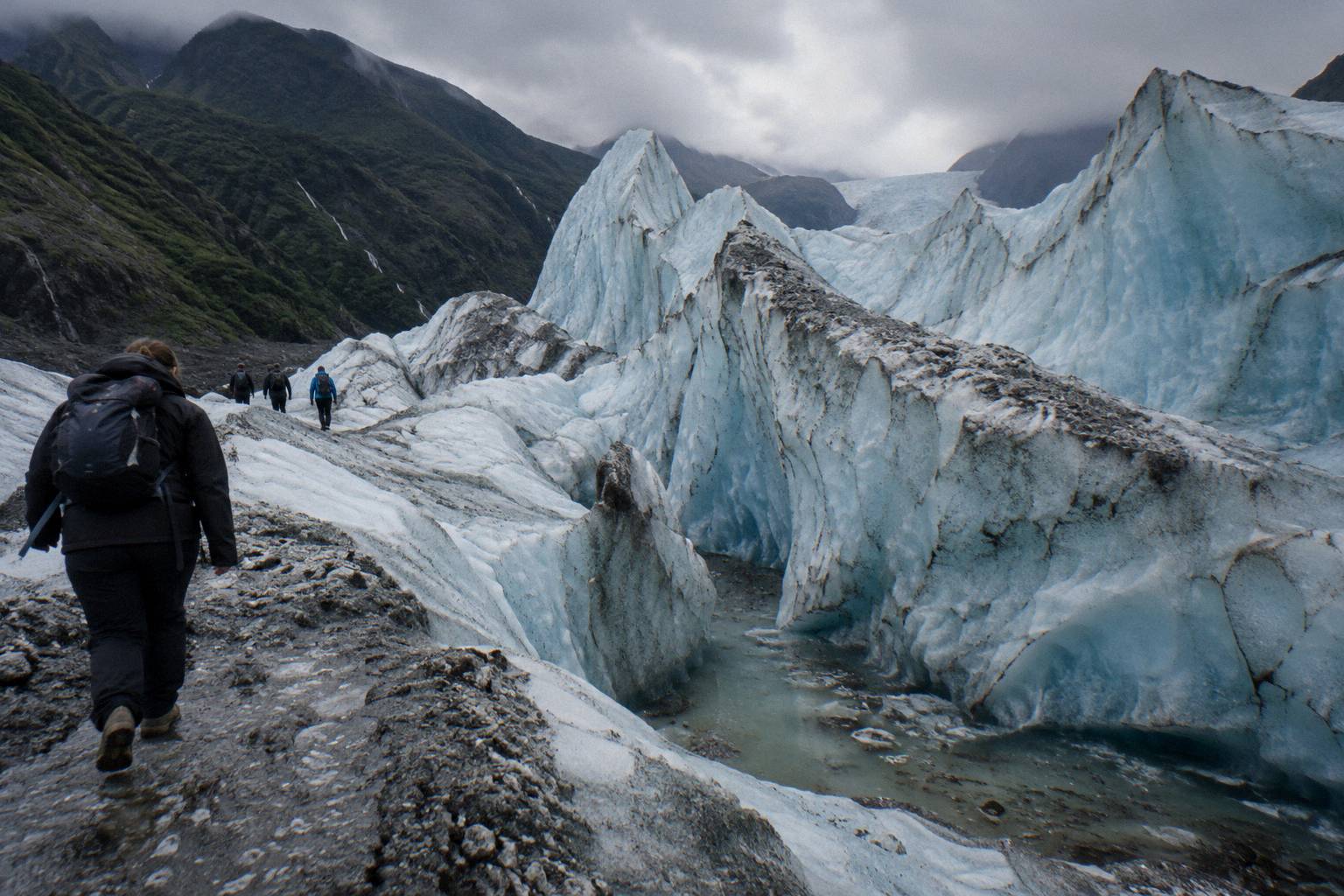
The main ice fall is where the glacier's speed is concentrated. FJGG calls Franz Josef the "fastest moving commercially guided glacier in the world", another of its own claims, and the practical consequence is that the ice is heavily crevassed, churned and reworked continuously. What that means for what you see is simple: you see working ice.
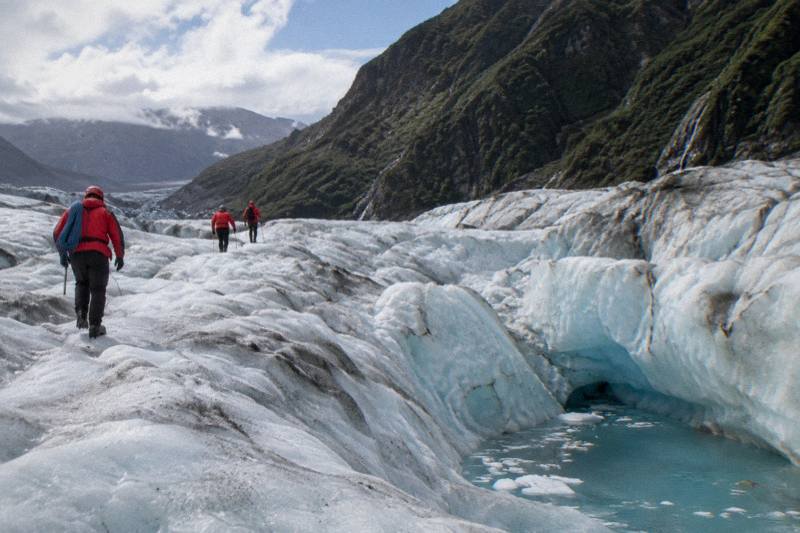
The surface you walk on is the same surface that FJGG says moves up to 5 m a day, and the features on it, the ridges, the wells and the walls of blue ice, are products of that movement. The operator supplies crampons, harness, helmet, waterproof jacket and over-trousers, weatherproof boots and socks, trekking poles, a warm hat and gloves, because the terrain is uneven: FJGG describes the fitness requirement as moderate, comfortable walking 2 to 3 hours on uneven terrain including steps cut into the ice, with no previous experience needed.
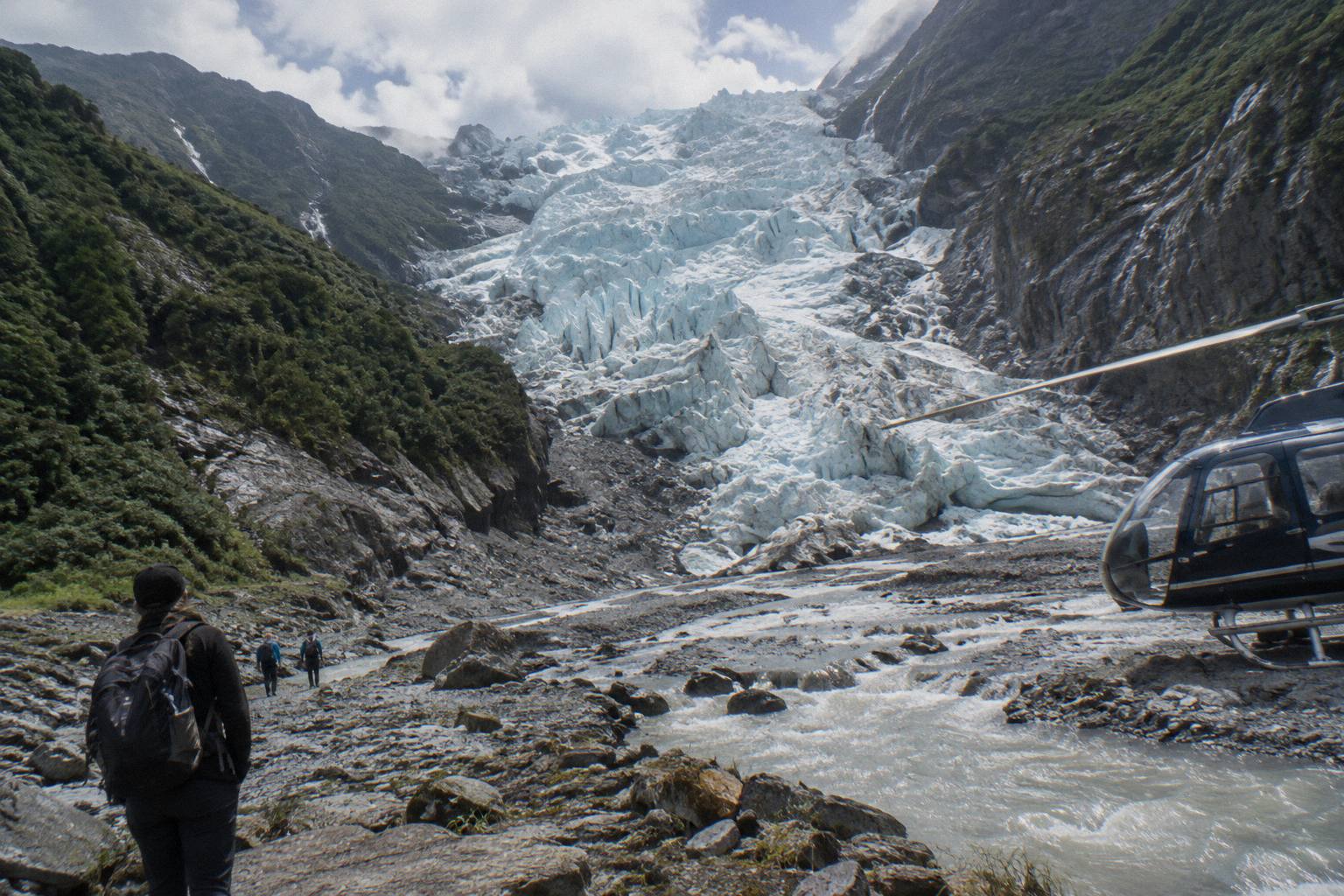
The landing itself is part of the spectacle. The helicopter sets down on the ice with its rotors turning, the group disembarks in the order the crew directs, and the machines lift away to wait or reposition. The operator's gear list asks you to leave behind anything that could blow away or be dropped, including selfie sticks, drones, power banks and lighters, which is as much about the landing zone as the walk. Drones are separately banned by DOC on the valley walk below.
If the main ice fall is what you have come to see, the choice between the three trips above is mostly a choice of ice time and group size. The classic heli hike gives up to 2.5 hours on the ice at 1 guide to 11 guests from NZD 899.
The Franz Josef Glacier Adventure stretches that to up to 5.5 hours on the ice, caps each booking at four guests, includes lunch and drinks, and runs daily at 7:15am from December to March from NZD 1,549. The Fox Glacier Heli Hike is a different glacier with a different operator, up to 3 hours of ice time from NZD 849, and is covered in its own section below.
What The Ice Itself Looks Like
The operators describe glacier ice in physical terms rather than scenic ones: the ice fall is steep and fast, the glacier is one of the steepest in the country by FJGG's account, and it flows down toward temperate rainforest. No operator page read describes colour, texture or shade, so none of that is stated here.
It is worth being direct about the limits of any preview. The operator pages describe where you go, how long you have and what the glacier does, but they do not publish a catalogue of what the ice looks like on a given morning, because a glacier that FJGG says moves up to 5 m a day does not have a fixed appearance. Photographs on the booking pages will show one day's conditions. Your day will have its own.
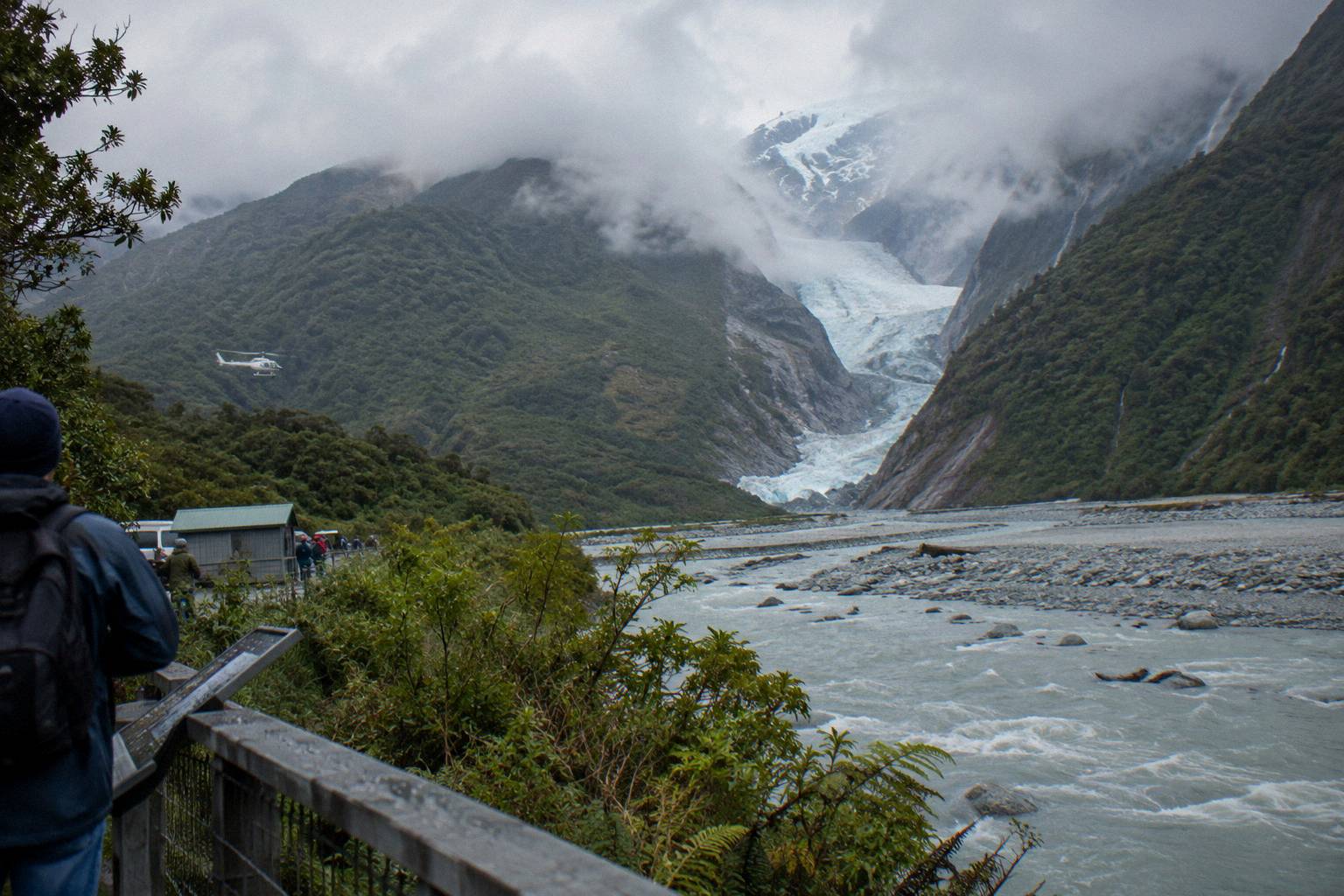
What is stated, and worth holding onto, is the setting. The Maori name of the glacier is Ka Roimata o Hine Hukatere, "the frozen tears of Hine Hukatere", as FJGG records it. The glacier sits inside Westland Tai Poutini National Park, part of the Te Wahipounamu South West New Zealand World Heritage Area, and it flows down toward a valley floor covered in temperate rainforest, with regional rainfall the operator puts at 6 to 8 m a year.
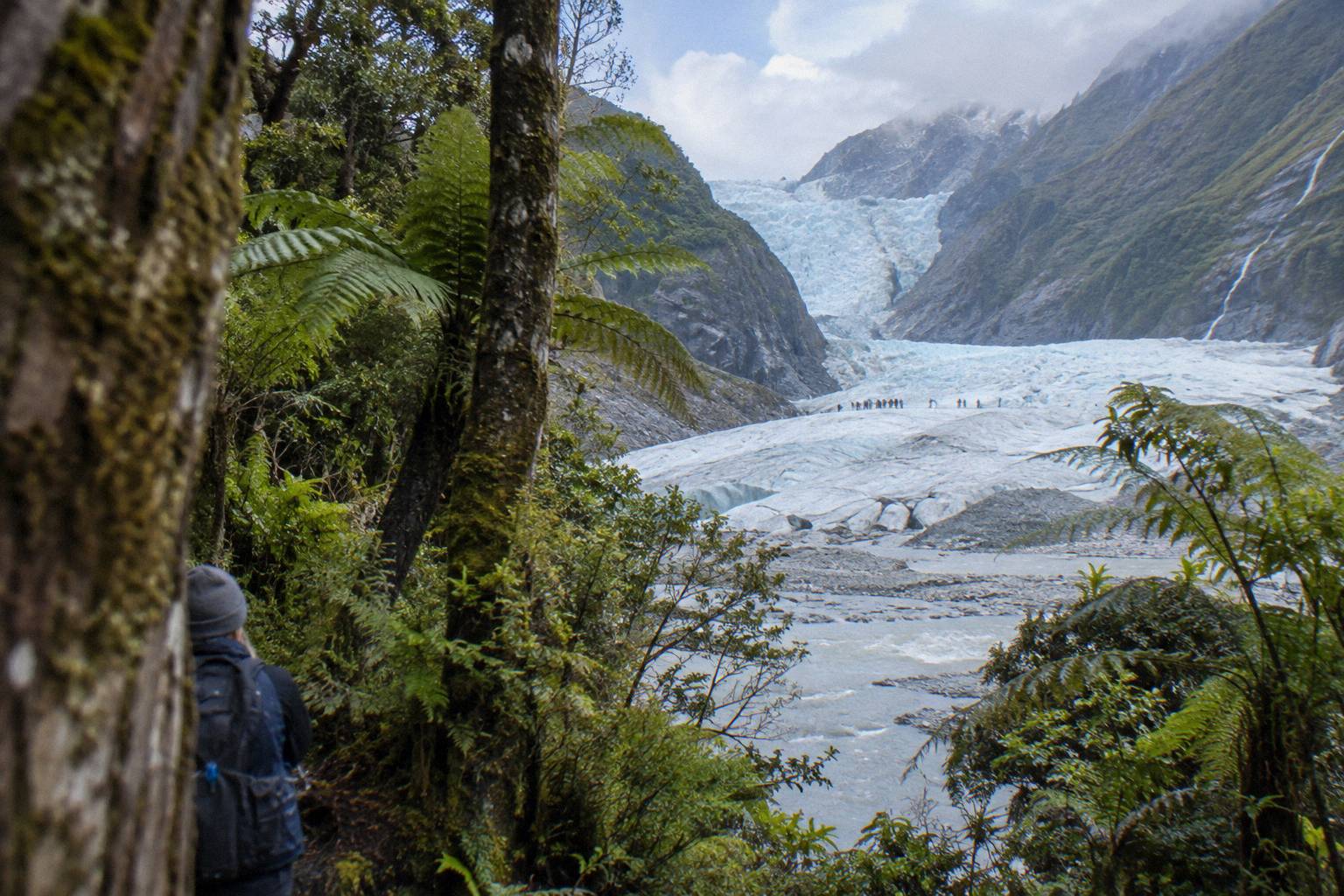
The contrast between rainforest and ice is not decoration; it is the physical reason this glacier looks and behaves the way it does. FJGG states the glacier descends from 3,000 m above sea level to 500 m over 9 km, and makes the claim that it has the "lowest terminal face elevation of any glacier flowing into a temperate rainforest".
If you are deciding whether the experience is worth the price, the honest framing is this: you are buying access, up to 2.5 hours of it, to a section of a moving glacier that cannot be reached on foot, guided by people who cut steps into the ice and read its hazards daily.
The view changes week to week because the ice itself changes week to week. If a specific photograph is what you are chasing, a specific blue cave, a specific arch, no operator here will promise it, and the next section explains exactly why.
The classic trip, the Franz Josef Glacier Heli Hike, is rated 4.6 to 4.7 across its booking pages, and it is the product most first-time visitors choose. The details, summer departures at 7:30am, 10:00am and 12:30pm with check-in 15 minutes before, a minimum age of 10, a weight range of 35 to 115 kg and a minimum height of 137 cm, are all on the operator's heli hike page.
The tour page here carries the same figures and lets you Heli Hike, Up To 4 Hours against your dates; you can also read the full Franz Josef heli hike trip rundown before you commit.
Crevasses, Caves And Why Nothing Is Guaranteed
No operator page read for this site lists crevasses, ice caves, arches or any specific ice feature as something you will see. Fox Glacier Guiding describes its ice time as weather permitting and gives no guarantees on specific features, and FJGG's longer trips say only that abseiling or a crevasse traverse is possible, not booked. Any page that promises you an ice cave is promising something the operators will not.
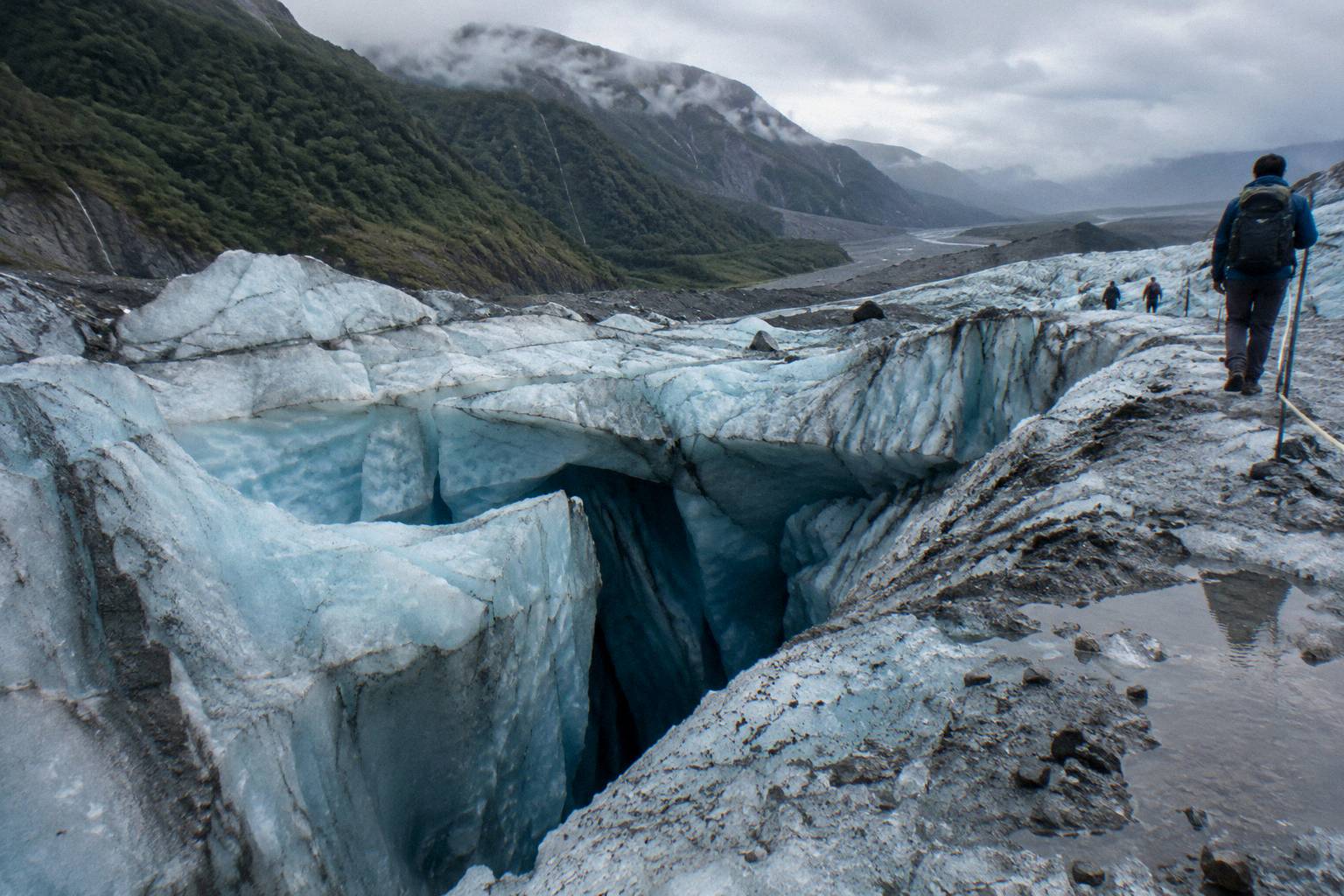
This is the single most important thing to understand before booking, so it deserves its own section. Crevasses certainly exist on a glacier moving up to 5 m a day, and ice features form and collapse all season. But the guide's job is to route the group safely, and safe routing on a given morning may run past a wall of fractured blue ice, or it may run across a broad, snowy plateau where the hazards are buried.
Both are honest outcomes of the same trip. FJGG's Glacier Adventure page goes furthest of any product here, saying that abseiling or a crevasse traverse is possible on that trip, and even there the word is possible, not included.
The reason is the ice itself. FJGG says the main ice fall moves at recorded speeds up to 5 m a day, and Glacier Helicopters notes the glacier was in a state of advance until 2008 and that after the 2012 terminal face collapse it is only accessible by helicopter.
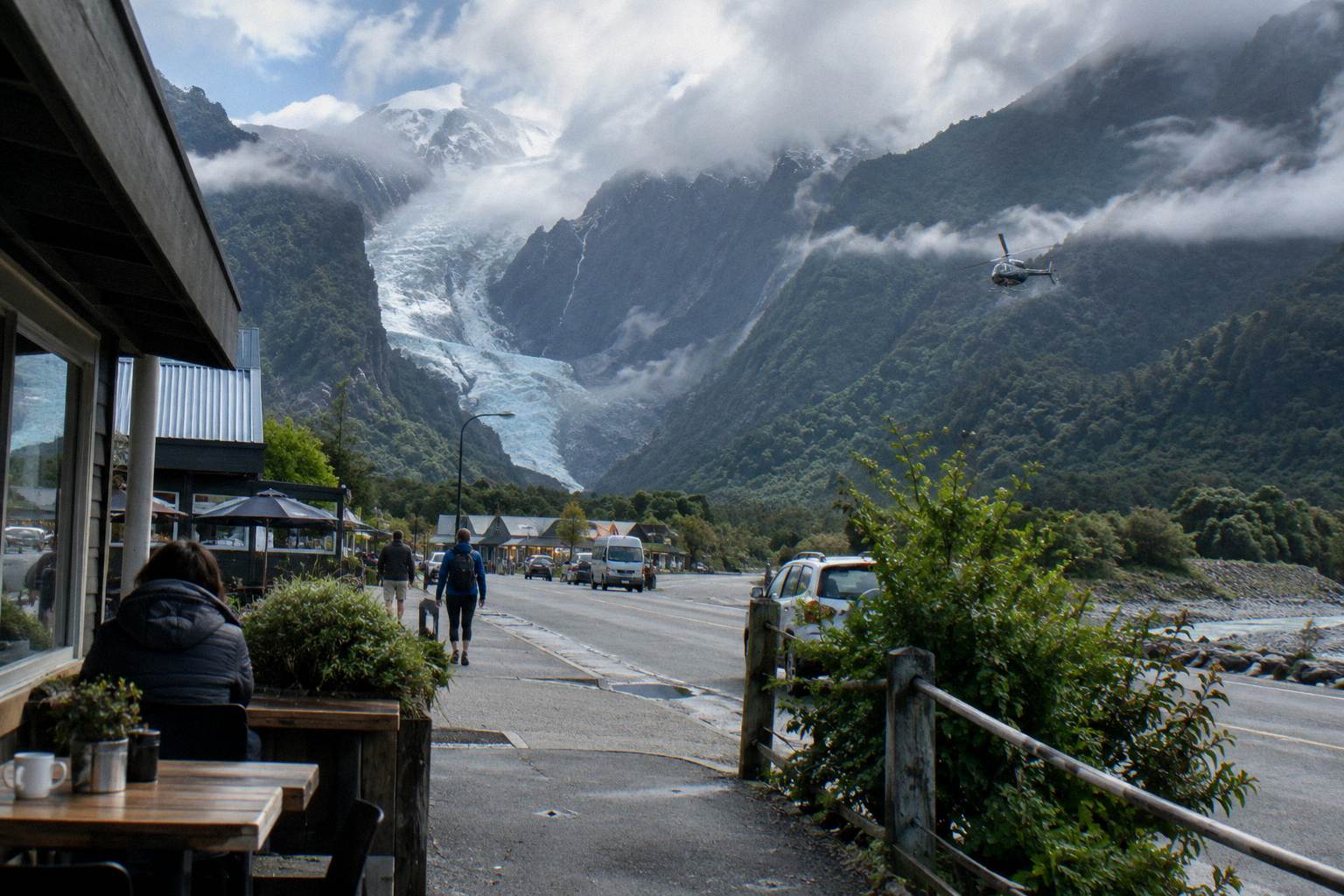
A landscape that reshapes itself weekly cannot carry a fixed attraction list. The same honesty applies to the weather window: FJGG says the heli hike needs a four-hour clear weather window, six for the Adventure and five for the Ice Climb, with the final weather call usually just before departure.
| Product | What the operator says about features | Guarantee given |
|---|---|---|
| Franz Josef Glacier Heli Hike | Lands on the main ice fall; steps cut into the ice | None on specific features |
| Glacier Adventure | Abseiling or a crevasse traverse possible | Possible, not booked |
| Heli Ice Climb | Ice climbing instruction, 1 guide to 4 guests | No experience needed, features not listed |
| Fox Glacier Heli Hike | Up to 3 hours of ice time, weather permitting | FGG gives no guarantees on specific features |
| Glacier Landing | 15 minutes standing on the icefall at about 1,300 m | Landing stated, features not listed |
For readers weighing the spend, this cuts both ways. You cannot buy a specific cave or arch, which is disappointing if one photo sold you on the idea. But you are also not buying a stage set: the ice you stand on is the genuine moving surface of a glacier that FJGG calls the fastest moving commercially guided glacier in the world, its claim.
What you see is what the glacier has built that week, cut and chosen by a guide who assesses it daily. If seeing the ice under your own boots is the goal, every version of this trip delivers it. If seeing one specific shape of ice is the goal, no version of it can.
Steps Cut Into The Ice And How The Guide Routes The Day
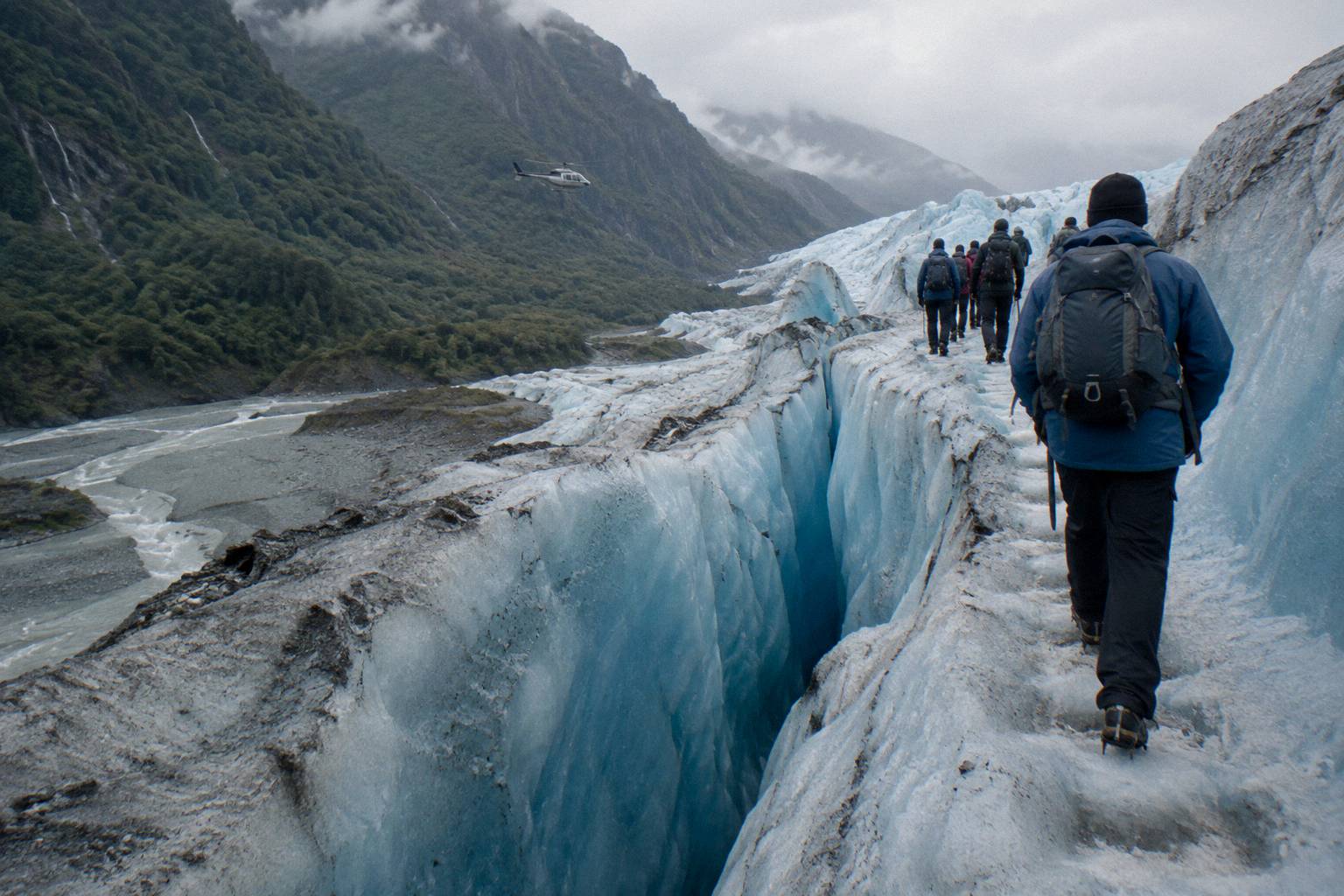
The one surface feature every FJGG heli hike does have, because the operator makes it, is steps cut into the ice. FJGG's fitness description asks that you be comfortable walking 2 to 3 hours on uneven terrain including steps cut into the ice, so the walking surface is carved and maintained by the guide. You are on a working path, not a marked trail.
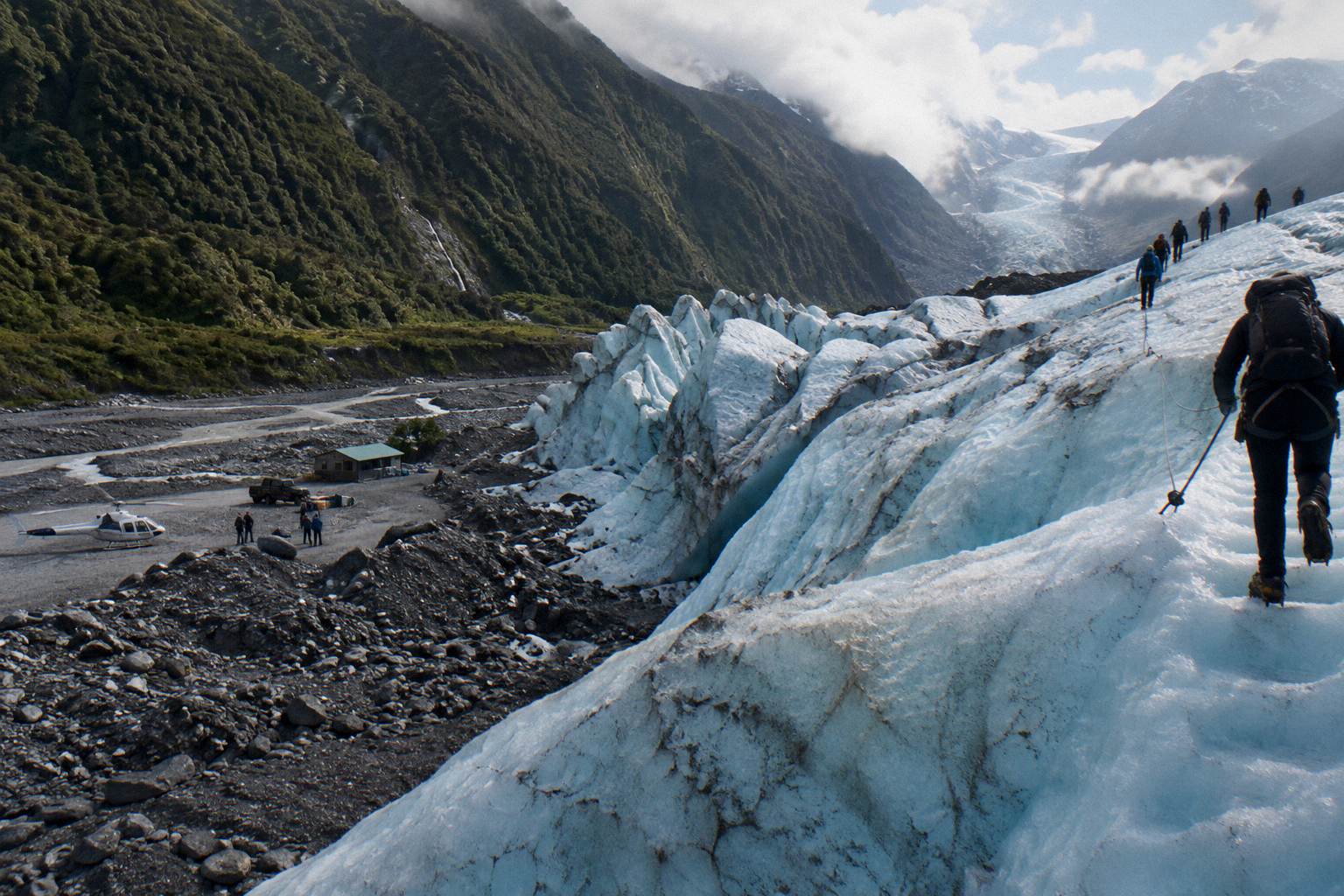
This detail answers a question people often ask after seeing photographs of heli hikes: how do you walk on something that moves 5 m a day? The answer is that you do not walk on it as it lies. The guide, equipped with the crampons, harness and helmet the operator supplies to every guest, cuts and adapts a route through the ice fall as the group goes.
The steps exist for the duration of your trip and then the ice reclaims them. The guide also assesses fitness on the day and may adjust the route. On Fox Glacier, Fox Glacier Guiding runs the same principle with heli in and heli out, supplying boots, socks, crampons, a waterproof raincoat and over-trousers, hat and gloves and a small backpack with a 3 kg limit on all of its trips.
The rhythm of the day follows from that. On Franz Josef, summer departures run at 7:30am, 10:00am and 12:30pm, with check-in 15 minutes before, and the whole experience runs up to 4 hours from check-in to the end, of which up to 2.5 hours is on the ice.
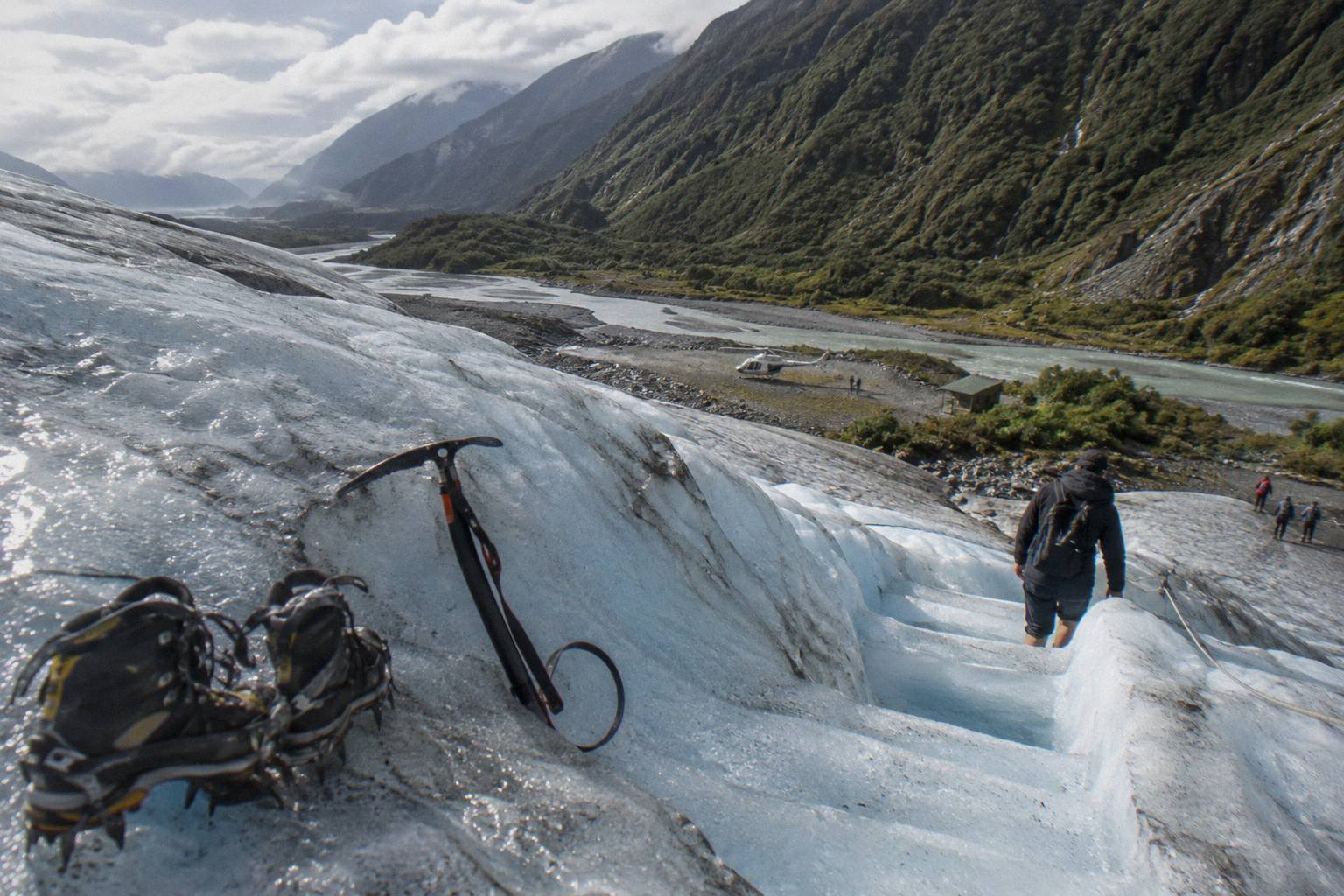
On Fox Glacier the Flying Fox Heli Hike departs at 8:50am and 11:50am year round with extra departures on demand, check-in 20 minutes before at 44 Main Road, Fox Glacier township, and runs up to 4 hours in total with up to 3 hours of ice time. Neither operator states the length of the flight legs separately, so that figure is not given here.
If the carved-path idea appeals, the longer trips exist because of it. The Franz Josef Glacier Adventure, up to 5.5 hours on the ice, gives the guide far more room to work a route through the ice fall, with a maximum of four guests per booking and lunch and drinks included, from NZD 1,549, minimum age 14, daily 7:15am departures from December to March.
The Franz Josef Heli Ice Climb, up to 5.5 hours on ice and up to 8 hours in total at 1 guide to 4 guests, minimum age 16, adds vertical ice climbing with no experience needed, from NZD 1,249, departing 7:15am year round on demand with enquiry-based booking.
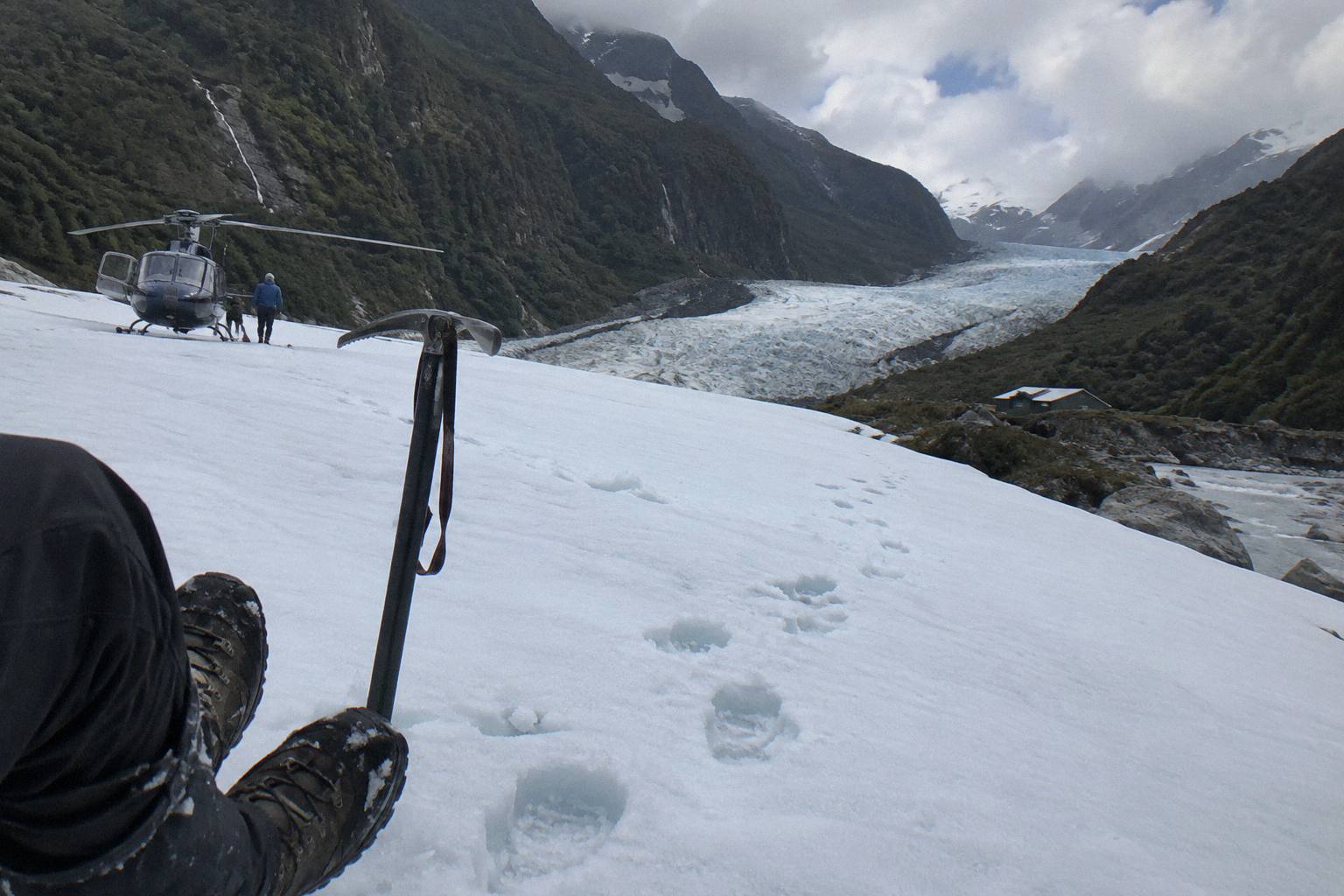
The Adventure is the trip for readers whose answer to "what do you see" is "as much of the ice as one day can hold". Small bookings, long ice time and a guide with hours to spend on routing are what the higher price over the classic hike buys. What to wear on the day is covered separately in the heli hike clothing and gear guide, since both operators supply most of the technical kit and the packing decisions that remain are yours.
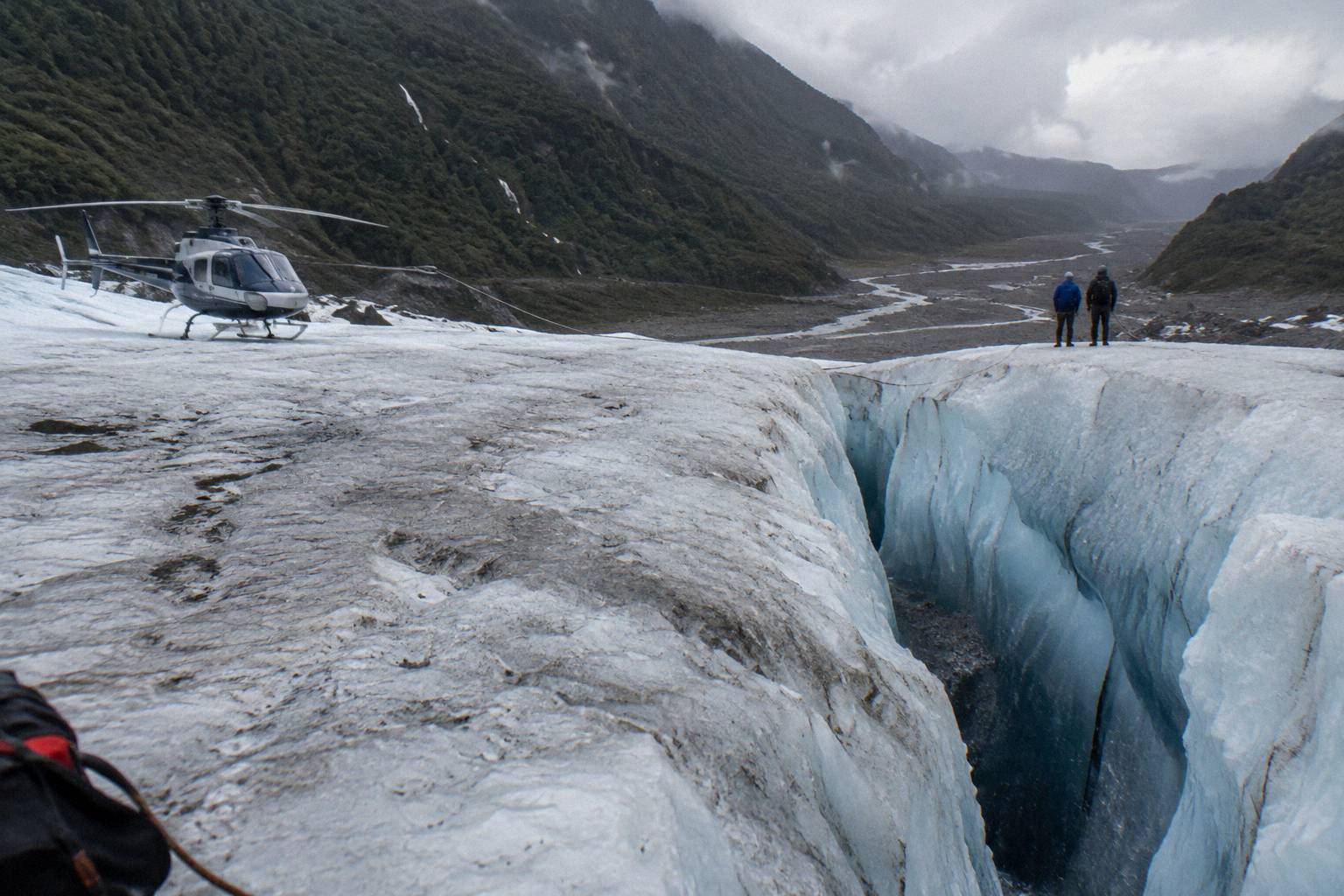
What You See From The Air On The Way In
The flight legs frame the ice with the whole valley: rainforest, the river plain and the rock walls of a World Heritage national park, then the glacier running down toward the valley floor. Glacier Helicopters records that the glacier was advancing until 2008 and became helicopter-only access after the 2012 terminal collapse. The aerial view is included in every heli hike, and it is the entire product on a scenic flight.
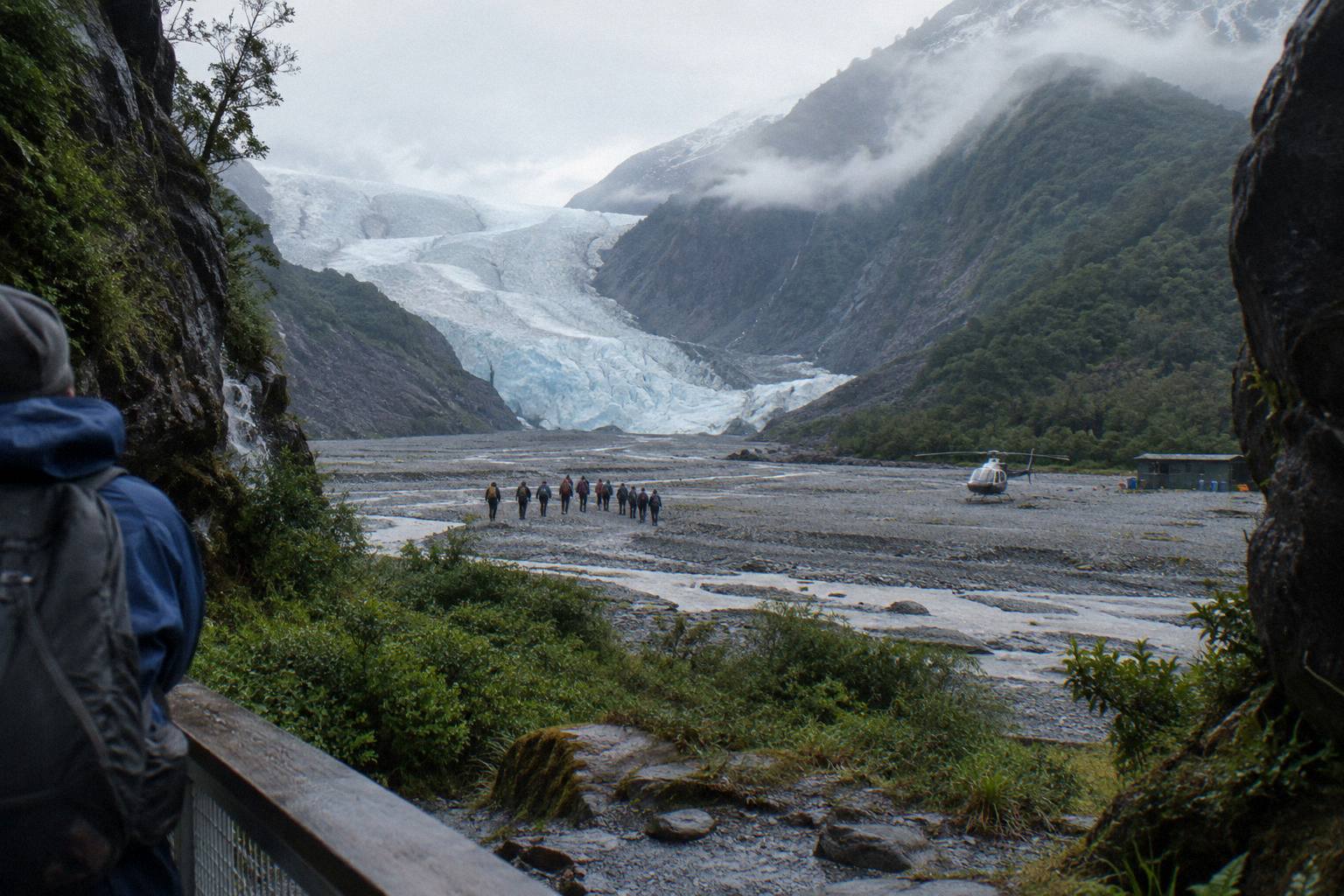
If you want that aerial view without the hike, the flight products deliver it more cheaply. The Franz Josef 25-Minute Helicopter Flight With Snow Landing from Glacier Helicopters is about 25 minutes from NZD 395 and includes a snow landing.
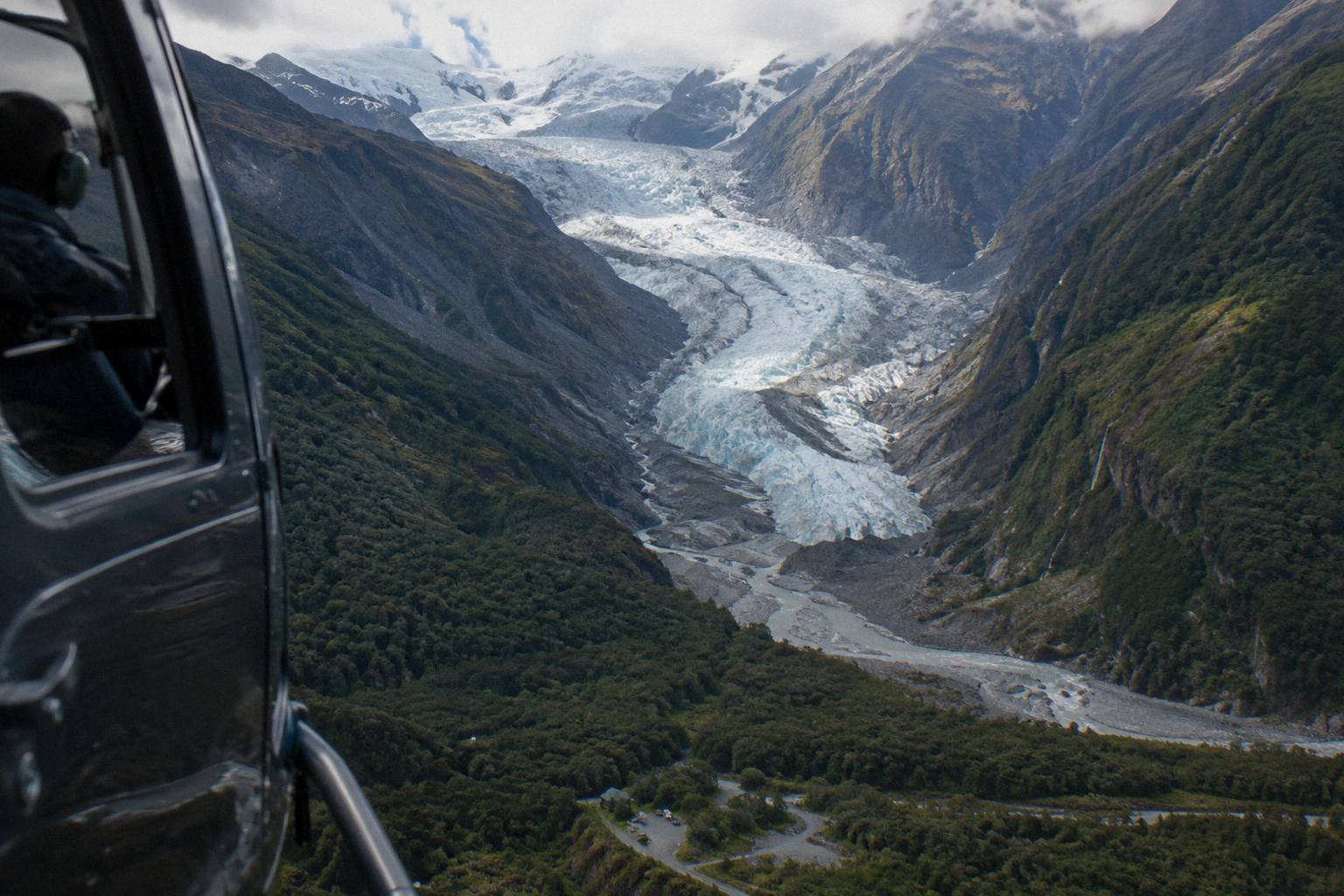
The 35-Minute Twin Glacier Helicopter Flight from Glacier Country Helicopters runs about 35 minutes including about 10 minutes on the snow and crosses both glaciers; no price is stated for it on its booking page, so ask the operator. The Franz Josef & Fox Glaciers Helicopter Flight With Snow Landing, about 35 minutes, likewise has no price stated on its page. These are flights with landings, not guided walks: nobody hands you crampons.
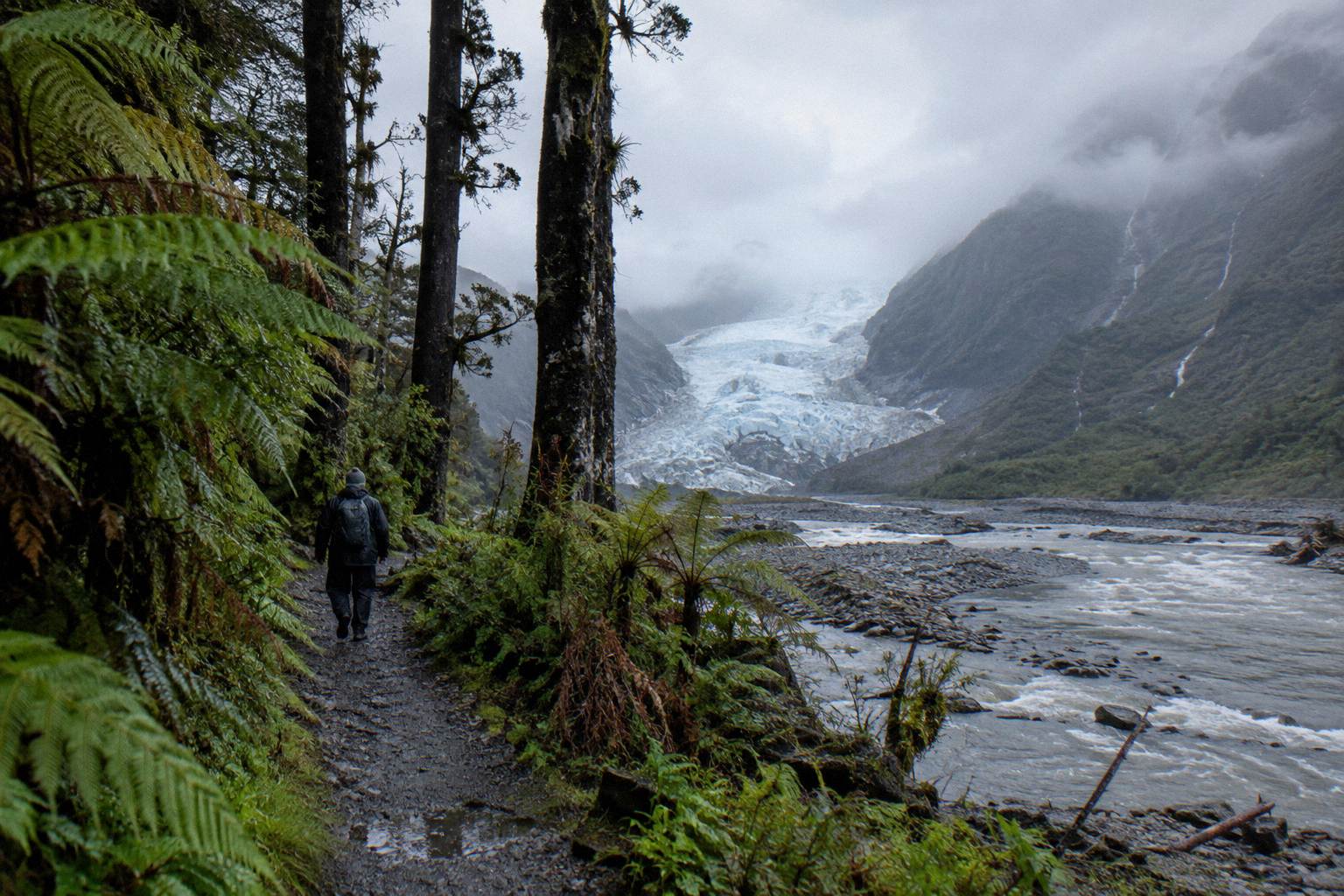
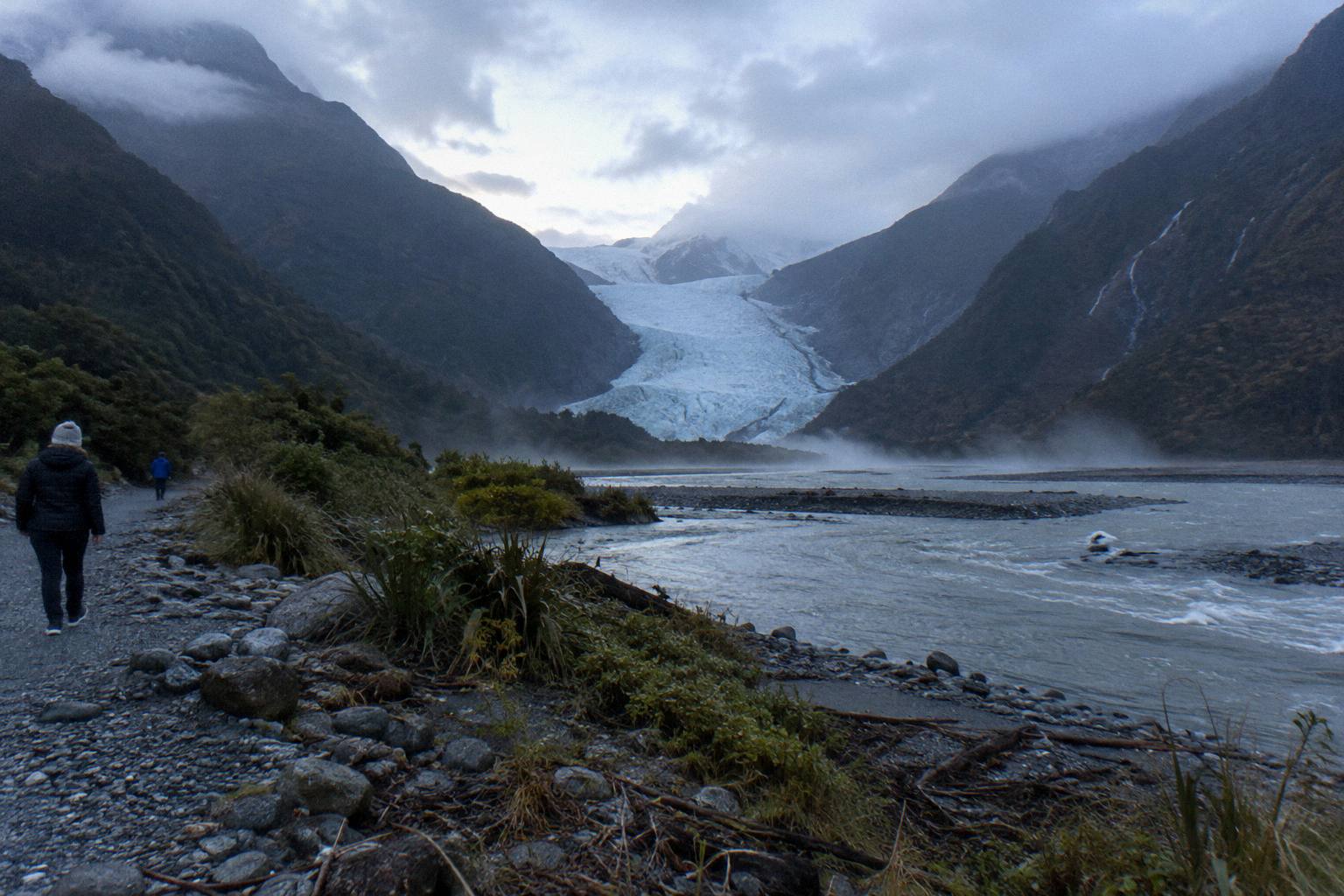
On the valley floor, DOC's own walks give a third way to see the glacier, from a distance. The Franz Josef Glacier valley walk is 1.7 km return, about 30 minutes, easy to intermediate, and ends at a viewing barrier: DOC states plainly that the river has cut off access up the valley, so it is not possible to go further on foot, and that barriers must not be crossed because of river surges, rock fall and flooding.
The car park at the end of the roughly 4 km access road costs NZD 2.50 per half hour or NZD 20 a day. It is a fine viewpoint walk and it is not, and cannot be, a glacier walk. For more on that distinction, see whether you can see Franz Josef Glacier without a helicopter.
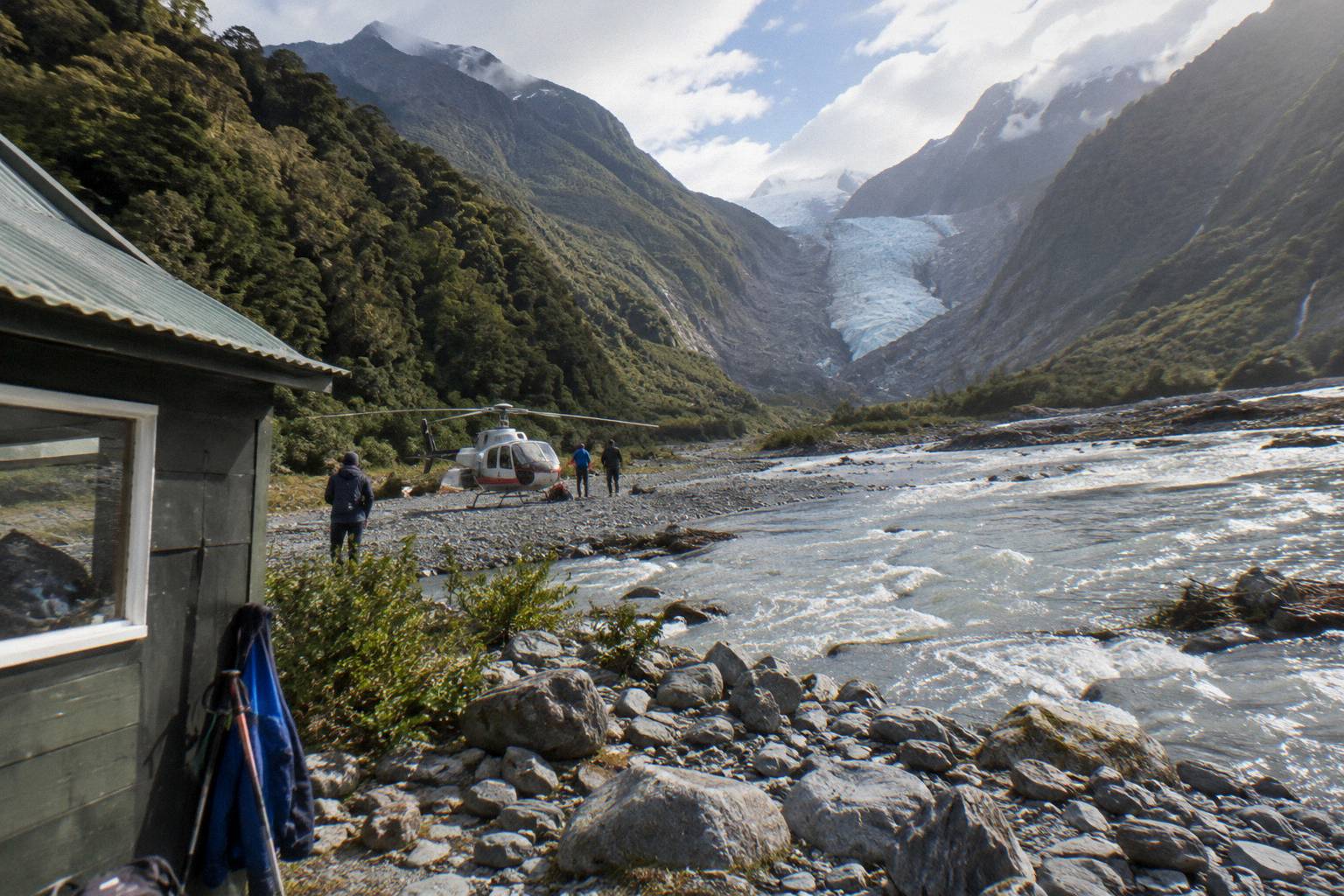
DOC also lists longer viewpoints in the area. Alex Knob Track, 8 hours and graded advanced, offers, in DOC's words, the "best views of Franz Josef Glacier without taking a helicopter flight". Canavans Knob is a short climb of 1 hour to 1 hour 40.
At Fox Glacier, DOC lists the Lake Matheson walk at 1 hour 30, the Te Weheka Walkway and Cycleway at 40 minutes to a viewpoint of what DOC calls the largest active landslide in New Zealand, and the Lake Gault Track at 3 hours return. None of these puts a boot on ice; they are the honest free-to-cheap alternatives, and they explain why the helicopter products cost what they do.
The Glacier In Numbers
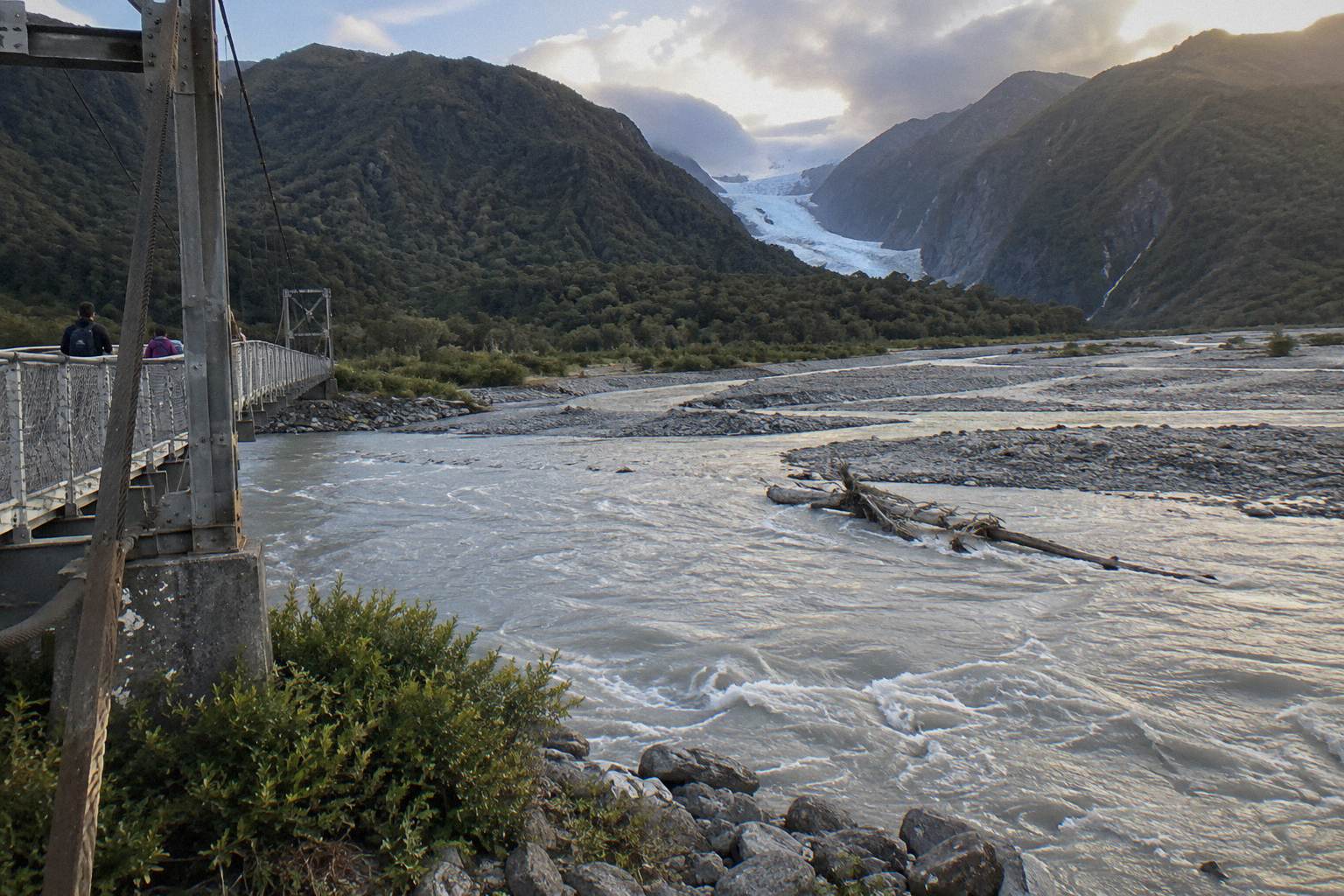
Every figure worth quoting about Franz Josef Glacier belongs to the operator or DOC, not to this page: FJGG says the glacier runs 3,000 m down to 500 m over 9 km, that it is one of the steepest glaciers in the country, and that the main ice fall has been recorded at up to 5 m a day. The chart below places those numbers beside the ice time each product buys.
| Figure | Number | Who states it |
|---|---|---|
| Descent of the glacier | 3,000 m to 500 m over 9 km | FJGG |
| Recorded speed of the main ice fall | Up to 5 m a day | FJGG |
| Weather window needed for the heli hike | 4 hours clear | FJGG |
| Guides to guests, heli hike | 1 to 11 | FJGG |
| Valley walk to the viewing barrier | 1.7 km return, 30 minutes | DOC |
| Regional annual rainfall | 6 to 8 m | FJGG |
Read the table with attribution in mind. Glacier length figures conflict between sources, 9 km in FJGG's own pages and other numbers elsewhere, so 9 km appears here only as FJGG's statement, never as bare fact. The same discipline applies to the elevation figures and to the operator's superlatives.
The numbers that are not in dispute are the practical ones: the ice time you are buying, the guide ratio, the minimum ages and the weather windows, and those are the numbers that should drive a booking decision. DOC's own record of the valley walk, 1.7 km return ending at a barrier, and FJGG's statement of 6 to 8 m of annual rainfall in the region, round out the picture the ice sits in.
The Fox Glacier Ice Walk Compared
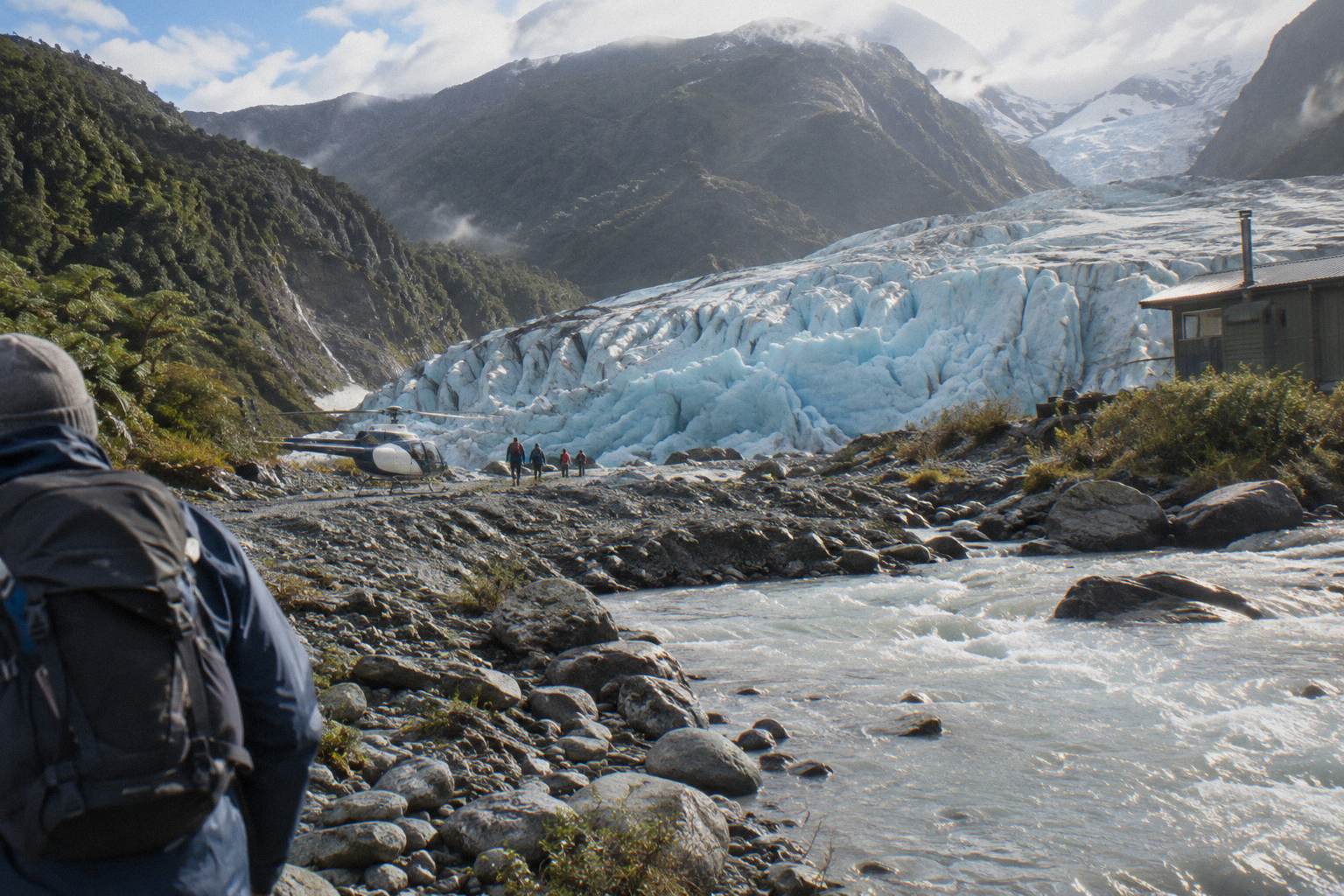
Fox Glacier Guiding, which marked 50 years of guiding in 2024, runs the Flying Fox Heli Hike: up to 3 hours of ice time within up to 4 hours in total, from NZD 849, with a minimum age of 9 and a 116 kg weight limit on all helicopter trips. It is rated 4.9 on one booking page, and as at Franz Josef, what the ice shows on the day is not guaranteed.
The comparison between the two townships is a decision about logistics as much as ice. Franz Josef trips depart Glacier Base, 63 Cron Street; Fox trips depart 44 Main Road in the Fox Glacier township, with check-in 20 minutes before and a large car park north of the building. The operators' minimum groups differ too: FJGG generally needs 4 guests and confirms 48 hours ahead, offering an alternative such as the Heli Hike or a private option if numbers are short, while FGG's minimum is 3 and it tries to place smaller numbers with others.
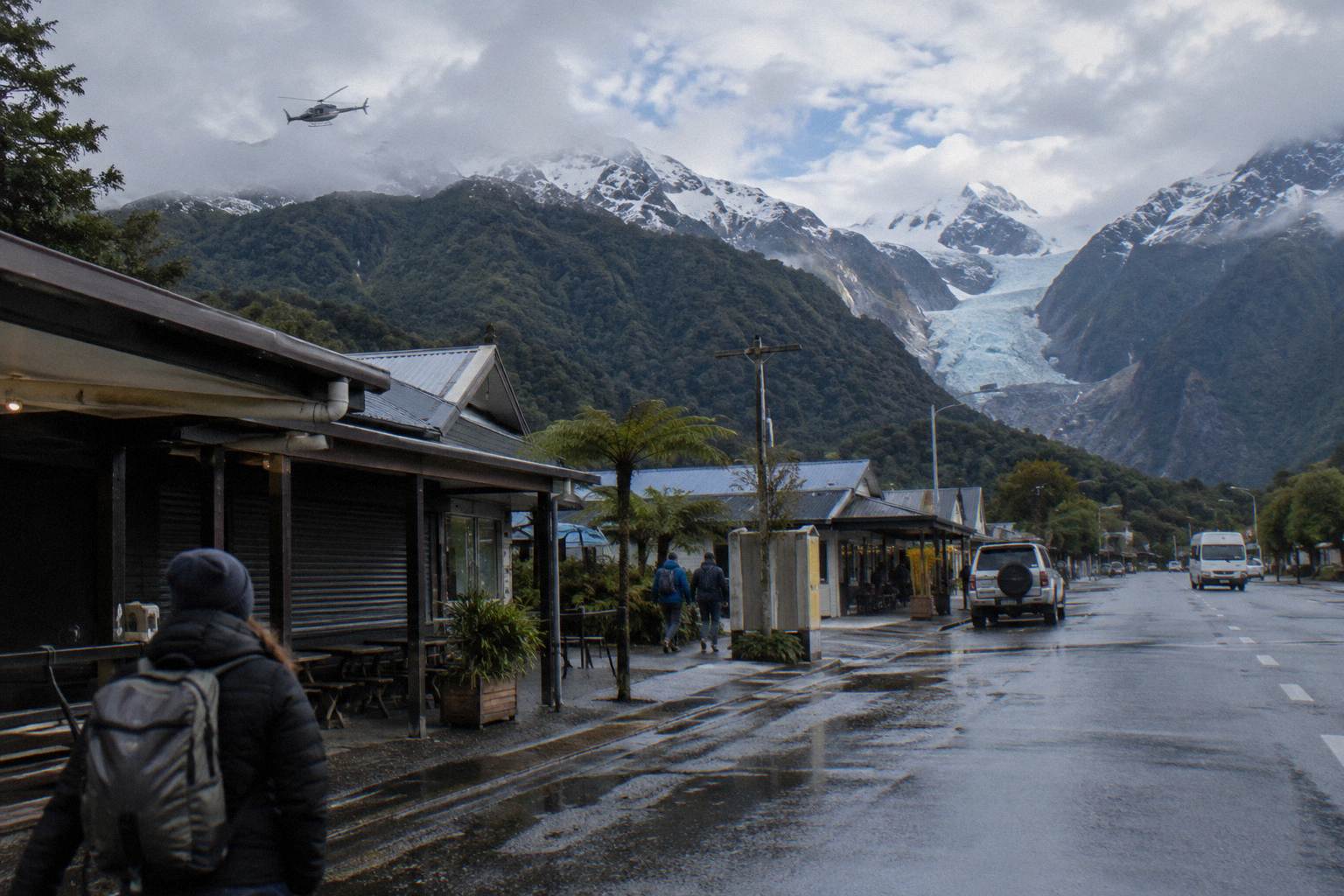
Families should note that FGG prices children at the adult rate on Flying Fox, NZD 849 for ages 9 to 16 with an adult, and offers a family deal of NZD 3,050 for 2 adults and 2 children, which the operator says saves NZD 346. Proof of a child's age, a passport, is required at FGG check-in.
| Franz Josef Glacier Heli Hike | Fox Glacier Heli Hike | |
|---|---|---|
| Operator | Franz Josef Glacier Guides | Fox Glacier Guiding |
| Operator price | From NZD 899 | From NZD 849 |
| Ice time | Up to 2.5 hours | Up to 3 hours, weather permitting |
| Total time | Up to 4 hours from check-in | Up to 4 hours in total |
| Minimum age | 10 | 9, ages 9 to 16 with an adult |
| Weight range | 35 to 115 kg | Up to 116 kg on all helicopter trips |
| Guide ratio | 1 guide to 11 guests | Not stated |
| Departures | 7:30am, 10:00am, 12:30pm in summer | 8:50am and 11:50am year round, extras on demand |
| Rating | 4.6 to 4.7 | 4.9 on one booking page |
FGG also sells two operator-only trips this site does not carry booking cards for. The Extreme Fox All Day Heli Hike is up to 8 hours in total with up to 7 hours of ice time, from NZD 1,049, minimum age 13, good fitness and good English required, and may use ropes, short ice pitches and abseil.
The Fox Glacier Express is a 2-hour heli hike, up to 2 hours in total with up to 1 hour on ice, low physical demand, minimum age 9, from NZD 749. For the full township decision, including where to stay and which valley suits which traveller, read the Franz Josef versus Fox Glacier comparison.
The Fox trip earns its place in the shortlist for three stated reasons: up to 3 hours of ice time for NZD 50 less than the Franz Josef classic, a minimum age of 9 rather than 10, and year-round twin morning departures with extras on demand. Against it sit the check-in drive to a second township and the fact that its rating comes from one booking page only, so treat it as a single page's score rather than a settled verdict.
What You Do Not See, And Why That Is Fine
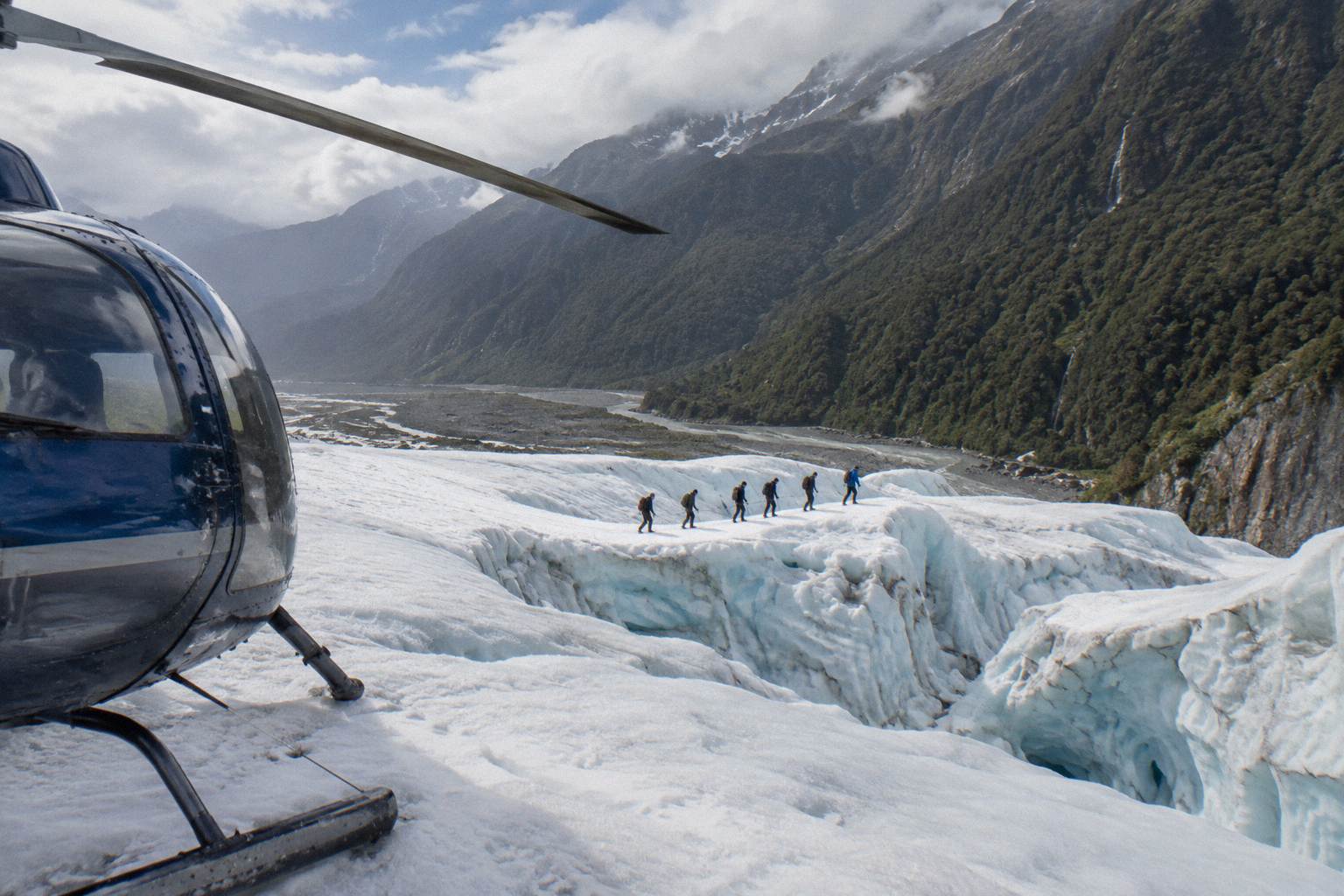
You do not see the terminal face up close, because nobody walks to it: DOC states that valley access is cut off and helicopters are the only safe way onto the ice. You do not see a fixed circuit of caves and arches, because no operator guarantees features on a surface FJGG says moves up to 5 m a day. What you get instead is a moving landscape that exists only in the week you visit.
There is a temptation, after a week of researching, to treat a glacier like a monument with a fixed set of sights. The facts say otherwise. The operator's own history of the glacier, advance until 2008, a terminal collapse in 2012, helicopter-only access since, describes a landscape that has repeatedly rewritten what a visitor can even reach.
FJGG's two-day advice for visitors, spend at least two days in Franz Josef and book the first day, exists precisely because the four-hour clear weather window the heli hike needs may not arrive on schedule.
The same logic shapes the refund rules. If FJGG cancels for weather you get a full refund or a reschedule to the next available slot, with an alternative such as the Glacier Landing offered where possible, and the operator notes a refund is subject to the terms of your booking agent if you booked through one.
Customers can change or cancel free of charge up to 24 hours before check-in; inside 24 hours the full amount is charged. FGG's terms mirror the shape of it: final weather decision 10 minutes before departure, full refund or a move to another departure if cancelled, free cancellation with 24 hours notice. Neither operator promises the weather, and neither should any page selling you the trip.
Common Mistakes When Choosing An Ice Walk
The mistakes that cost people money here are consistent: booking a single day in town when the operator advises two, expecting a specific ice feature no operator guarantees, confusing a scenic snow landing with a guided walk, and assuming the two glaciers share one operator's rules. Each one is avoidable with the operators' own stated facts. The four below trip up the most bookings.
First, treating the minimum ages, weights and times as interchangeable between Franz Josef and Fox. They are not. The Franz Josef heli hike has a minimum age of 10, a weight range of 35 to 115 kg and a minimum height of 137 cm; the Fox Flying Fox has a minimum age of 9 and a 116 kg ceiling on all helicopter trips; the Glacier Adventure needs 14 and the Ice Climb 16.
A family with a 9-year-old fits Fox and not Franz Josef, and a 13-year-old fits Extreme Fox and not the Ice Climb. Check the specific product, not the category.
Second, buying a snow landing and expecting a hike. The Glacier Landing at NZD 699 gives 15 minutes standing on the icefall at about 1,300 m, an hour from check-in, minimum age 4, enclosed shoes only. The 25-minute flight from NZD 395 gives a snow landing and no guiding. Both are real products and neither puts crampons on your feet. If walking the ice is the point, book a hike; if standing on it is enough, the landings are the cheaper, easier answer.
Third, planning one day. FJGG says the heli hike needs a four-hour clear weather window and advises two days in the area, booking the first, because the final call often comes just before departure. A visitor flying in and out the same day has no fallback slot if the cloud sits on the ice fall.
Fourth, expecting photographs to repeat. On ice the operator says moves up to 5 m a day, last season's cave may be this season's crevasse wall, and the honest position, which is also the operators' own position, is that features are natural and not guaranteed. Book the glacier, not a picture of it.
For most readers the classic Franz Josef trip is the right first answer: the stated ice time, the stated price from NZD 899, a rating of 4.6 to 4.7, and a schedule of three summer departures that leaves room in the day. First-timers wanting the fuller briefing on the day's sequence, check-in to ice and back, will find it in the first-timer's heli hike walkthrough.
Common Questions About A Glacier Heli Hike
Do You See Crevasses And Ice Caves On A Heli Hike?
Crevasses exist on the ice, but no operator lists them, or ice caves, as something you will see. Fox Glacier Guiding gives no guarantees on specific features and describes ice time as weather permitting, and FJGG's Glacier Adventure page says only that abseiling or a crevasse traverse is possible. The guide routes around what the ice has built that week.
What Part Of The Glacier Does The Heli Hike Land On?
The Franz Josef Glacier Heli Hike lands on the main ice fall, the steep upper section where FJGG says ice has been recorded moving at up to 5 m a day. FJGG claims exclusive guiding access to the glacier and says its helicopters are operated by Inflite. The exact landing point and route are decided on the day.
Can You Walk Onto The Glacier Without A Helicopter?
No. DOC states the river has cut off access up the Franz Josef valley, that barriers must not be crossed, and that helicopters are the only safe way to get people onto the glacier for guided walks. The DOC valley walk is 1.7 km return and ends at a viewing barrier.
How Much Time Do You Actually Spend On The Ice?
The Franz Josef Glacier Heli Hike gives up to 2.5 hours on the ice within up to 4 hours from check-in. The Fox Glacier Heli Hike gives up to 3 hours of ice time within up to 4 hours in total. The Franz Josef Glacier Adventure gives up to 5.5 hours on the ice within up to 8 hours in total.
Is A Snow Landing Flight The Same As A Heli Hike?
No. A snow landing, such as the 25-minute flight from NZD 395 or the FJGG Glacier Landing at NZD 699 with 15 minutes on the icefall, puts you on the ice without a guided walk. A heli hike supplies crampons, a harness, a helmet and a guide and walks you across the ice.
Does The Weather Change What You See?
Yes. FJGG says the heli hike needs a four-hour clear weather window and the final call usually comes just before departure; if the operator cancels you get a full refund or a reschedule, with an alternative such as the Glacier Landing offered where possible. FGG makes its final decision 10 minutes before departure. The operator advises spending at least two days in Franz Josef.